
Semyon Bychkov
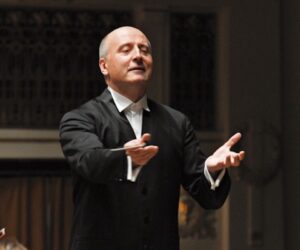
Semyon Bychkov supplies an extraordinarily well-played account of Mahler’s Third; Paavo Järvi’s version of Mahler’s Fifth avoids the more idiosyncratic excesses of Leonard Bernstein’s superb 1987 Vienna recording.

Not all of Atlanta Symphony Orchestra conductor Nathalie Stutzmann’s ideas about Dvorak’s Ninth Symphony add up, but there is not much to argue with in Czech Philharmonic Orchestra director Semyon Bychkov’s take on Dvorak’s Seventh, Eighth, and Ninth Symphonies.

Each month, our arts critics — music, book, theater, dance, television, film, and visual arts — fire off a few brief reviews.

Each month, our arts critics — music, book, theater, dance, television, film, and visual arts — fire off a few brief reviews.
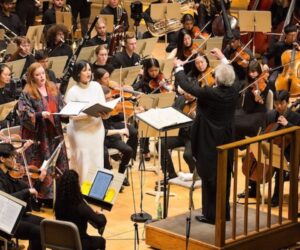
In both performances tempos are fleet but not rushed. The big moments – from the hellish apex of the first movement’s development to the screaming climax of the Scherzo and the cathartic resolution of the finale – pack heavy punches.

Each month, our arts critics — music, book, theater, dance, television, film, and visual arts — fire off a few brief reviews.
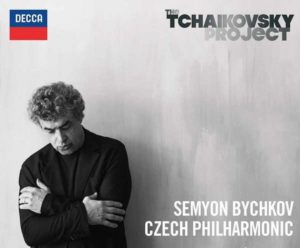
Semyon Bychkov and the Czech Philharmonic do justice to a lot of Tchaikovsky’s orchestral music, while John Eliot Gardiner and the London Symphony play Robert Schumann’s famously-dense orchestrations with clarity. But Michael Stern’s account of The Planets completely lacks mystery.
Conductor Yannick Nézet-Séguin does dazzlingly right by the symphonies of Mendelssohn.
Recent Comments