
Russian
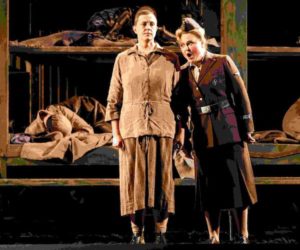
Moissey Vainberg’s opera powerfully evokes the brutality of Hitler’s extermination camps and the moral ambiguity of postwar Germany.

This memoir offers an invaluable, broad look at intellectual Russia before and after the revolutions of 1917.
Joshua Rubenstein has penned a compact, chilling account of the demise of the Russian tyrant.
Nabokov will become much more seriously playful about extinction and the nature of love in the increasingly complex fables to come. “The Tragedy of Mr. Morn” is his initial earnest fairy tale.
As the year nears its end, time is running out to write at length about some of the new books that gave me pleasure. Thus this quick list of favorites. As usual, my taste runs to prose that’s off-the-beaten-path.
By Helen Epstein July 30 featured a Russian warhorse program at Tanglewood: Glinka’s “Overture to Ruslan and Ludmila”; Tchaikovsky’s Piano Concerto No. 1 in B-flat minor, and Prokofiev’s Music from the ballet Romeo and Juliet. These are familiar (some might say over-familiar) works for orchestra, but, of course, there’s a reason they’re still being programmed.…
I enjoyed the movie —- critics from outside the dance world have found Ballet Russes charming, too — but the filmmakers’ real gifts are the oral histories that they collected from these dancers just before it was too late.
Classical Music Commentary: Boston’s Lost Opportunity — How the BSO Board Chose Charles Munch over Leonard Bernstein