
John Singer Sargent

Quibbles aside, this book’s profusion of illustrations is a windfall for artists, art students, and those keen on close looking and visual culture.

I wish this catalogue spelled out John Singer Sargent’s professional stance as a “juste milieu” painter more methodically. That term refers to those eager to be associated with new stylistic tendencies yet careful not to transgress the establishment’s norms.
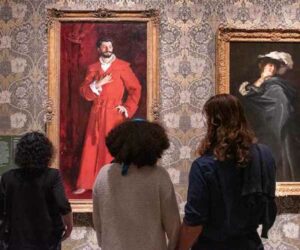
Boston’s veneration of John Singer Sargent is awkwardly implicated in the city’s habit of denouncing modern art.

Was John Singer Sargent just a talented flatterer of his wealthy patrons or was there more to him?

The MFA’s Fashioned by Sargent alludes — only at whisper level — to the fact that many of John Singer Sargent’s clients represent questionable ideals.

Is the artist’s direction of clothing choices — and how he painted the garments — a sufficiently compelling inquiry in which to anchor an exhibit?
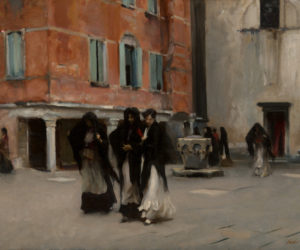
The allure of Venice, as crafted by Venetian artisans, seduced American artists and collectors, who traveled across the world and brought back their prizes to American homes and eventually to museums.
Paul Fisher’s back-and-forth tease about John Singer Sargent’s sexuality starts out as intriguing, then becomes distracting, and finally irritating as the biographer never quite closes in on his targets.

By digging deep into Thomas McKeller, the Gardner Museum has not only resurrected a lost figure (and lost music, and “lost” art) but revealed and contributed to an ongoing history.
Visual Arts Commentary: John Singer Sargent — A Particular Sort of Loner
Viewing John Singer Sargent and his art through the lens of identity studies and LGBTQ history supplies new insights into claims about his homosexuality.
Read More about Visual Arts Commentary: John Singer Sargent — A Particular Sort of Loner