
Trevor Fairbrother
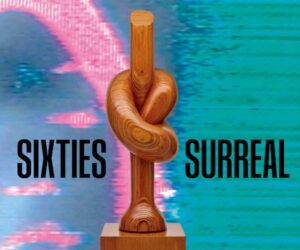
While I heartily recommend “Sixties Surreal” as a provocative revisionist compendium or almanac, I know the volume will frustrate those who expect to find a conventional survey.
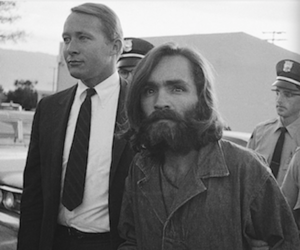
Nicholas Tochka is less interested in crafting a coherent portrayal of Charles Manson’s “musical lives” than in connecting his critical hypothesis of “the invention of the Sixties” to critical theories.

I found it remarkable to explore the exhibition, then experience a kind of filmic audience with the artist, then return, fired up and enlightened, to the beautiful installation.
This lively foray into popular history, and others, exemplifies the move to attract younger audiences with open and freewheeling interests in gender and sexual nonconformity.

By Trevor Fairbrother The Queer Lens project made me think about queer culture and camera culture as distinct phenomena that began in the Victorian era: each was a manifestation of modernity. The latest exhibition that Paul Martineau has curated at the J. Paul Getty Museum is titled Queer Lens: A History of Photography and features…

Quibbles aside, this book’s profusion of illustrations is a windfall for artists, art students, and those keen on close looking and visual culture.
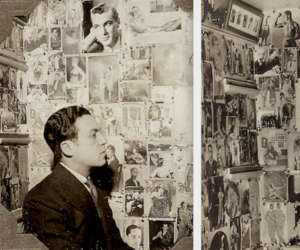
Max Ewing is little known today, but this book celebrates him as a sexually nonconforming bachelor who strove to impress the quirkiest bohemian clique of the Roaring ’20s.

I wish this catalogue spelled out John Singer Sargent’s professional stance as a “juste milieu” painter more methodically. That term refers to those eager to be associated with new stylistic tendencies yet careful not to transgress the establishment’s norms.

In her stimulating book, Eva Díaz presents more than 30 conceptually minded artists who “reconsider how the applications of technologies used in near and outer space, once billed as progressive and exploratory, are today rife with negative effects such as resource depletion and privatization, economic inequality, and racial and gender domination.”
Visual Arts Commentary: John Singer Sargent — A Particular Sort of Loner
Viewing John Singer Sargent and his art through the lens of identity studies and LGBTQ history supplies new insights into claims about his homosexuality.
Read More about Visual Arts Commentary: John Singer Sargent — A Particular Sort of Loner