Classical Music Album: Making History Heard — “The Lost Music of Women”
By Stacy Jarvis
Malena Ernman and Ecstatic Ensemble bring three millennia of music into fresh focus in a compelling vocal programme that asks whose work we remember—and why.
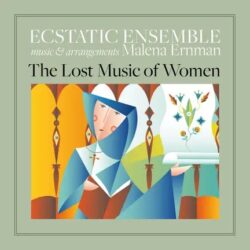
The Lost Music of Women, Malena Ernman and the Ecstatic Ensemble, Proprius Records.
Sappho was the name that stopped me. Even as a musicologist, I encounter her far more often on the page than in a musical programme. Hearing her represented on the album The Lost Music of Women brought her identity as a maker of songs into focus. Words usually encountered in print became part of a performance—and raised a question that runs through the recording: how much of women’s creative work is missing from the history we inherit?
That question reaches beyond classical music. The names we learn at school become our reference points for cultural achievement. Familiarity makes their prominence seem inevitable; omission can look like evidence that others contributed little. Yet a place in history requires more than talent. Work must be preserved, performed, and championed. Swedish singer Malena Ernman and Ecstatic Ensemble offer an inviting encounter with music many listeners may never otherwise hear. For younger audiences especially, such encounters can widen the sense of who gets to create—and whose ambitions belong in the story.
The Lost Music of Women brings together seventeen tracks spanning more than three millennia. Its broadly chronological sequence is one of its pleasures: beginning with a Hurrian hymn from ancient Ugarit, in present-day Syria, it moves through sharply different musical worlds towards our own time. Across that long history, women’s participation emerges—even where the evidence is fragmentary—as integral to the story, not an occasional exception. The album’s most persuasive achievement is the encounter it makes possible: listeners can hear these pieces as music, rather than know them only as omissions from music history.
Sappho’s “Wedding Song” was my highlight. Its words evoke celebrations that promise little sleep, an occasion still recognizable across the centuries. Her original melodies have not survived, so this is no recovery of an ancient score. Instead, the performance renews our encounter with her as a songwriter. There is something affecting about hearing her words among a gathering of voices: the fragments we study on the page once belonged to emotional events in people’s lives.
The religious works reveal how circumstances shaped both creation and survival. Kassia was a Byzantine abbess; Hildegard of Bingen led a religious community in medieval Germany. Convents could offer women opportunities for intellectual activity difficult to find elsewhere. Their inclusion supplies a historical dimension to a question that remains pertinent: what can artists make, and what will endure, within the institutions available to them?
Barbara Strozzi’s “Che si può fare?” takes us to seventeenth-century Venice. A singer as well as a composer, Strozzi published eight collections of music—a substantial career, though her name remains less familiar than those of many male contemporaries. Her example brings the album’s title into focus. Lost need not mean destroyed. Music can survive in print yet disappear from public awareness; recovering it means finding an audience again, not simply finding the notes.
I also welcomed the anonymous songs, including “The Werewolf” and “Frog Went A-Courting.” Much of our musical inheritance comes from people whose names were never recorded; their songs endure because someone remembered and passed them on. Anonymity does not establish female authorship, but nor does it justify assuming a male creator. These selections make room for musical lives beyond the named careers around which conventional histories tend to be organized.
Ernman’s arrangements for unaccompanied voices place her own interpretative decisions at the centre of the project. She also supplies new music for the Norwegian poet Jorunn Skaldemö’s “Sendibitr” and for “O Death Rock Me Asleep,” traditionally attributed to Anne Boleyn. Here, the project moves beyond preservation: earlier words acquire another musical life through a living musician’s response. The inclusions also reach beyond such familiar European figures as Clara Schumann. For example, one track features Black composer Florence Price’s “Because,” which is set to the poetry of Paul Laurence Dunbar.
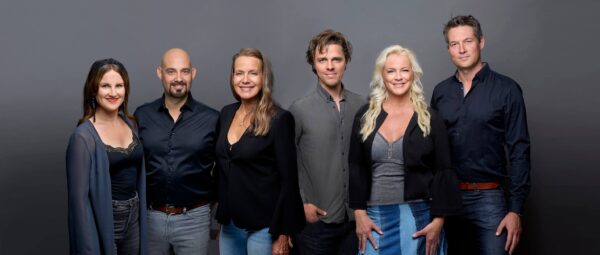
Ecstatic Ensemble. Photo: Peter Knutson
There are weaknesses to this presentation. The documentation calls for greater care. Nannerl Mozart, Wolfgang’s sister, is credited alongside Ernman with “Un’aura amorosa,” but the album does not adequately explain the attribution. The printed words are those of Ferrando’s aria from Wolfgang’s opera Così fan tutte. A project specifically concerned with historical recognition should make such distinctions clear. It should also distinguish unfamiliarity from neglect: encountering a piece for the first time does not mean that others have forgotten it, or ceased working to preserve it.
Albums like this can educate as well as delight. Behind each disc is a series of commitments: finding unfamiliar but usable material, making interpretative decisions, devoting time to rehearsal, and securing the resources to record and release it. More recordings that make serious commitments to overlooked music are essential. But these efforts must also provide the information necessary to gratify curiosity about women’s music. Attention alone cannot sustain an emerging repertoire: performers need opportunities to learn it, and listeners need ways not only to hear it but to deepen their understanding of it. Of course, historical context can enhance the encounter, but enjoyment does not depend on it.
For listeners already interested in women composers, The Lost Music of Women opens paths beyond the usual names; for those drawn to the past or simply to unfamiliar music, it offers an inviting way in. I found it calming to hear, yet searching in the questions it raised. Its chronological shape gives the program a clear direction without demanding prior musical knowledge; the powerful voices of the Ecstatic Ensemble offer a starting point for anyone who finds classical music difficult to approach.
Ethel Smyth’s suffrage anthem “March of the Women” reminds us that music can make public demands; Ernman’s closing “Remember Me” centers on a more personal appeal. Sappho drew me back for another listen; another listener might return to Strozzi or seek out more of Price’s songs. This is where a project like this might begin to change cultural memory — when a name we feel we ought to know suggests music that we shouldn’t miss.
Stacy Jarvis is a music historian, classical violinist and cultural journalist completing a PhD in Musicology at the University of Birmingham.
Tagged: Christiane Højlund, David Risberg, Didier Linder, Ecstatic Ensemble, Elin Skorup, Gustav Nordlander, Jeanette Köhn, Leif Aruhn-Solén, Malena Ernman (mezzo-soprano), Olof Akre, Sara Niklasson