
Book Review: “Starting Over with John and Yoko” – The Story Behind the Photographs
By Ed Symkus
Kenneth Womack’s lively account of Boston photographer Roger Farrington’s 1980 shoot offers a small but captivating footnote to Beatles history.
Starting Over with John and Yoko: The Photographs by Roger Farrington and Kenneth Womack. Rutgers University Press, 143 pages, $19.85 (paperback).
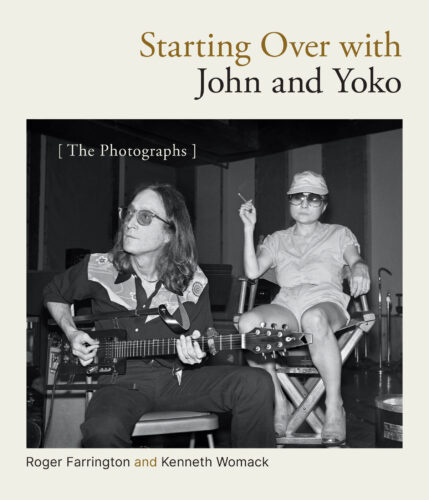 OK, Beatles buffs. Get ready to make a bit more room on your bookshelves for this newest entry in an endless stream of publications about Beatles lore. But, know this: It’s not about the Beatles. Even with the clever title Starting Over with John and Yoko, neither is it about John nor Yoko (though both are featured players in the tale told). It’s about a photographer who scored a plum assignment, and a hectic, long-ago day in the life of that photographer.
He is Boston-based Roger Farrington, who, in the mid-1970s, landed the job of company manager at the Charles Playhouse (former residency of Blue Man Group), then expanded his duties to run the box office, handle publicity photography, and become Playhouse owner Frank Sugrue’s assistant. The key term here is publicity photography.
The long-ago day was in early-August, 1980, not long after Farrington left the Charles to start up his own firm, Roger Farrington Photography.
The assignment … well, that’s where things begin to get complicated. But to the credit of the book’s author, Kenneth Womack, whose bibliography includes John Lennon 1980: The Last Days in the Life and Living the Beatles Legend: The Untold Story of Mal Evans, the multitude of people, events, and fast-moving circumstances are kept clear and concise.
Here’s the thumbnail: By 1980, John Lennon and Yoko Ono had pretty much been off the grid for about five years, tucked away in their apartment in the exclusive New York City cooperative the Dakota, where they had moved in 1973, living a life of what they thought of as normalcy. But both of them had new songs to share. And the idea of a return to the recording studio was beckoning.
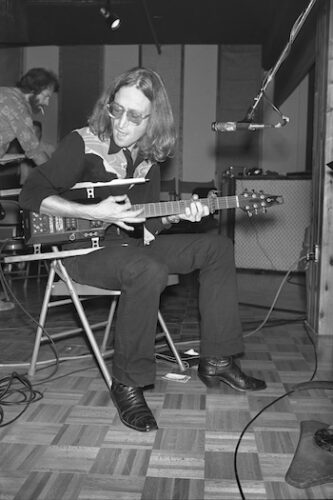
An image from Starting Over with John and Yoko: The Photographs. Photo: courtesy of Roger Farrington
That idea was likely Ono’s, if Womack’s text is to be believed. It suggests that she was the shot-caller of the duo, and that Lennon, who often referred to her as “Mother,” usually went along with whatever she said.
It’s made clear that, while she was difficult and manipulative and anxious (in contrast to Lennon’s warm openness), she also had strong, insightful designs on the workings of good publicity.
But first, a step back in time for another character in the story: well-established Boston publicist Charles J. Cohen had been hired by Frank Sugrue to be publicity director for the Charles Playhouse, which brought Cohen in constant contact with photographer Farrington.
Back to 1980. Lennon and Ono by then had many apartments in the Dakota, and the headquarters for their company Lenono Music, were on the first floor. Ono wanted a big press splash about what would eventually become the album Double Fantasy. But she also wanted it kept secret until the last moment. Rather than risk the chance of the pushy New York publicity and press establishments leaking the story too early, Ono opted to use a small Boston firm – Charles J. Cohen Public Relations.
And back to the assignment: Cohen, under Ono’s direction, was hired to create a PR release about Lennon and Ono getting back into the game. Of course, the release would be accompanied by a photo. Cohen called Farrington, saying he “might know of a little assignment for you.”
From there, after taking time to explain what Lennon and Ono had been up to during their downtime, a history of both the Charles Playhouse and the Dakota, and some of Farrington’s back story, the book remains focused on Farrington’s frantic lead-up to getting a “perfect” publicity shot, one that was casual and candid, of Lennon and Ono.
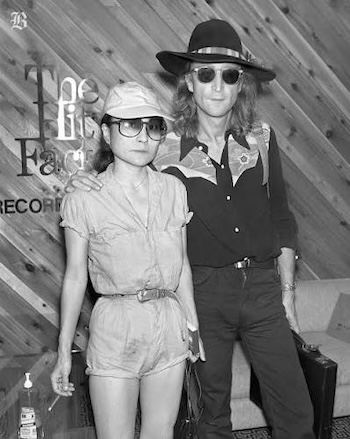
An image from Starting Over with John and Yoko: The Photographs. Photo: courtesy of Roger Farrington
Mostly told in the third person, the story weaves in some pop music history, throws a few jabs at Boston – with Womack unnecessarily referring to it as “an entertainment and foodie backwater with very little in the way of nightlife” in 1975 – and explores – through first-person quotes – how Farrington was constantly forced to think on his feet before, during, and after the photo shoot.
Womack also presents the painstaking details of Farrington’s frenzied procedure of developing the film back in his Boston darkroom (remember, this was well before the days of digital photography), paints Charles J. Cohen as unpleasant and unprofessional, and offers nicely written thoughts on Farrington’s pictorial results.
Ah, yes, the photos.
The compact book (143 pages and slightly smaller than a 45 record sleeve) is peppered with what Farrington got that day, both on the streets of New York and in Ono’s chosen studio The Hit Factory, as well as with a few related photos of album and magazine covers, newspaper pages, and contracts.
It’s certainly cool to be reading about how Farrington managed to get his shots, then being able to flip the page and see them. Alas, while most of the black-and-white photos are well composed and exposed, and a few solo shots of Lennon are terrific (my favorite, on page 74, is of him smiling, arms raised, with his Sardonyx 800 D II guitar strapped on), Ono – for whatever reason – is either frowning or glowering in almost all of the two-shots.
But, still, once again addressing the Beatles buffs among you, this is a small but captivating story that slipped under the radar. And it should probably be on your bookshelf.
Ed Symkus is a Boston native and Emerson College graduate. He plays guitar, went to Woodstock, wrote a behind-the-scenes story on Ringo Starr & His All-Starr Band, calls Rubber Soul one of his desert island albums, and was forced to sell his 11th row ticket to The Beatles’ Suffolk Downs concert when his father wouldn’t let him go.
Tagged: "Starting Over with John & Yoko", Charles J. Cohen, Charles Playhouse, John Lennon, Kenneth Womack, Roger Farrington, The Beatles