
Book Review: “Sounds Like Trouble to Me” — The Damage Prisons Do
By Bill Littlefield
Jean Trounstine’s debut blends hard-won insight with high drama in a prison story of guilt, resistance, and survival.
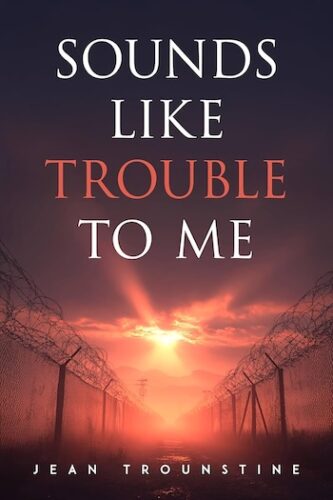
Sounds Like Trouble To Me by Jean Trounstine. Running Wild Press, 355 pages, $21.99.
 The strengths of Jean Trounstine’s first novel, much of which is set in a prison, are numerous. She has considerable experience as a teacher and program facilitator working with incarcerated women and those on probation. She is particularly familiar with the trauma suffered by women abused by men, as is the case for many who end up in jail. Trounstine also captures what the inside of a prison feels like and how incarceration can undermine confidence and worse. One character knowingly notes that solitary confinement is officially referred to as “Administrative Segregation,” as if “a less loathsome name might make the hole appear less loathsome … but everyone knew the hole was a hole.”
What’s more, her characters — especially the incarcerated women and the correctional officers who supervise them — avoid the clichés often paraded in TV or movie depictions of prisons. Trounstine’s protagonist, Nettie Murphy, has survived domestic abuse. Her struggle dramatizes a victim’s determination not only to achieve some justice but to grow beyond what she has suffered and, just as significantly, to grapple with the guilt she feels when striking back. Murphy is aided by an attorney who, like her client, is dealing with ghosts from the past.
Trounstine aspires to more than storytelling. A subplot involves exposing the criminal activities of several correctional officers, along with the actions of a grotesque psychiatrist who harasses and assaults his patients. Some readers may feel that Sounds Like Trouble to Me would have been stronger without such over-the-top villains. The psychiatrist, for instance, is physically repellent — he keeps a snake in his office, claiming it helps patients confront their anxieties. Unsurprisingly, the creature terrifies many of the women.
The villains may be heavy-handed, but Sounds Like Trouble To Me generates considerable suspense as prisoners attempt to discredit them. Trounstine has directed plays for incarcerated women at the Framingham, Massachusetts, prison, and it shows: the narrative does not lack drama. At Murphy’s instigation, a small group plots to expose corrupt officers — their drug dealing, blackmail, and brutality — and suffers considerable abuse in return.
The novel suggests that the prisoners may ultimately succeed, an outcome that feels unlikely. Trounstine’s background as a journalist covering prison and parole suggests that she knows full well how rarely such resistance prevails. Retribution by authorities for perceived rebellion is typically swift and often nasty. At one point, Nettie states, “punishment is all a prison knows how to do.” Trounstine underscores this point, describing prisons — even clean ones — as “cold and barren … just another way to isolate and remind the accused that they were considered dangerous, and by extension, guilty.”
Sounds Like Trouble To Me is a Running Wild Press publication which, according to a note at the end of the novel, “publishes stories that cross genres … by authors who identify with … marginalized groups.” The book would have benefited from more rigorous copy editing than this small press appears able to provide. There is occasional laziness in the prose: a character’s eyes are described as “blue steel,” and the prison fare as “the garbage that passed for food.” Still, these are minor flaws given the story’s considerable social value. The more journalism, poetry, and fiction that spotlight the damage caused by prisons and incarceration, the better.
Bill Littlefield volunteers with the Emerson Prison Initiative. His most recent novel is Mercy (Black Rose Writing)
Tagged: "Sounds Like Trouble to Me", Jean Trounstine, jail, prison