Visual Arts Show: Friendship and Inclusion — “To My Best Friend” at the ICA/Boston
By Lauren Kaufmann
This exhibit is a fair reflection of the museum’s desire to spotlight work by artists who have traditionally been neglected by the museum world.
To My Best Friend at The Institute of Contemporary Art/Boston, the Kim and Jim Pallotta Gallery, on view until December 31, 2026.
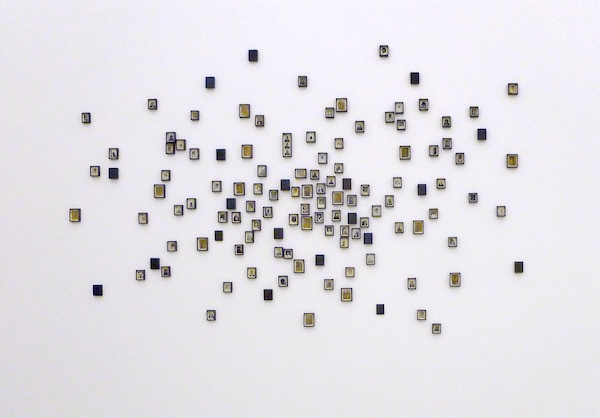
Lorna Simpson, To My Best Friend, 2013. Photo: courtesy of the ICA/Boston
Museums have always relied on the generosity of individual donors to build their collections. Although the ICA/Boston was founded in 1936, the museum did not begin to acquire art for its permanent collection until 2006 — the same year the museum moved into its new building in the Seaport District.
Fotene Demoulas and Tom Coté are longtime supporters of the ICA, where they have played a vital role in the museum’s growth. To My Best Friend showcases 20 works made by 17 contemporary artists. Each of the works in this exhibition has been donated to the ICA or is promised by Demoulas and Coté.
To My Best Friend focuses on work by underrepresented and women artists. With 60 percent of the ICA’s collection made up of work by women, and 40 percent created by artists who identify as BIPOC (Black, Indigenous, and People of Color), this exhibit is a fair reflection of the museum’s desire to spotlight work by artists who have traditionally been neglected by the museum world.
The title of the exhibit — To My Best Friend — is taken from the name of an installation by Lorna Simpson that appears on the large wall at the opening of the show. The wall is adorned with 85 small, framed, black-and-white photo booth portraits. The images conjure up happy memories of squeezing into a photo booth with a best friend while mugging for the camera. These mini photos, popular and affordable, were once attached to bulletin boards and refrigerators — cheery snapshots of a moment in time. The fact that Simpson found these images leads you to wonder how and why the photos were abandoned. Maybe their destiny was to become part of Simpson’s artwork, where they have found a meaningful second life.
Press materials for the exhibit state that the title of the show evokes the warmth and reciprocity at the heart of the relationships the ICA has built between artists, audiences, and collectors. Friendships among artists, collectors, and curators are indeed critical to the museum’s continued growth.
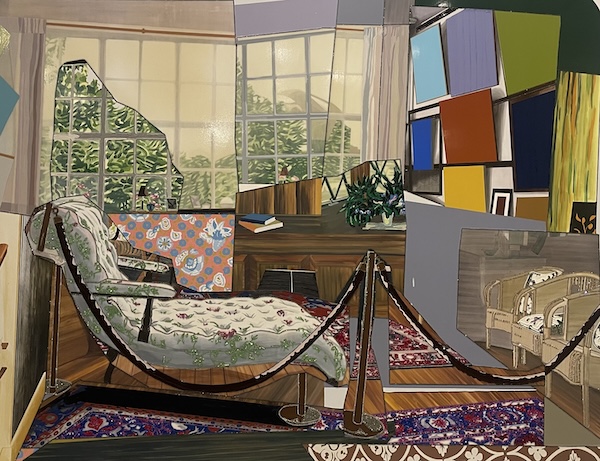
Mickalene Thomas, Monet’s Salon, 2012. Photo: courtesy of Lauren Kaufmann
Like many of the pieces in this exhibit, Simpson’s work takes on new and deeper meaning when you look more closely. On first glance, the installation is an arresting array of many small pieces, but when you zoom in, you notice revealing details, such as the fact that all the people in the photos are Black. Simpson’s piece validates their lives, stories, and friendships — a subtle, but effective, nod to the underlying message of the Black Lives Matter movement: these people’s lives have meaning.
Lorna Simpson is the 2026 recipient of the ICA’s Meraki Artist Award, recognizing the achievements of women visual artists. This $100,000 award is funded by Fotene Demoulas. Simpson is an artistic innovator whose art addresses issues of race and gender in American culture. Throughout the 1980s and ’90s, she used conceptual photography to express her personal and political concerns. Her work was first exhibited at the ICA in 1988. In recent years, Simpson has expanded her practice to include collage, painting, drawing, and sculpture. Given that the ICA announced the awarding of the Meraki honor this past December, I was hoping to see more examples of Simpson’s work. Perhaps when she receives the award in April the museum will bring greater attention to Simpson’s creative accomplishments.
In Monet’s Salon, Mickalene Thomas responds to her time as an artist-in-resident at Monet’s home in Giverny. The label for Thomas’s painting includes two photos of Monet’s salon—an old black-and-white photo of the artist in his studio and a more recent color photo of the room. The picture riffs on Monet’s studio/lounge, replete with color-block paintings hung salon-style, a rhinestone-studded chaise longue, and semi-opaque windows that overlook his famous garden. Thomas has taken the elements of Monet’s room and, through fragmentation and reconfiguration, turned them into a contemporary collage. A stanchion in the foreground asserts that Giverny, Monet’s country home, is now a public viewing space, or house museum.
Thomas is one of several artists who employ collage techniques in their work, layering images and words, often combining paint, newsprint, and image transfers. In “The Beautiful Ones” Series #7, 2018 by Njideka Akunyili Crosby, a young Black girl stands in the middle, arms crossed, gazing directly at the viewer. She’s wearing a yellow top and is surrounded by yellow cars. As you examine the work more closely, you notice a myriad of photographic images embedded in the headlights, windows, and doors of the cars. The artist has woven photos from her personal collection into the work as a way to express her feelings about the complexities of modern life.
The late Jaune Quick-to-See Smith was considered the mother of contemporary Indigenous art. I See Red: Indian Heart, 1993, is Smith’s reflection on the 500th anniversary of Christopher Columbus’s arrival in the Americas. A large heart dominates the work, while newspaper clippings relating to Native people’s rights are interspersed throughout the canvas. Splotches and drippings of paint permeate the painting, evoking a feeling of raw emotion. To fully grasp Smith’s intent, you have to get up close and read the headlines and news clippings.
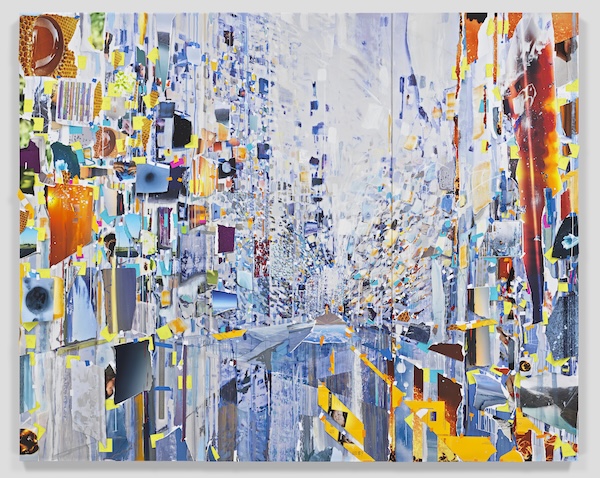
Sarah Sze, Surround Sound (After Studio), 2019. Photo: courtesy of the ICA/Boston
Sarah Sze’s work Surround Sound (After Studio), 2019, is a dazzling mixed-media piece that looks, from a distance, like shattered glass in an urban setting. On closer examination, you see paint, paper scraps, Post-it Notes, torn packages of photographic paper, and handwritten notes. In 2025, Sze was the first recipient of the ICA’s Meraki Artist Award. Her work appears to be made up of three pieces put together, although they appear seamless until you notice that the separate sections are not flush. It’s a remarkably vibrant piece with a strong sense of movement and light.
Becky Suss’s 8 Greenwood Place (1985-2021) is an homage to her childhood bedroom. A large quilt hangs on the wall behind a table on which is placed a dollhouse. Step in more closely and you’ll notice scenes from famous children’s books in the dollhouse windows. Through her depiction of her childhood bedroom, Suss celebrates the underappreciated aspects of domestic work that have traditionally been handled by women.
In 2017’s The Much-Vaunted Air, artist Lynette Yiadom-Boakye depicts a Black dancer standing offstage. While we’re familiar with paintings and sculptures of dancers, they are very often white. This image forces us to question our assumptions and consider why more artists haven’t centered Black dancers in their work.
In another mixed-media and collage piece, 2021’s Becoming, Deborah Roberts chooses a Black girl as her subject matter. The label notes that the artist has called this work a self-portrait. By focusing on Black children, she explores some of the stereotypes that have been projected on them, as well as some of her own feelings about herself and her childhood. While the girl’s straight-ahead gaze indicates self-confidence, her right arm is held across her body, suggesting a tentative quality in her sense of self.
The exhibition is an impressive display of some of the work being made and collected today. Each of the pieces invites you to look more closely and think more deeply as you consider the layers of meaning. Technique and subject matter draw you in as you consider how each work was made and how the artists employ materials in novel ways in service of posing critical questions and expressing personal messages about our increasingly complicated world.
Lauren Kaufmann has worked in the museum field for the past 14 years and has curated a number of exhibitions.
Tagged: "To My Best Friend", Becky Suss, Fotene Demoulas, ICA Boston, Jaune Quick-to-See Smith, Lorna Simpson, Lynette Yiadom-Boakye, Mickalene Thomas, Njideka Akunyili Crosby, Sarah Sze