Translation Spotlight: Haunted and Haunting
By Tess Lewis
Appreciations of three remarkable translated works that have preoccupied me for months.
The Place of Shells by Mai Ishizawa. Translated from Japanese by Polly Barton. 160pp. New Directions
Darkenbloom by Eva Menasse. Translated from German by Charlotte Collins. 480pp. Scribe
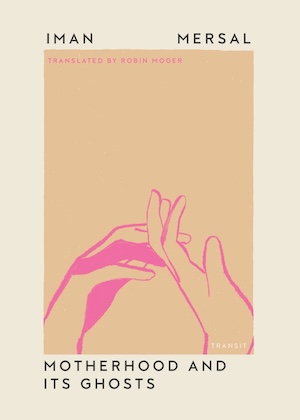
Motherhood and its Ghosts by Iman Mersal. Translated from Arabic by Robin Moger. 158pp. Transit Books
2025—may it rest in peace—was a bumpy year on many fronts. External and internal circumstances hobbled my promised bimonthly translation spotlight to a biannual limp. Before recapturing my pace in 2026, I want to shine a light on three remarkable translated works that have haunted me for months. In different and unusual ways, they plumb the shadows that history casts on the present and tease out the tangle of its after-effects, both tangible and intangible.
 Memory and grief engage in a complicated pas de deux in Mai Ishizawa’s captivating debut novel, The Place of Shells. In the summer of 2020, mid-pandemic, a Japanese doctoral student is in Göttingen, writing a thesis on medieval German paintings of saints. A seam in time is torn open by the visit of Nomiya, an old friend and fellow graduate student, who had been swept out to sea in the 2011 Tōhoku earthquake and tsunami. There is nothing particularly spectral about Nomiya, but time and reality seem to warp around him. Talisman-like objects begin to appear in the forest as if searching for their former owners, and the pain stored in the narrator’s body takes the physical form of a row of molars protruding from the skin on her back.
In this intricate web of symbols and motifs, Ishizawa shows how metaphorical and magical thinking help us cope with the inevitable losses triggered by forgetting. What the narrator had most feared, she realizes, “was the distortions of memory caused by emotions and the passage of time. That was where forgetting began.” And yet, “[a]ll along, it hadn’t been about the pain of the memories, but the guilt I felt for my distance from them.” Polly Barton’s translation skillfully renders the novella’s eerie atmosphere and the narrator’s articulate but halting attempts to understand recurring cycles of devastation in human history, suffering, and the nature of grief.
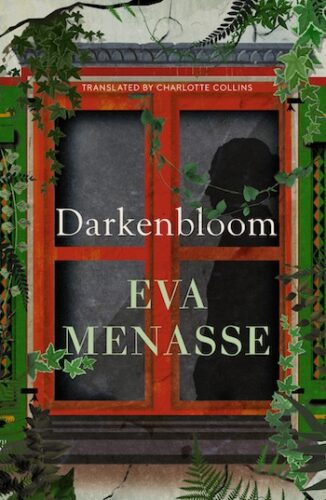 Memory and grief are firmly stifled — in fact, they’re all but suffocated at first — in Eva Menasse’s feline, monumental novel Darkenbloom (reviewed for the Arts Fuse by Kai Maristed). In the summer of 1989, the eponymous Austrian town on the border with Hungary is woken from its decades-long doze by, in short order, the unearthing of a corpse from the Second World War, crowds of East Germans gathering at the border for the Pan-European picnic that heralded the rending of the Iron Curtain, sketchy political machinations around the area’s water supply, and the arrival of a stranger who seems extraordinarily well-informed about the town’s residents.
Feline and monumental are adjectives not often used together, but Darkenbloom is certainly both. At least a dozen narrative threads drawing on a large cast of characters are adroitly interwoven and recounted in the unnamed narrator’s wry, matter-of-factly cunning voice, which has every quality Merriam-Webster’s ascribes to the word feline: sleekly graceful, sly, treacherous, stealthy. It is to Charlotte Collins’ credit that her translation is just as cat-like. We are told, for instance, that during the war, Darkenbloomers had simply been too busy to pay attention to the horrors that occurred in and around their town. After the war, “they just carried on, as everyone did—the majority, anyway. As everyone did who wasn’t excluded from carrying on: because they were dead, for example.”
Although Menasse constructed her novel around aspects of the Rechnitz massacre, in which nearly two hundred Jewish-Hungarian forced laborers were murdered in March 1945, she is interested in a much broader—and grayer—moral palette. Darkenbloom explores questions of personal and collective memory, willed amnesia, silence, guilt, responsibility, atonement, and the costs they extract. By the novel’s close, some crimes have been exposed, some mysteries explained (a few erroneously), some memories aired, others definitively silenced, but, as the feathered devils on the church’s altarpiece whisper, “This is not the end of the story.”
The persistence of memory despite its elusiveness, incompleteness, and unreliability forms the core of the Egyptian poet Iman Mersal’s narrative essay Motherhood and its Ghosts. Mersal was seven-years-old when her twenty-seven-year-old mother died giving birth to a stillborn boy. The only portrait the author has of her mother is a photograph of the two of them taken less than two months before her death. It preserves only a fleeting aspect of Mersal’s mother, omitting what was most essential—her interests and emotions, her smile, her domestic fortress:
It is before me now and I can see for myself that I was with her, but she is a ghost. The picture is a burden: an assault on, and fabrication of, what I remember. It doesn’t make my mother present; it sharpens my desire to resist, to transcend her ghostliness, to rescue what the picture hides.
This photograph serves as more than an impetus for Mersal to “find [her] mother in her portrait.” When she has children of her own in Canada, outside her “motherland” and with little memory of her relationship with her own mother, the photograph becomes a whetstone on which she can hone concepts of motherhood that lie outside the dominant narrative of the ideal mother as instinctual and unconditionally loving and self-sacrificing.
One of the most poignant sections includes journal entries about her younger son Youssef’s struggles with mental health. A three-page list of diagnoses, which include bipolar depression and several anxiety and obsessive-compulsive disorders, led to his admittance to a residential facility. Her despair is palpable. “Death is more merciful than mental illness,” she writes in one entry. “You cannot possess the memory of someone who has been losing their link to the world before your eyes, day after day.”
Absence and loss, only partially mitigated by ghostly presences, flow like tides through this unusual blend of memoir, diary, photographic analysis, and literary criticism. Nonetheless, Motherhood and its Ghosts is clarifying and inspiring. Translated by Robin Moger with great sensitivity to its subtle shifts in emotional tone, Mersal’s examination of the darker currents within motherhood is also a call to tune out the white noise of archetypes and generalizations. Instead, the book invites us to listen closely to individual experiences, however discomforting or unpalatable. That kind of attention grows, counterintuitively, into a communal perspective. In this way, Mersal challenges and encourages her readers: “you will have to narrate your own experience or learn to take refuge in a narrative that will help you see that you are not alone.” (Arts Fuse review of Mersal’s poetry volume Threshold, translated from the Arabic by Robyn Creswell.)
Memory is fickle, even treacherous, nevertheless, we must rely on it. And sometimes, the effort to remember is as essential as what we remember. “That’s how memory works,” the narrator in Darkenbloom points out, “everything seems to be gone, echoing emptiness, a deep, dark expanse, but if you feel your way around, you find gossamer thin-threads that do have something attached to them if you give them a tug.”
Tess Lewis is a writer and translator from French and German. Her translations include works by Walter Benjamin, Ingeborg Bachmann, and Montaigne. A Guggenheim and Berlin Prize Fellow, she won the 2017 PEN Award for Translation. She is an Advisory Editor for The Hudson Review and co-curator of the Festival Neue Literature, New York City’s only German language literature festival. www.tesslewis.org
Tagged: "Darkenbloom", "Motherhood and its Ghosts", "The Place of Shells", Charlotte Collins., Eva Menasse, Iman Mersal, Mai Ishizawa, Polly Barton