
Book Reviews: “In a Distant Valley” and “A Chance Meeting” — Distinctively American Characters
By Roberta Silman
Two uniquely American books that will give you unexpected pleasures just when you need them most.
In a Distant Valley by Shannon Bowring. Europa Editions, 348 pages, $18
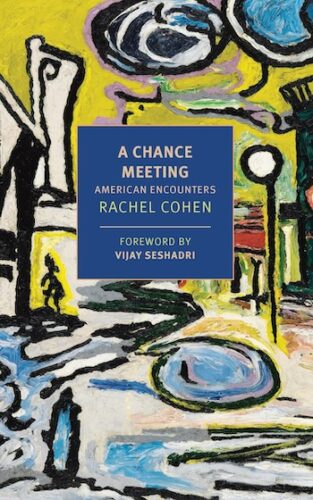
A Chance Meeting, American Encounters by Rachel Cohen. New York Review Books, 393 pages, $19.95
Just when you think nothing good can possibly happen, something does. So now, at the most depressing time of the year, when we are enduring the most disheartening political situation this country has endured in many decades, PBS is airing a true gift: Ken Burns’ six part, 12 hour The American Revolution. It is wonderful, as the recent review in this magazine attests. And most important, it has made me think about what it means to be an American. Henry James said, “It is a complex fate to be an American,” and thanks to a new generation of historians, we are getting a truer picture of our complicated past.
What “American” truly means, in all its variety, can find its way into all aspects of our culture. So here are two uniquely American books, filled with characters you will recognize either from your own life or from history, and, most important, will give you unexpected pleasures just when you need them most.
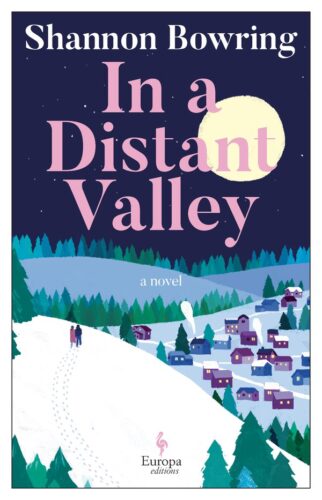
In a Distant Valley is the third book in Shannon Bowring’s trilogy about a fictional town, Dalton, in northern Maine. I reviewed the two earlier books because I found Bowring to be a compassionate writer who understands the meaning of place, who can invent a wide range of characters and knows all too well how a tragedy — a suicide that occurs at the end of the first book — can reverberate in ways that sometimes seem infinite. In this third book she does tie up some loose ends, and if read too quickly this could simply be the end of a trilogy with people healing from a horrific trauma and making their way to a relatively happy ending. Yet there is more.
This time around Bowring takes more risks. First, she is exploring the age-old and seemingly insoluble problem of what it means to be born in poverty, using as her best example Rose’s ex, Tommy Merchant, who has come back to Dalton just when Rose and her two sons are beginning to envision a better future. And second, the novelist explores, with sometimes comic effect, how the fat kid who loved gardening, Greg Fortin, has matured into a thin, thoughtful, and intellectually curious adult who has no intention of going into the family business. Third, Bowring brings back Angela, the young woman whose life was saved from drowning by Greg when they were kids; she is now a more confident woman who discovers she has agency and strength and the ability to take the lead in the face of danger.
Quite early into the novel, Bowring has Nate Theroux, who has returned to his job as a policeman after his wife Bridget’s suicide, lay it all out:
The hardest part about returning to the job, though, has been reminding himself how to deal with people who are depressed, angry, broken. People stuck in a cycle of poverty, which goes hand in hand with drugs and alcohol and violence. Seems like one generation makes a series of bad choices, and the next, having no other example, repeats the same choices. Over and over and over again, until all the bad, ugly things take root in the blood. Nate hasn’t lost the urge to help people, but he has started to doubt he can do anything meaningful for the folks who need it most. Who is he to heal a century or more of hurt?
By the end of the novel, Nate will have learned that he can help, and he does; moreover, Tommy has surprised himself and broken out of the cycle of despair he thought he was condemned to live in forever. These are themes that fascinated the great Theodore Dreiser and, in our own time, Barbara Kingsolver, most spectacularly in her novel, Demon Copperhead. But it is good to see that a writer who is just starting out, like Bowring, has the courage to address them head-on and remind us that these characters — so beleaguered by the constraints of poverty — deserve not only a voice, but our empathy. Especially now.
The subtitle of A Chance Meeting is “American Encounters” and the book is composed of 36 meetings of famous Americans starting in the mid-19th century and ending in the late 20th century: from Henry James and Matthew Brady to Norman Mailer and Robert Lowell. Published twenty years ago and now re-issued by New York Review Books, these double (and sometimes triple) portraits are often based on real meetings, but their details have been imagined by Cohen. So what we have is a rare specimen of biography enhanced by fiction to create small snippets of these very interesting lives. They range from Willa Cather (whose essay about meeting Flaubert’s niece gave Cohen her title) and Mark Twain to Carl Van Vechten and Gertrude Stein to Charlie Chaplin and W.E.B. DuBois to Zora Neale Hurston and Langston Hughes to Joseph Cornell and Marianne Moore to Robert Lowell and Elizabeth Bishop to John Cage and Richard Avedon. Enhanced by photographs, this lovely book is not only a chronological history of numerous “influencers” in American culture, but also a history of photography in America, starting with Brady and Steiglitz, moving onto Van Vechten and Steichen, and ending with Avedon.
 Who knew that Hart Crane and Katharine Anne Porter had a thing? Or that Joseph Cornell and Marianne Moore might have been more than friends, if he weren’t so timid and she under the iron fist of the mother she lived with until the end of her life? Or that Marcel Duchamp loomed so large in the imaginations of both Cornell and John Cage? Or that Du Bois loved the movies, those starring Charlie Chaplin, the best of all? Or that Chaplin could be so obnoxious? Or that Sarah Orne Jewett (about whom I am not as enthusiastic as Cohen) was such an important mentor to one of my great heroes, Willa Cather? I recently reviewed the new wonderful biography of James Baldwin, and learned that he had strong ties to both the great artist Beauford Delaney and Avedon (his high school friend). Cohen was way ahead of me when she was working on this book in the late 1990s and early 2000s. There are so many delicious tidbits here that will catch your fancy and either make you want to know more or, conversely, say “I have had enough” — the way I felt about Katharine Anne Porter.
Some — like Zora Neale Hurston — are more radiant than others, so, to give you an idea of Cohen’s method, which is so original and quirky, as well as her wonderful eye for the right detail and her exceptionally good prose, here is how she begins the portrait of Langston Hughes and Zora:
Langston Hughes always said that Zora Neale Hurston was the only person he knew who could stand on the corner of 135th Street and Lenox Avenue with a huge pair of calipers in her hand and persuade strangers passing by to stop so she could measure their heads. She was studying at Columbia at the time, with the anthropologists Franz Boas and Melville Herskovits, who were gathering evidence to assert that, contrary to current anthropological belief, the shapes of people’s heads and the racial characteristics of those shapes were not correlated with their owners’ intelligence. Though some of the people on 135th street said they were too busy for experiments—it was 1926, and there was a lot going on—Zora Neale Hurston was a force, and she made you laugh, sometimes right away, and there was something about the way she asked.
And then, how Zora, the indomitable Zora, ended up years later in Cohen’s portrait of her with Carl Van Vechten:
Van Vechten must have known from the early days of their friendship that Zora Neale Hurston would be lucky if she lived to an old age; he didn’t save her, but neither did he blame her for not saving herself. For much of her life Hurston was the only Black woman in the country making her living from writing, and she was always embattled. Late in her life, broke, “blue,” she wrote, “as the inside of a stovepipe,” and proudly refusing to lean on her friends, she took a job cleaning houses to pay her bills. A story about her from a local Florida paper was picked up and run nationally, and her friends finally found out what was happening to her. Van Vechten and his wife, Fania Marinoff, were among the first to send money.
The genesis of this remarkable book started right after Cohen graduated from college. As she explains in her Introduction to the First Edition:
Many of these people began keeping me company ten years ago, during a solitary year I spent driving around the United States. I had in my trunk two crates of books, by Henry James, Mark Twain, and Ulysses Grant, Willa Cather, Katharine Anne Porter, James Baldwin, Marianne Moore, and Elizabeth Bishop. I was reading books, as I had not before, to know their authors. I watched these writers responding to love, solitude, religion, the natural world, reading, and their families, but I cared most to know how they felt about friendship.
The key phrase here is “to know their authors.” She took her time and spent ten years writing A Chance Meeting and produced a book that should be cherished down through the ages. It is also a terrific gift to give to any young person interested in history or literature. She understood exactly what Sarah Orne Jewett meant when she sent a letter to Willa Cather at a time when Cather was not quite on track — one of the best pieces of advice given to any young person who “wants to write.”
In short, you must write to the human heart, the great consciousness that all humanity goes to make up. Otherwise what might be strength in a writer is only crudeness, and what might be insight is only observation; sentiment falls to sentimentality—you can write about life, but never write life itself . . . To work in silence and with all one’s heart, that is the writer’s lot; he is the only artist who must be solitary, and yet needs the widest outlook upon the world.
And, as a delicious bonus, Cohen made a map of all the friendships she had found and placed it at the very beginning of the book. It is a charming drawing, a taste of the splendid pleasures to come. And one that plots the trajectory of this book in a way that will stay with you long after you have turned the last page.
Roberta Silman is the author of five novels, two short story collections, and two children’s books. Her second collection of stories, called Heart-work, was just published. Her most recent novels, Secrets and Shadows and Summer Lightning, are available on Amazon in paperback and ebook and as audio books from Alison Larkin Presents. Secrets and Shadows (Arts Fuse review) is in its second printing and was chosen as one of the best Indie Books of 2018 by Kirkus. A recipient of fellowships from the Guggenheim Foundation and the National Endowment for the Arts, she has reviewed for The New York Times and Boston Globe, and writes regularly for The Arts Fuse. More about her can be found at robertasilman.com, and she can also be reached at [email protected].