
May Short Fuses — Materia Critica
Each month, our arts critics — music, book, theater, dance, television, film, and visual arts — fire off a few brief reviews.
Books
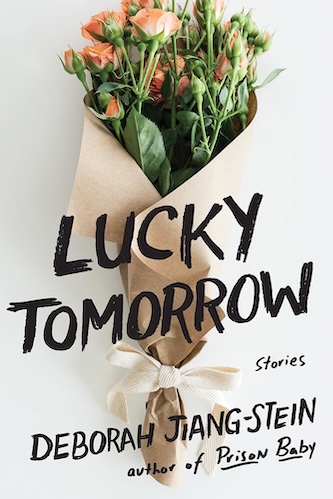 Many of the stories in Deborah Jiang-Stein’s collection Lucky Tomorrow (University of Minnesota Press, 144 pages) feel deliberately fragmentary, intent on dramatizing poignant impressions of the inner lives of marginalized, bedeviled figures. One story focuses on Edwin, who was a boxer before he was called on to become a preacher: “His voices and visions endured for years as old boxing injuries delivered him into frailty and then dementia.” As the author writes about one of Edwin’s sermons, after he has lost his congregation, the despairing man’s words were “more drama than message.”
What these stories have in common is the experience of loss. It’s a circumstance with which the author is familiar, having been born to a woman who was incarcerated for drug trafficking and then separated from her. One of the characters who appears in many of the stories in the volume spends much of her time either searching for her daughter or fantasizing about what it will be like to find her. In one story, that character writes letters to her daughter from prison — but she has no idea where to send them. She saves the letters and, desperate for replies, she writes those, too. In another tale, the daughter is given several shoeboxes full of napkins on which her mother, whom she’s never met, has drawn pictures. But they are lost in a fire. “The breeze set the ashes free,” Jiang-Stein writes, “a gentle scattering of my story into the world a little at a time.”
In an afterword, the author states that it was her aim to communicate the pain of “the unseen,” whom she identifies as “individuals experiencing mental health crises” and “people unhoused,” among many others. In the best of these stories, she makes the invisible in society visible.
— Bill Littlefield
Who knew that Giorgio Vasari, the 16th century Italian painter, architect, and pundit best known for his classic text The Lives of the Artists, was also an action hero rivaling Ethan Hunt in Mission Impossible.
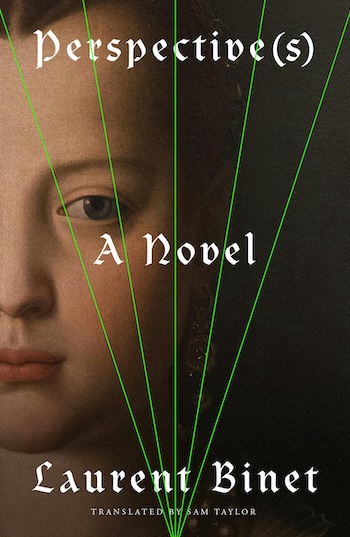
That’s how Laurent Binet portrays him in his epistolary romp, Perspective(s) (Translated from the French by Sam Taylor. MacMillan. 272 pages). He’s a cross between Dan Brown and Umberto Eco caught up in a plot involving political chicanery, religious intolerance, cloak and dagger hijinks, reflections on the nature of art, and a murder mystery. Among his many other roles, Vasari is a fixer for Florence’s enlightened despot Duke Cosimo de’ Medici, who calls on him to find out who drove a chisel into the heart of Jacopo da Pontormo (he in fact died of natural causes) at the foot of his unfinished, potentially blasphemous fresco of the Last Judgement. Adding to the intrigue is the discovery of Pontormo’s scandalous painting Cupid and Venus, in which the painter replaced the wanton, nude goddess’s face with that of the Duke’s teenage daughter.
It’s a lot for Vasari – and Binet – to deal with, and both handle it with aplomb, if diminishing credibility. The suspects – and the letter writers – compose a who’s who of the Italian Renaissance, ranging from a pre-Marxist color-grinder to the stigmatic Saint Catherine de’ Ricci, and including every painter of note from Sister Plautilla Nelli to the great Michelangelo himself.
Vasari acquits himself well in a search that involves meditations on aesthetics and feats of derring-do culminating in a chase across rooftops with the flooding Arno filling the streets below. His quest, and Binet’s as well, are epitomized in a scene in which Vasari falls back on the title principles to draw a bead on an assassin’s forehead with a crossbow. “It was the laws of perspective taking shape before me,” he writes. “I touched the surface of things, because it was no longer the real world that I could see in all its depth. Or rather, it was the real world…”
Binet has been reinventing the historical novel since his 2012 debut HHhH, a meta-account of the assassination of the über-Nazi Heinrich Heydrich. That book helped spawn two films – perhaps this one might inspire a franchise featuring super-agent Vasari as played by Tom Cruise.
— Peter Keough
 Henry James’s The American Scene, the fruit of the writer’s ten-month journey across America, traveling from his old haunts in Boston and Cambridge down to Florida and across to California, is an odd book. The Master’s anthropological/sociological reactions to what he saw in 1904, guided by what he characterized as the “randomness of impressions,” have been dismissed by many as indulgent and eccentric, at times racist and antisemitic. About this book, critic Sharon Cameron noted that James, “as if recoiling from what he sees, almost, it seems, stops seeing at all.” Published in 1907, The American Scene is steeped in James’s difficult ‘late style’, so this syntactically knotty travelogue would best be approached (and interpreted) with the help of an expert, convivial escort.
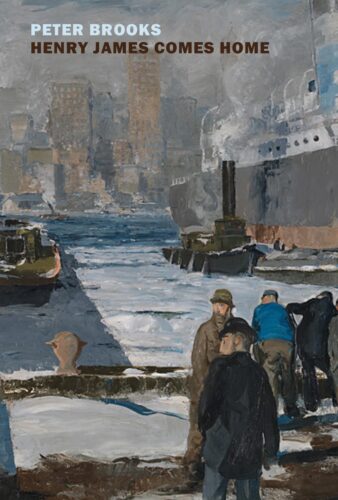
Veteran scholar Peter Brooks serves that role extremely well in Henry James Comes Home (New York Review Books, 248 pages), an engagingly articulate combination of criticism, biography, and celebration that suggests why the reputation of The American Scene has turned around over the past couple of decades. His compelling argument is that James’s alienation from the mercantile temperament of the Gilded Age, his sensitivity to the despoilment of nature, analytical speculations about buildings, people, and social arrangements, pointed dissent from historical bromides, and interest in the country’s future make this volume, even today, “an important report on American democracy, its effects on manners, on speech, on the land itself.”
That said, Brooks’s sympathy for James goes too far at times, such as when he defends the writer’s puzzling admiration for country clubs because they cultivated healthy families. Around 20 years later, Sinclair Lewis’s Babbitt put his finger on what those exclusionary “diversions and spiritual outpourings” were all about: “They were not asked to join the Tonawanda Country Club nor invited to the dances at the Union. Himself, Babbitt fretted, he didn’t ‘care a fat hoot for all these highrollers, but the wife would kind of like to be Among Those Present.'” Given James’s snobbery, he and Mrs. Babbitt might have seen eye to eye on that issue.
— Bill Marx
Jazz
On Freedom, the second album (Clap Your Hands) from The Fabian Willmann Trio, the idea is to incorporate as much melody as possible into the trio’s open interactions, using simple structures to liberate the players from complex harmonies and confining rhythms.
Willmann has a dry, breathy sound on tenor, and he’s built the trio’s concept around it. The record is soaked in reverb (to a distracting extent), so the feel is spacious and airy. If you like to hear your jazz trios in cathedrals instead of basement clubs, this one’s for you.
“Dawn” is a haunting melody with wordless vocals from guest Sissel Vera Pettersen, with guest Lionel Loueke on heavily processed electric guitar that conflicts with the excessive reverb. Another familiar name is Jeff Ballard, drummer for the Brad Mehldau Trio. He’s a fine choice, as he’s eloquent at implying rhythms while coloring the sound from all over the kit.
“Birds” has a melody that sounds an awful lot like Frank Loesser’s “I’ve Never Been in Love Before” (from which another quote appears in Willmann’s solo on “Day”). Arne Huber walks the bass, slightly out of sync with the sax melody. He chooses to float over the swing rather than lock into it, and somehow it works. Similarly, “Jb Song” has something close to a chugging rhythm, like a dream about a train going through tunnels in the clouds.
There are other albums that explore more adventurously, and other albums out there that swing tighter. But if one of you wants to hear some Enya and the other wants Stan Getz, here’s your compromise.
— Allen Michie
I’ve always favored reading (and occasionally writing) short poems. I suppose it’s symptomatic of a get-to-the-point attitude that may signify limitations when the subject is poetry. But that’s me.
A new double CD set, created by Ingrid Laubrock, emphasizes the mid-career musician’s compositional skills by setting short poems by Erica Hunt within various vocal/instrumental duos. Alas, nary a bleat or a whinny is to be heard from Laubrock’s expressive saxophone on Purposing The Air (for some of her blowing, check out her recent work with Nels Cline’s Consentrik Quartet).
The poetry selections are all part of Hunt’s Mood Librarian – a poem in koan, which Laubrock describes as “a collection of sixty micro poetic fragments.” They are the kind of little word enigmas that you think might be easy to write, but are really quite hard to successfully pull off.
Vocalists Fay Victor, Sara Serpa, Theo Bleckmann, and Rachel Calloway are paired, respectively, with cellist Mariel Roberts, pianist Matt Mitchell, guitarist Ben Monder, and violinist Ari Streisfeld. The approach is generally what used to be called “art song”; the musical moods range from ethereal and spooky to playful and ponderous. Euro-jazz touches add ear-catching flavor while the austerities of Hunt’s riddles suggest depths.
The Bleckmann/Monder pieces find the seasoned duo contributing alt-folksy tones in “give yourself an out/where fates summon you” and the electric wash on the chant-like “all this light does/put time in the shade” and “no record is complete/still interested in the subject.” A breathy whistling and a heavy metal flurry frame “the box is turned over/so the body can tapdance.”
Serpa’s angelic soprano soars while Mitchell plays his piano inside (literally) and out on such pieces as “thinking of/one self/oneself” and “but to fly into the sun/and come back a paradox.”
Veterans Victor and Roberts stretch out their techniques on “a new painting of the duke/calmly boarding Noah’s ark/even before the animals have/a heads up.” The singer’s non-verbal effusions provide plenty of gritty dazzle.
Elsewhere, Calloway and Streisfeld, who make up a working twosome called Duo Cortona, supply the most Northern European drenched segments. A particularly beautiful snippet: “after “ecstasy”/laundry” and “life a/dash between dates.” A side trip to Japan is suggested in “wake the stone.” A line in the penultimate Hunt lyric suggests Laubrock’s inspiration for the recording’s title: “birds purpose the air/as you purpose/pen and paper.” At times puzzling, but ultimately pleasing, the compositions on this fascinating release occasionally take flight.
— Steve Feeney
Classical Music
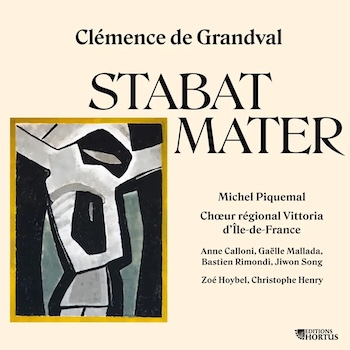
I previously drew attention here to an amazing 8-CD anthology of music by female composers from France in the “long nineteenth century.” Over the recent years, music lovers have come to know works by several of them, including Louise Bertin, Louise Farrenc, Pauline Viardot, Augusta Holmès, Marie Jaëll, Cécile Chaminade, and Lili Boulanger. But Clémence de Grandval remains somewhat obscure, though many of her works were published and performed at the concerts of the important Société nationale de musique.
One of her most frequently performed works during her lifetime (including at least once in Vienna) was a setting of the Stabat Mater hymn, for four solo voices, chorus, piano, and harmonium. (A harmonium is a small, relatively portable organ.)
The 13th-century Stabat Mater text lends itself well to musical setting, since the recurring rhythm and rhyme convey well a powerful scene: the Virgin Mary beholding her only-begotten son on the cross. To the well-known versions by such composers as Pergolesi and Rossini we can now add Grandval’s, which effectively conveys the sorrow and grandeur of the event through canny alternation of passages for four vocal soloists evoking, together and separately, Mary’s desolation and near-despair. The harmonic language is always direct and clear. (Grandval had studied composition privately with that master of lucidity Camille Saint-Saëns.)
The performance is gripping, a highlight being the tenor in the exquisite “Eia! Mater,” a movement that perhaps inspired the “Pie Jesu” in the Fauré Requiem. The Choeur Vittoria d’Île-de-France sings splendidly under Michel Piquemal, and the pianist, Zoé Hoybel, brings virtuosic intensity to her demanding part. The harmoniumist, Christophe Henry, provides enriching melodic lines that, in an orchestral version, would have been given to various solo winds. (An orchestrated version is, alas, now lost.) How exciting to discover a major new work, and a composer too long ignored!
— Ralph P. Locke
Rock
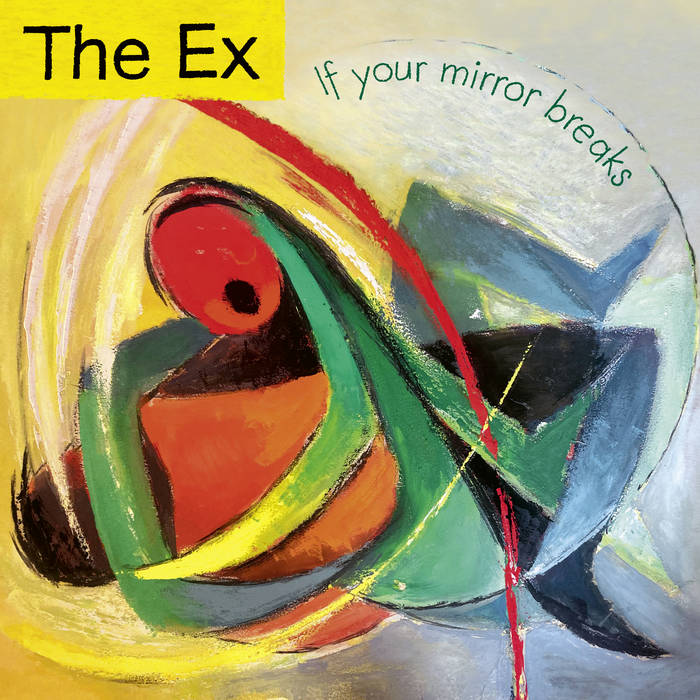 The Ex are now celebrating the 45th anniversary of their debut on record. While guitarist Terrie Hessels is the only remnant of their original lineup, the band has never even come close to declining into a legacy act. They started out as a mixture of Crass and the Gang of Four, performing anarchist-tinged punk but, down the road, they opened up to collaborations, and that produced most of their best music. Those partners have included cellist Tom Cora, Tortoise, Sonic Youth, and Ethiopian saxophonist Getatchew Mekurya.
If Your Mirror Breaks finds The Ex taking on the world by themselves (albeit making use of the words of James Baldwin and Walt Whitman). “Beat Beat Drums” finds the band using guitar and drums to create a sheet of propulsive noise. The Ex take the concept of rhythm guitar far more literally than most bands. (In live performance, Terrie sometimes wrenches his strings inches off the fretboard.) Working without a bass player, three of the Ex’s four members play guitar, which generates an unusual degree of crosstalk. Their instruments’ intersection creates a groove that uses everything as percussion. Drummer Katharina Bornfeld leads the band, playing cowbell as much as kick drum.
When it comes to lyrics, climate change is one of the central concerns of this album. “Monday Song” envisions deadly floods and fires, lamenting “there shouldn’t be water here at all.” Singer Arnold De Boer admits “I look outside and everything is changing/there is no stopping it/the old has lost its grip.” That said, he takes responsibility for today’s mess on “Spider and Fly”: “this song is to state we know what’s happening…we know what we did and what we did wrong.” Back in the ‘80s, The Ex were unshakeable in their political convictions. Without changing their core beliefs, If Your Mirror Breaks is the sound of arriving at middle age and realizing one doesn’t have all the answers.
— Steve Erickson
Water Damage wrestles the maximum amount of sound from the smallest number of notes possible. A 10-piece band based in Austin, TX, they fuse minimalist composition with rock. (Tony Conrad and Faust’s Outside the Dream Syndicate was a touchstone for the band, which titled its previous album In E after Terry Riley’s In C.) They perform what could be described as a kind of psychedelia, testifying to what they see as the consciousness-altering properties of drones played over strong rhythms. You could even see the troupe as an inverted image of a jam band; their songs average 20 minutes and many live tracks have been posted on Bandcamp, so they might resemble one. But, rather than featuring long, improvised solos, Water Damage’s approach is restrained and disciplined. On Instruments, the band expands slightly, with contributions from two outside musicians: guitarist David Grubbs, formerly of Gastr de Sol, and saxophonist Patrick Shiroishi.
Water Damage’s music wouldn’t work so well if their rhythm section weren’t so capable of settling into a groove. Instruments turns the tempo down. “Reel 28” is slow, nearly funky, with an indelible bassline taking the lead. (Guitars and violin provide color in the background.) Subtle changes help keep some of the longer songs lively – guitar and violin rise from out of the background hum to contribute a steady hum during the last few minutes of “Reel 28.” “Reel 25” is dreamier. A violin’s drone moans and flickers for several minutes, but then drums are pounded away to transform the mood. Over 20 minutes, the track becomes heavier and heavier, but the violin keeps crying out like an injured animal. Given that there are so many slowly moving parts, each member’s contribution is essential; in a band with a smaller lineup, the repetition would likely become monotonous. Not so here. The deeper you listen, the more subtleties of harmonics and overtones emerge. Even on a home stereo, Instruments is imposingly monumental.
— Steve Erickson
Design

New Roslindale Pathway and Entrance. Photo: Arnold Arboretum
After eight years of carefully tilling the soil, seeding, and germination, a new strategic piece of the Arnold Arboretum has finally bloomed: the Roslindale Gateway and the Tupelo Path, an ADA-accessible, shared use pedestrian and cycling pathway that runs through Harvard University’s stunning Arnold Arboretum. This collaborative effort — among the Arboretum, the City of Boston, and the Commonwealth of Massachusetts — helps to both complete and refine Boston’s Southwest path system, from Jamaica Plain’s MBTA Forest Hills bus, subway, and commuter rail terminus to the connection with the Roslindale Village Commuter Rail Station. Local Boston residents are now even more closely connected with a world-class natural site that is also an international museum of trees.
Founded in 1872 and designed by Frederick Law Olmsted, the Arnold Arboretum is a botanical research and educational institution as well as a public park. It occupies 280 acres of land shared by the Boston neighborhoods of Jamaica Plain and Roslindale. Each year, one to two million people visit the park.
The newly opened Gateway Path project, which includes the new Arnold Arboretum Roslindale entrance, was designed by Horsley Witten Group, an engineering and environmental consultant firm. The pathway’s conceptual plan was initially conceived in 2019. The firm also collaborated with Practice Landscape on the Arboretum’s South Street Connector, which will be completed during a later phase of the overall project.
The path will eventually contain two strategic entrances to the arboretum, providing a safe, welcoming, and accessible link to Boston’s Emerald Necklace system of parks. This project is an apt modern component to Olmsted’s masterwork. In celebration of the Roslindale Gateway path and the Roslindale neighborhood entrance, the Arnold Arboretum is going to host a ribbon-cutting and neighborhood block party in July.
Among many other delights, the Arnold Arboretum is a wonderful place to walk dogs (on leashes) and observe flowering dogwoods.
— Mark Favermann
Film
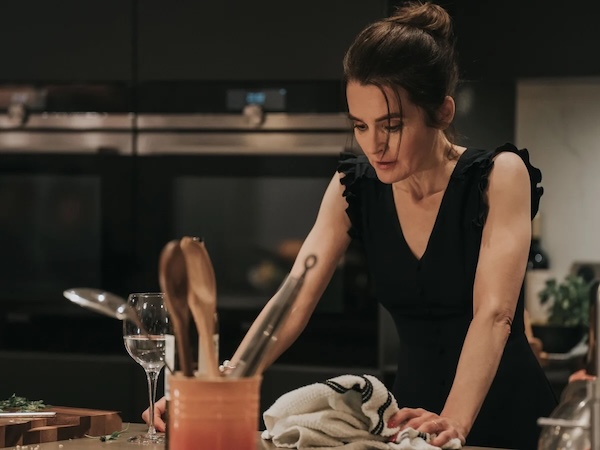
Shirley Henderson in The Trouble With Jessica.
The Trouble with Jessica is a clever dark comedy set in London that features an excellent ensemble cast and some intriguing twists and turns. Sarah (Shirley Henderson) and Tom (Alan Tudyk), a married couple who own a gorgeous home, throw a small dinner party for their closest friends, Richard (Rufus Sewell) and Beth (Olivia Williams). Forced to sell their manse because of imminent financial distress, Sarah and Tom are hosting a gathering to announce this difficult decision as they get ready for an eager buyer to swoop in. But the dinner goes off the rails when Richard and Beth bring an uninvited guest: Jessica (Indira Varma), a friend to both couples. Apparently, she is a problematic party animal and not always welcome. On this occasion, Jessica is a fifth wheel who likes to be the center of attention. Her provocative manner and socially disruptive behavior seem par for the course; the two couples (when out of Jessica’s earshot) acknowledge her various struggles and “all she’s been through.” It seems like a set-up for a snarky comedy of manners, until something very shocking takes place. Suddenly, there’s a dead body to deal with.
In addition to containing a healthy dose of quintessential Noises Off-style humor, this odd little chamber piece, which takes place entirely in and around the London home, turns out to be a rather brutal send-up of the trade-offs people make to maintain a comfortable life. The characters confront one another and themselves with the compromising choices they’ve made, often betraying idealistic principles they’ve mouthed since their younger, more optimistic days. Intriguing flashbacks also lend context to the events of this fateful evening, adding complexity and depth to the lives of characters whose selfishness and pretentiousness make them easy to dismiss. It’s hard to know if this film (directed by Matt Winn, who co-wrote the screenplay with James Handel) is meant to be a comedy with serious undertones, or a drama with absurd moments of humor, but it’s enjoyable and well done.
— Peg Aloi
Tagged: "If Your Mirror Breaks", "Instruments", "Lucky Tomorrow", "Perspective(s)", "Purposing The Air", "The Trouble With Jessica", Allen Michie, Bill Littlefield, Clémence de Grandval, Deborah Jiang-Stein, Freedom, Ingrid Laubrock, Laurent Binet, Mark Favermann, Peg Aloi, Peter Keough, Ralph Locke, Ralph P. Locke, Stabat Mater, Steve Erickson, Steve Feeney, The Ex, The Fabian Willmann Trio