Book Review: “Defending the Music” – A Bracing Voice from a Bolder Critical Age
By Jonathan Blumhofer
This substantial collection of the writings of classical music critic Michael Steinberg evokes a time when critics educated, provoked, and helped build cultural life.
Defending the Music: Michael Steinberg at the Boston Globe, 1964-76. Edited by Susan Feder, Jacob Jahiel, and Marc Mandel. Oxford University Press, 648 pp., $35.
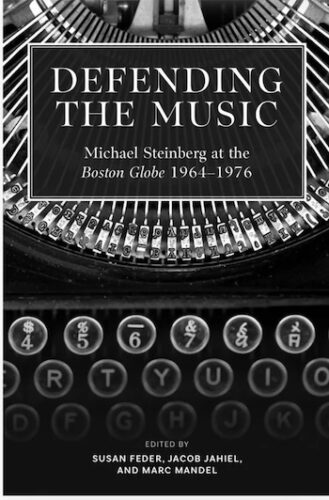 Nostalgia is a powerful drug. And Defending the Music, a compilation of reviews, articles, and letters from Michael Steinberg’s time as the Boston Globe’s chief classical music critic, can, if you’re not too careful, act like an elixir.
On the one hand, it recalls a philosophy of journalism that hardly exists anymore. Certainly, the depth, breadth, and versatility of writing like Steinberg’s isn’t to be expected at publications of record these days, especially when it comes to cultural coverage. Reading this book—and especially seeing the advertisements the Globe once took out in support of its roster of arts critics—is to rue the demise of a writing ethos that, if flawed, was preferable to what we’re left with.
At the same time, to shroud the dozen years this collection covers in the gauze of myth would be a mistake. True, it was an era of giants: Benjamin Britten, Peter Pears, Maria Callas, Lotte Lenya, Marian Anderson, Glenn Gould, Roland Hayes, Mstislav Rostropovich, Beverly Sills, Jessye Norman, and André Previn are but a few who make appearances. But it was hardly an idyllic time, either for the critic, the city, or the wider world; Steinberg would likely have been the first to say so.
Born in Breslau, Germany (now Wroclaw, Poland) in 1928, he escaped to England via the Kindertransport in 1939 and eventually found his way to America. Educated at Princeton, where his roommate at one point was the eminent pianist Charles Rosen, Steinberg received a thorough grounding in contemporary music; his teachers included the theorist Edward T. Cone and composer Milton Babbitt. While on a Fulbright scholarship in Italy, he met Luigi Dallapiccola, Goffredo Petrassi, and Elliott Carter, becoming a lifelong champion of the latter.
Hired by the Globe following a stint teaching at Manhattan School of Music, Steinberg quickly made his presence felt. Though criticism can be an ugly, thankless task, he wrote with an assurance and verve that, sixty years on, still pops off the page.
A performance of a Handel Concerto grosso “demonstrated that it is possible to achieve a certain charm even with every imaginable feature of sonority, speed, articulation, dynamics quite wrong.” Later on, Georg Solti and the Chicago Symphony delivered a reading of Tchaikovsky’s Fifth Symphony that was “loud, fierce, given to formidable chomping, and with brass attacks that feel like what you get when you stick your finger into an electric socket.” Babbitt’s Quartet No. 2 was “all ginger and bite.”
Certain other assessments have held up well. Eugene Ormandy, in Steinberg’s telling, “has almost as few outright bad ideas about music as good ones…it is too bad […] he seems to think of orchestral playing as an activity independent from the interpretation of music.” “Along with a new Nixon, we seem to get a new Philharmonic Hall every season,” he wrote of the New York City venue after a renovation in 1969. “The newest version…is not up to much either.”
If Steinberg wasn’t, generally, so caustic as Virgil Thomson, neither did he hold back. A Charles Munch performance of the Symphonie fantastique was “coarse in sonority, frenzied in temper.” The Handel & Haydn Society’s director Edward Gilday was “not qualified to conduct Handel’s Messiah” according to a 1964 review (Steinberg actively championed his replacement, Thomas Dunn, whose tenure helped revitalize that ensemble).
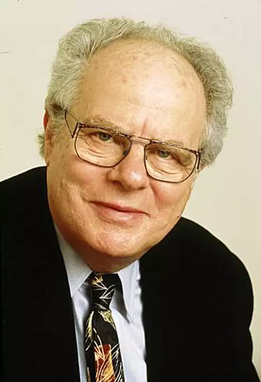
Critic Michael Steinberg. Photo: WikiMedia
Ormandy’s 1969 visit to Symphony Hall with the Philadelphia Orchestra “was dazzling in the way a Mantovani concert is, but it had awfully little to do with playing music, which is what I think orchestras are for.” Steinberg’s most notorious pan, of a Brahms performance a week later led by Carlo Maria Giulini—an interpretation proceeding from “nothing more uncommon than opportunism and meretricious vulgarity”—is partly notable for its brevity.
But, for the most part, Steinberg seemed to understand his role at the Globe as a mix of educator, advocate, and upholder of standards. Those disparate tasks were united by deep musical understanding and a reverence for the composer’s intent: “in both reviews you mention,” he wrote in response to a complaint from then-BSO president Henry Cabot, “I explained my reservations in terms of what I read Handel’s and Beethoven’s intentions to be.”
The last devotion transcended boundaries of genre and musical period. Though Steinberg’s sympathies for the knottiest types of contemporary music might have presupposed a lack of enthusiasm for other fare, his writing on the music of his time—be that Schoenberg’s Violin Concerto, Babbitt’s Relata II, or Bernstein’s Kaddish Symphony—is unfailingly insightful and clear; at its best, it makes you want to revisit the works under discussion (or check them out for the first time). So, for that matter, does his take on the Beatles’ movie Help!
A missional zeal marks certain of his essays. There’s a wonderful piece on Schumann’s Scenes from Goethe’s “Faust” (which, notably, the BSO hasn’t assayed since Steinberg reviewed it in 1966), and a beautiful tribute to violinist Rudolf Kolisch on his 80th birthday in 1976. Recordings of composers as diverse as Monteverdi, Palestrina, Wagner, Mahler, and Reich emphasize his reach. An appraisal of David Cairns’ 1970 translation of Berlioz’s Memoirs—“irresistible”—is spot-on.
There are, too, the inevitably disappointing takes, like Steinberg’s declaration that Erich Wolfgang Korngold was simply “a bad composer.” In that, at least, the writer shared a bias typical of his generation. Nevertheless, many of his judgements have been borne out in the fifty years since he left the Globe to become the BSO’s program note annotator (and, later, annotator and artistic advisor for the San Francisco Symphony).
For local readers, especially, the passage of those decades will make reading many installments in Defending the Music bittersweet. Sarah Caldwell and Russell Sherman are no longer with us. Neither are Craig Smith or Michael Tilson Thomas (“one of the ablest, most interesting conductors in the profession,” as Steinberg perceptively understated the matter in 1969). Colin Davis, Seiji Ozawa, and Bernard Hatink, as well. Richard Pittman was felled by a stroke in 2020 and his Boston Musica Viva—a group “sympathetic to recent music and skillful with it”—folded during the pandemic.
Still, a few luminaries endure. John and Rose Mary Harbison, now in their eighties, remain part of the scene. And Benjamin Zander, whose Beethoven Fifth Symphony with the Boston Civic Symphony at Jordan Hall in 1973 resulted in “a performance almost totally divorced from tradition, but profoundly in touch with what is clearly to be read in [the] score,” has one more season before he retires.
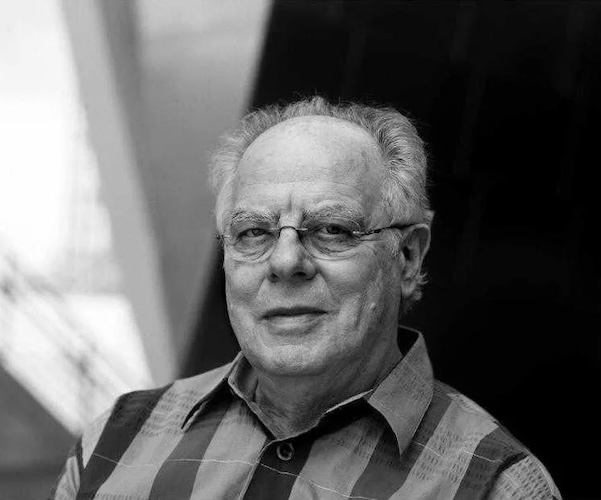
For the most part, Michael Steinberg saw his role at the Boston Globe as a mix of educator, advocate, and upholder of standards. Photo: The Michael Steinberg and Jorja Fleezanis Fund
Even as time moves inexorably on, it’s good to have such a vivid documentation of Boston’s lively recent past. As local institutions look forward—and the BSO is struggling to do that right now (one can only imagine what Steinberg would have to say about developments at Symphony Hall in recent months)—having some historical context is vital.
So is taking to heart one of Defending the Music’s other big takeaways. That would be its reminder that criticism, when done rightly, isn’t merely a matter of passing judgement. It’s a record of a time and a place, for sure. But it is also a necessary component in shaping minds, discussions, even communities. Timing and temperament are key, of course, as is a clear understanding of the task at hand. Steinberg possessed all of those qualities.
“Michael could not have accomplished what he did in any other American city at the time,” his successor at the Globe, Richard Dyer, notes in the book’s introduction. “Boston was then in ferment…Michael created some of that ferment but also profited from it—it gave him important things to write about.” For proof, just look around: we’re still living in a culture he illuminated and helped craft.
Jonathan Blumhofer is a composer and violist who has been active in the greater Boston area since 2004. His music has received numerous awards and been performed by various ensembles, including the American Composers Orchestra, Kiev Philharmonic, Camerata Chicago, Xanthos Ensemble, and Juventas New Music Group. Since receiving his doctorate from Boston University in 2010, Jon has taught at Clark University, Worcester Polytechnic Institute, and online for the University of Phoenix, in addition to writing music criticism for the Worcester Telegram & Gazette.
Tagged: "Defending the Music", Jacob Jahiel, Marc Mandel, Michael Steinberg, boston-globe