
Jazz Concert Review: Gerald Clayton Trio at the Regattabar — Swing with Soul and Subtlety
By Jon Garelick
The relaxed intensity of the band was apparent from the get-go.
Gerald Clayton Trio at the Regattabar, Boston, on March 28
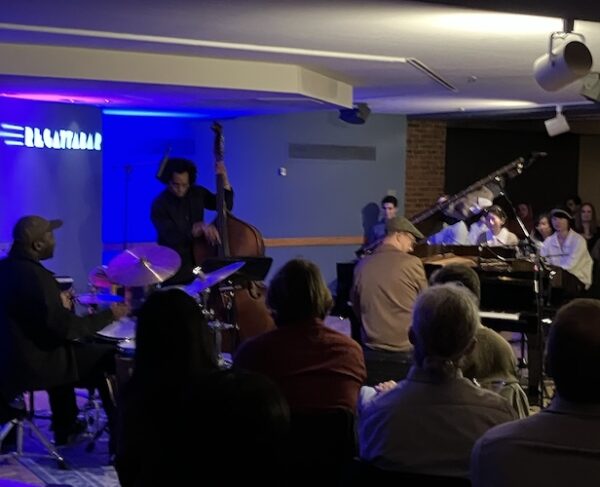
The Gerald Clayton Trio at Regattabar. Photo: Jon Garelick
A few years ago, a musician friend and I were watching a highly touted star jazz pianist tearing it up with a trio. She thundered and roared, unleashing what seemed like millions of notes per second, punctuating passages with crescendos of tidal wave glissandos and big fortissimo chords. It was the epitome of what the critic Whitney Balliett once called jazz’s “look, ma, no hands virtuosity.” When she was done, my friend said, “It’s interesting when the music is all presentation.”
I thought back to that comment on Friday night at the Regattabar when I was listening to the Gerald Clayton Trio. Here was a performance that was the exact opposite of that long-ago event — or maybe its inverse. Clayton and his band had technique to spare, and the show had wonderful virtuosic moments (Balliett meant to describe a jazz virtue, after all). But here was something else: a kind of unselfconscious lyricism that was apparent in all tempos, a generosity in the give and take among the bandmembers that invited the audience into the musical conversation
The relaxed intensity of the band was apparent from the get-go. Clayton, 41, has a countless list of sideman credits as well as a healthy bunch of recordings as a leader, most recently on Blue Note, including a live album from the Village Vanguard that I highlighted as one of the best jazz albums of 2020. At the Regattabar, genial and dapper in a cap and jacket, he introduced the first tune as his “contrafact” of Billy Strayhorn’s “Upper Manhattan Medical Group.” He began with some very cool outer-space chordal harmonies before being joined by drummer Rodney Green’s fast, quiet brushes and stepping into a medium-uptempo walk with bassist Rashaan Carter. Clayton’s moves through various displaced rhythms and crunchy harmonies made Strayhorn sound like Monk, but I was cool with the contrafact. It was one sweet, swinging walk. “This is jazz,” I wrote in my notebook.
The piece continued. Clayton hit a repeated-note phrase in the upper register before dipping down and then coming up for some quick running phrases with assenting counterpoint from Green, and then Clayton’s own answering sequence. Carter soloed in upper-register flurries phrased with apt rests. Conversational. Green comped him with soft brushes on a cymbal and the quiet tapping of an index finger on snare. Green moved to sticks for an exchange of eights with Clayton, bringing the simmer to a boil.
It’s hard to describe the delicious tension of the band’s swing, the way they moved in and out of that walking-bass rhythm all night. Walking-bass swing is generally anathema to people who come to jazz from rock and funk. But, in performances like this, it seems to manifest jazz’s underlying heartbeat, felt everywhere even when it’s not being played.
The band did play ballad tempos (“Monk’s Mood,” Geri Allen’s “Open-Handed Reach,” with its rubato passages and moves in and out of waltz time). But there was always a swing in the delicious, almost unbearable tension and release from one note to the next, even the way Carter would anticipate Clayton by coming in with a two-note upper-register phrase on a cadence and then dropping down for a low-note punctuation. And the sequencing could not have been better: from the opening swing rhythms and bebop of the Strayhorn and Dizzy Gillespie’s “Con Alma,” to the hard-bop funk of Cedar Walton’s “I’m Not So Sure” as a bluesy palate cleanser. “Monk’s Mood” moved into a minor key that sounded for a moment like it was going to turn into “Sketches of Spain.” Charlie Parker’s “Ah-Leu-Cha” hinted for a bit at a classical sonata (in the left hand) and then Harlem stride.
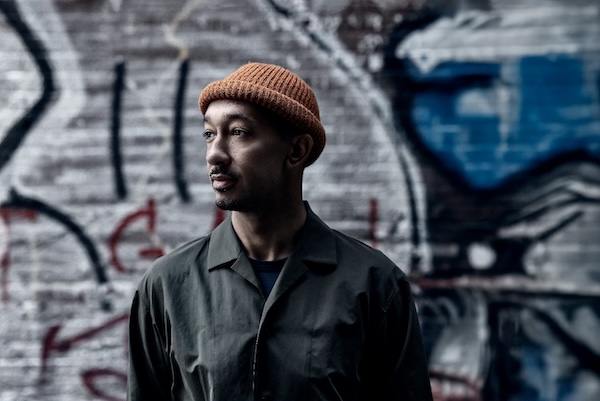
Pianist Gerald Clayton. Photo: Ogata
The audience seemed hip to every turn — the vocal recognition when the melody of the unannounced “Monk’s Mood” came into view, applause after “Con Alma” moved into double-time, then into walking block chords, and back down to tempo. When “Open-Handed Reach” shifted meters (Carter’s bass was crucial here), someone behind me quietly murmured, “Yeah, woah.”
The band setup was different from what I’ve seen at the Regattabar before: the drums behind the piano, near the door where the band enters, and the bass off to the piano’s left. I’m not sure why they wanted it this way — and I’ve never seen Gerald Clayton live before, so maybe this is how he always likes it. He seemed happy to occasionally turn around on the piano bench to look at Green. But it seemed to work. The R-bar’s variable sound mix was solid, and the bass, at least, sounded a lot better than it did for John Scofield’s trio last week. But then, maybe the players deserve credit for adjusting. Did Green keep down his volume? Maybe. But Steve Lehman’s quartet show at the R-bar last year was super loud, and drummer Damion Reid was unrestrained; I heard every note. That time I was sitting near the front, this time I was off to the left in the rear row behind Green’s drums.
Who knows. Happy are the ears that can hear. A previous engagement forced me to leave this show after 73 minutes. (Clayton said that since they started late, they were going to play a couple more tunes.). Clayton said this was the first time he’s played with this group as a trio. Really? How did they sound so in sync with, perhaps, nothing more than a sound check rehearsal? Maybe that accounted for the preponderance of cover tunes. I’d be happy to hear them play whatever they want — and a chance to hear whatever I missed this time.
Jon Garelick is a retired staff member of the Boston Globe Opinion pages and a former arts editor at the Boston Phoenix. He can be reached at garelickjon@gmail.com.