
Doc Talk: Keeping Time at the Boston Baltic Film Festival
By Peter Keough
Admiring looks at a wealth of illuminating documentaries in this year’s gathering.
The Boston Baltic Film Festival. At the Emerson Paramount Center February 27-March 1 and online March 2-23.
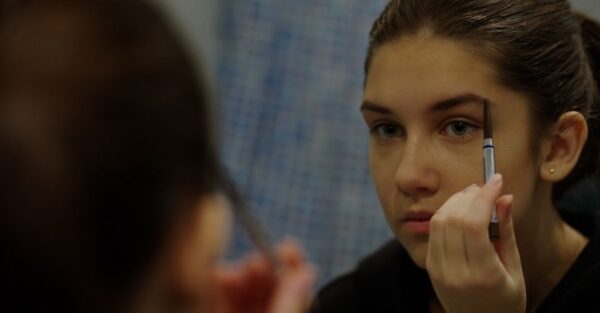
A scene from To Be Continued — Teenhood. Photo: courtesy of the NYBFF
Latvian directors Ivars Seleckis and Armands Začs’s To Be Continued — Teenhood (2024; screens February 28 at 10 a.m. with the filmmakers attending the screening; also streaming online March 2-23) doesn’t take long to allude to the threat posed by their truculent neighbor Russia. In an early scene a news report on a car radio describes that, six months after the Russian invasion, Ukrainians are celebrating their 31st year of independence from the Soviet Union. Listening to the report is Kārlis, who has already resolved to join the military, not just because he wants to help protect his country from potential invaders but because he sees it as a promising career.
Kārlis is one of five seven-year-olds that the directors had chosen to profile for the first To Be Continued back in 2018. Intended as a series not unlike Michael Apted’s Up franchise and probably inspired also by the late Latvian documentarian Juris Podnieks’s Is It Easy to Be Young? (1986), the film picks up their stories seven years later, when the participants are 14. Oddly, only Kārlis shows much concern about the ongoing Russian invasion. But then they are barely adolescents and their lives are just opening up for them. Zane, seen in a flashback to the 2018 film belting out a song in a school contest and winning first prize, has since been excelling at basketball and has hopes for the national team. She’s popular with her classmates, but her grades could be better. Gleb, the scion of a wealthy family, is pressured into excelling academically and at sports and even plays the guitar, but his father is still not satisfied. So you might excuse him for being a bit of a bully and for sometimes cheating in school. Anete’s mother has returned from working in London; they are now reunited but, sadly, her grandmother, who had once cared for her, is now is suffering from dementia. Perhaps most changed is Anastasija, whose once fairy-tale like life tending to the family’s horses has darkened into domestic trouble and estrangement.
Masterful in its intermingling of past and present and subtle and exacting in its detailing of this precarious stage of life, Teenhood also includes one of recent cinema’s most poignant vignettes of young love.
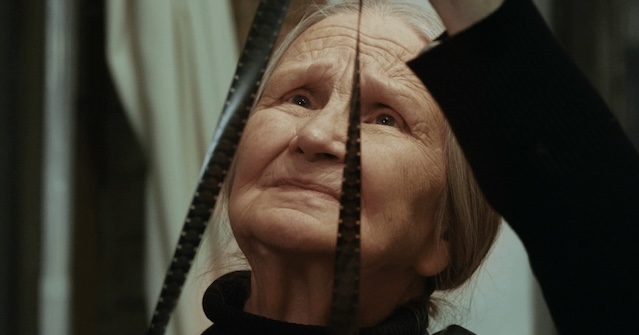
A scene from The Mammoth Hunt. Photo: courtesy of the NYBFF
Like To Be Continued, Lithuanian filmmaker Aistė Stonytė’s The Mammoth Hunt (2024; streaming online March 2-23) also focuses on the passage of time. In the 1960s, Jonas Jurašas was the hottest theater director in Lithuania. Not only was he brilliant, charismatic, and an inspiration to his colleagues at the Kaunas State Drama Theatre, but he also believed in the importance of art as an expression of political conviction — a courageous stand in the former Soviet Union. In 1968 he put on a play called The Mammoth Hunters, an Ionesco-like satire that was a thinly veiled critique of the communist regime. It proved a huge hit, so much so that Moscow was alerted and had the production shut down. But not before Jurašas and the company put on a last secret performance and had it filmed. For this act of courage Jurašas soon found himself blacklisted. Then he wrote an open letter to the authorities that declared his belief in the primacy of free expression and let it be leaked to the West. It proved to be his downfall and he had to flee the country.
Meanwhile, the film of the last performance had disappeared. In attempting to track the footage down, Stonytė uncovers a depressing story of cowardice and possible betrayal. As for Jurašas, he managed some success in the US, including at the Trinity Square Repertory Company in Providence. When Lithuania finally gained its independence from the Soviet Union in 1991, he returned as a hero. But, though the theater artist went back to directing, he felt estranged from his former homeland. In the end, he is seen looking lost as he hobbles with a cane through the theater where he once had triumphed.
Like Jonas Jurašas, Estonian composer Arvo Pärt also insisted on defying the then Soviet regime and making art his own way. In 1968, Credo not only upended the rigidly imposed conventions imposed on musicians, but also reaffirmed his Orthodox Christian faith. His music was consequently banned. In 1980, he emigrated to Vienna, where he resumed his career.
Has Pärt enjoyed more success than Jurašas since his forced exile? In Arvo Pärt: And Then Come the Evening and the Morning (1990), the first part of Estonian director Dorian Supin’s trilogy about the composer (all three films plus several shorts on Pärt are available for streaming March 2-23), random strangers on the street are asked if they know who he is. No one does. But you might know him from his otherworldly 1977 composition Fratres which appears on the soundtracks of P.T. Anderson’s There Will Be Blood (2007) and Terrence Malick’s To the Wonder (2013). Or maybe his Tabula Rasa (1977) in Pablo Larrain’s El Conde (2023) or 1990’s Berliner Messe: Kyrie in Avengers: Age of Ultron (2015), or any one of the other 150 films in which his music is featured. His compelling, mystically minimalist, so-called tintinnabuli style has made him by the reckoning of some the most performed living classical composer. His 90th birthday was celebrated last year with concerts by symphony orchestras around the world, including the Boston Symphony Orchestra.
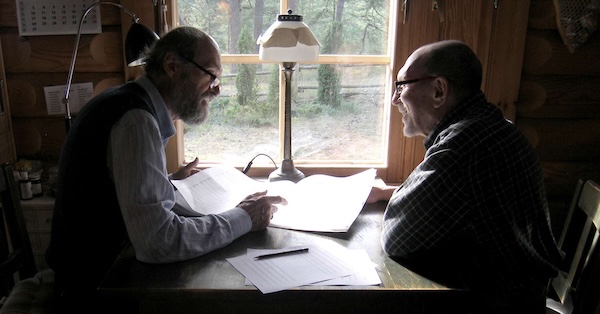
A scene from Arvo Pärt: Even If I Lose Everything. Photo: courtesy of the NYBFF
But Supin is not interested in such details as those. He wants to grasp the essence of the music and perhaps the ineffable process of its creation. Not an easy task, especially because Pärt himself often seems at a loss in explaining it. Still, on occasion, he will engage in a rhapsodic exegesis that almost, but doesn’t quite, cohere into an epiphany. Supin wisely includes a generous sample of the music itself and imitates Pärt’s incantatory, often unearthly style through his use of poetic imagery and elliptical, impressionistic editing.
This especially is the case in the trilogy’s second film, Arvo Pärt: 24 Preludes for a Fugue (2002), which, like François Girard’s 32 Short Films about Glenn Gould (1993) approaches the mystery of the artist’s work via brief, enigmatic, cinematic crotchets. They have titles like “Cecilia,” in which Pärt is seen correcting notations on a score and then kneeling at an altar before Maderno’s statue of the martyred St. Cecilia, and “Perfect Silence,” in which he listens to rain falling in an overgrown courtyard and whispers, “The sound is beautiful here — can you record it?”
In the third film, Arvo Pärt: Even If I Lose Everything (2015), the composer reflects on how, after a triumphant performance of his Stabat Mater (1985) in Vienna, he was walking with his wife carrying the roses they had given him after the concert and he stepped in dog poop. “I still remember the smell,” he laughs. And he wasn’t referring to the roses.
Peter Keough writes about film and other topics and has contributed to numerous publications. He had been the film editor of the Boston Phoenix from 1989 to its demise in 2013 and has edited three books on film, including Kathryn Bigelow: Interviews (University Press of Mississippi, 2013) and For Kids of All Ages: The National Society of Film Critics on Children’s Movies (Rowman & Littlefield, 2019).
Tagged: "Arvo Pärt: 24 Preludes for a Fugue", "Arvo Pärt: Even If I Lose Everything", "The Mammoth Hunt", "To Be Continued — Teenhood", -Arvo-Pärt, Aistė Stonytė, Armands Začs, Boston Baltic Film Festival, Dorian Supin, Ivars Seleckis