
Jazz Album Review: Kris Davis Expresses Environmental Grief Through Music in “The Solastalgia Suite”
By Michael Ullman
In its evocativeness, shapeliness, and meaningful drama, Solastalgia Suite is Kris Davis’s masterpiece… so far.
Kris Davis and the Lutoslawski Quartet, The Solastalgia Suite (Pyroclastic)
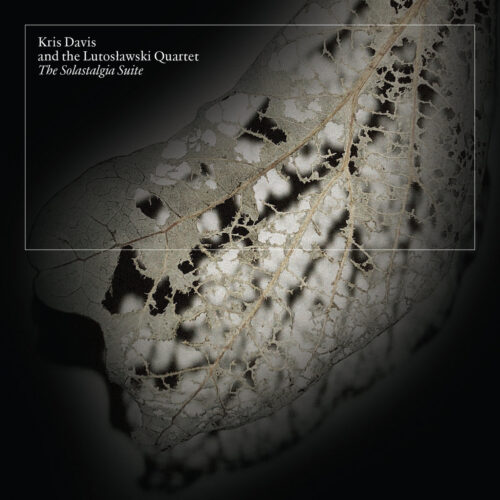 “Solastalgia” is a word coined by philosopher Glenn Albrecht, who distinguishes the condition from nostalgia, which is the feeling of loss when contemplating aspects of the past. Solastalgia “is the distress that is produced by environmental change impacting on people while they are directly connected to their home environment.” In other words, they cannot go home again, because they are already there.
Pianist/composer Kris Davis’s Solastalgia Suite is an eight-movement work composed for string quartet and piano, and dedicated to evoking aspects of that angst. Although there is tonal variety here, the suite is meant to be unsettling rather than cheerful. The titles of the movements suggest loss and separation. Ghost Reefs reminds us that the remnants of reefs are there, but that the vital forms of life they supported have been killed off by pollution. The strings open the movement quietly. They seem to wander tentatively before repeatedly coming to a stop. But after a little more than a minute, there is a crescendo and the quartet plays harsh dissonances in a kind of protest, before, it seems, running out of steam. People are turning ghostly in this world too, as in An Invitation to Disappear, the most lovely movement of the work. Invitation begins with a mournful melody that’s stated by solo viola. Within the first minute, the rest of the quartet joins in, establishing a kind of murmuring conversation. The piano arrives halfway through: Davis restates the theme while the quartet plays with surges of intensity.
The suite begins with the nervy five minutes of Interlude, whose title suggests that we are already in the middle of something. Halfway through, as the pianist plays the same repeated phrase, the music becomes almost harsh: solastalgia is far from a comfortable feeling. (Davis doesn’t typically allow the piano to dominate.) I don’t know which title is more threatening, Toward No Earthly Pole, or The Known End. The former begins with eerie harmonics emanating from the strings along with dampened single notes from the piano. It feels like a major shakeup when — after a minute and a half — the natural sound of the piano is permitted to intrude warmly. The piece allows other soloists, but the main impression the composition makes is the squeaking behind them.
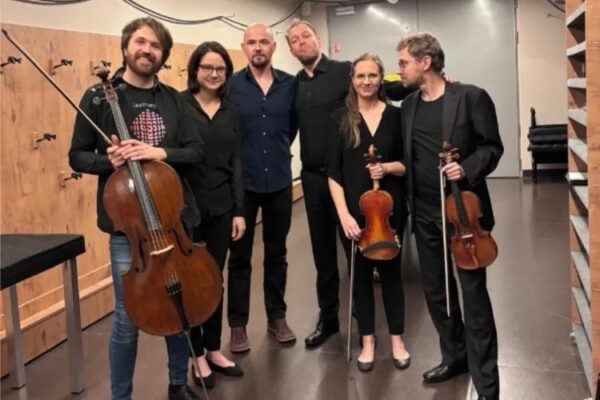
Kris Davis and the Lutosławski Quartet: The Solastalgia Suite
Coming immediately afterwards, The Known End offers a positive opening statement from the strings. This movement frequently puts Davis up front. The string sections include a solo that’s pitched higher than one could imagine the violin could go. The conversation is brisk, even rude, given some of the interruptions. Davis’s pieces are typically lively and, to my ears, fascinating as well as surprising in their deft shifts in mood and technique. After the first four minutes of The Known End, the strings suddenly turn to playing reverent long tones while the piano sticks to an obsessive figure. Later, on Pressure and Yield, jittery, aggressive strings play unlovely, tense staccato phrases.
In writing The Solastalgia Suite, Davis, who comes from Vancouver, was inspired, or perhaps more likely provoked, by her mournful experiences of going home: “I see the changes when I go back to Canada…. The environments are different, the climate’s different — the whole connection with nature is different.” In its evocativeness, shapeliness, and meaningful drama, Solastalgia Suite is Davis’s masterpiece… so far.
Michael Ullman studied classical clarinet and was educated at Harvard, the University of Chicago, and the U. of Michigan, from which he received a PhD in English. The author or co-author of two books on jazz, he has written on jazz and classical music for the Atlantic Monthly, New Republic, High Fidelity, Stereophile, Boston Phoenix, Boston Globe, and other venues. His articles on Dickens, Joyce, Kipling, and others have appeared in academic journals. For over 30 years, he has written a bimonthly jazz column for Fanfare Magazine, for which he also reviews classical music. He is emeritus at Tufts University where he taught mostly modernist writers in the English Department and jazz and blues history in the Music Department.
I’ve listened to this beautiful piece a number of times. Thanks for this great “reading” of it, Michael!