
Arts Feature: Top Classical Recordings and Concerts of 2025
Our classical music critics supply their favorites, albums and concerts, from over the past year.
Jonathan Blumhofer
What a long, strange year 2025 has been for classical music, or at least some segments of it.
In Washington, the Trump administration took a page from Stalinist Russia and annexed the Kennedy Center in an effort to sanction an official American art ahead of the country’s 250th birthday. What, exactly, that definition looks like remains anybody’s guess, though the response from other quarters of the country — including Boston — has largely been business as usual.
Indeed, our metropolis’s performing arts institutions have basically behaved as though nothing untoward is happening in the wider world politically, ethically, socially, or environmentally. Be that as it may, there’s some fight in smaller groups, and certain events from heavy-hitters (like the Boston Symphony’s “Decoding Shostakovich” festival in the spring) have managed to fit the moment. Looking ahead, several upcoming appearances — not least Davóne Tines’s What Is Your Hand in This? with Ruckus in January — promise timely music-making.
Through it all, the recording and publishing industries remain busily at work providing, at times, illuminating, thoughtful, and entertaining content. Below is my year-end tally of items that, despite the tempest of everyday life, anchored themselves firmly in my mind for good or ill these last 12 months.
2025’s Top Recordings
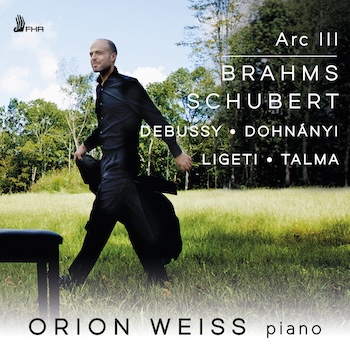
Arc III (First Hand Records) – Orion Weiss’s Arc triptych wrapped with an homage to joy, that most elusive of emotional states. It turned out to be a particularly welcome choice for an unsettling year. The wide-ranging program — from Schubert to Ligeti — proved as unexpectedly successful as Weiss’s playing was refreshing and insightful.
24 Caprices (Deutsche Grammophon) – Taking a page from her DG label-mate Daniil Trifonov, violinist María Dueñas offered her first concept album, a survey of the unexpectedly stunning genre of the caprice. Using Paganini’s famous book of 24 as her starting point, the 23-year-old curated a fascinating journey that crossed centuries and cultures and whose star wattage was fully matched by the peerless musicianship firing the enterprise.
Ravel: Complete Piano Works (Chandos) – There was no shortage of Ravel to be found on disc or in-concert during this 150th-birthday year and Jean-Efflam Bavouzet’s recording of the composer’s complete keyboard music wasn’t the only one to hit the market. But, to my ears, it was the best: commanding, stylish, well defined, and ever alive to the music’s wealth of nuances.
Aguas de Amazonia (Rockwell Records) – A new arrangement of an obscure Philip Glass score from Third Coast Percussion? Yes, please — especially when played with the rhythmic vigor and range of colors the group and flautist Constance Volk mine from its pages. Six months on, this remains (as I wrote in June) one of “this troubled year’s most life-affirming and hopeful” releases.
The Complete Dunbar/Moore Sessions (Lexicon Classics) – Baritone Will Liverman is a legitimate singer-composer. And he’s a pretty good pianist, too. But perhaps the most striking takeaway from this collection of original settings of texts by Paul Laurence Dunbar and Anita Dunbar-Nelson is the charismatic sense of personal conviction and musical perspective that drives each one of these songs.
Puts, Orchestral Works (Delos) – Something goes very right between the St. Louis Symphony Orchestra, music director Stéphane Denève, and Kevin Puts in this shortish compendium of symphonic music by the Missouri native. At the heart of it sits a spectacular Concerto for Orchestra that ought soon be a repertoire mainstay.
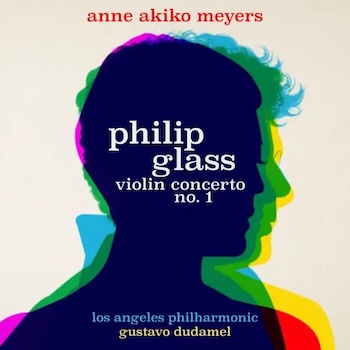
Glass, Violin Concerto (Platoon) – Anne Akiko Meyers’s advocacy for new and old scores by Glass is on full display in this wonderful recording of his 1987 Violin Concerto No. 1. That the nearly-89-year-old composer remains at the top of his game is demonstrated by the inclusion of Echorus and New Chaconne, the latter of which was written specifically for Meyers.
Credo (Alpha) – Arvo Pärt turned 90 on September 11 and Paavo Järvi and the Estonian Festival Orchestra were right there to mark the occasion with this excellent survey of the great man’s recent orchestral music. Though it’s easy to pigeonhole Pärt as gentle and devotional, this album reminds that his soul and music possess cores of steel.
Ginastera, Complete String Quartets (Pentatone) – Alberto Ginastera and his string quartets aren’t exactly staples in American concert halls. But perhaps the Miró Quartet’s invigorating recording of them can help change that. These are exacting and thrilling performances of some exacting and thrilling music that, for all its challenges, exhibits an inviting soulfulness.
Standard Stoppages (Cedille) – There’s a reason Third Coast Percussion gets two nods on this list: this album, which celebrates the collective’s 20th birthday, offers what I called “a veritable cornucopia of sounds experienced in multifarious combinations.” To be sure, there’s hardly a more fascinating or aurally satisfying way to pass nearly 80 minutes than with this survey of percussion quartet rep from around the world.
Most Memorable Pieces/Performances (for good or ill…)
Mustonen, Nonetto II (Bis) – There’s much to be said for Olli Mustonen as a pianist and, on the merits of this nonet for strings, a composer, too. The penultimate item on the United Strings of Europe’s hommages, this 15-minute-long opus taps Beethovenian depths with a lack of pretension that’s breathtaking.
Clyne, Abstractions (Naxos Classics) – The latest recording of music by Anna Clyne offers plentiful reminders of why she’s one of the day’s finest composers, not least this title work, a suite of movements responding to contemporary artworks housed in Baltimore’s Museum of Art and the private collections of Rheda Becker and Robert Meyerhoff.
Elgar, Violin Concerto (Ondine) – Christian Tetzlaff took the Heifetz approach to Elgar’s 1910 masterpiece and, in the process, turned it into something that lives, moves, and breathes with refreshing urgency. The filler, Thomas Adès’s 2005 Concerto, makes an unexpectedly fitting pairing as a result.
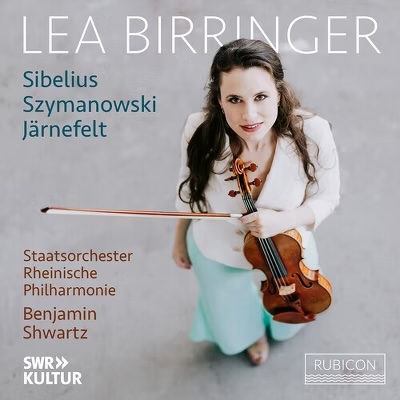
Szymanowski, Violin Concerto No. 2 (Rubicon) – A good year for violin concerto recordings included this take on Karol Szymanowski’s Second. The score isn’t exactly a staple, but you wouldn’t guess that from the care and brilliance Lea Birringer lavishes on it on this album.
Furtwängler, Symphony No. 2 (Chandos) – There’s no doubting Neeme Järvi’s commitment to whatever off-path repertoire he’s conducting. But even the Estonian maestro’s enthusiasm (and agreeably lively tempos) can’t compensate for the bloated, bloviating mess that is Wilhelm Furtwängler’s Second Symphony.
Brian, Agammemnon (Hyperion) – Nor, despite solid instrumental performances and strong singing, was the enigma that is Havergal Brian resolved with this release of two symphonies and a wordy, unwieldy Aeschylus adaptation.
Books, Nature, & More
2025 was a fine year for books, though much of what made up my reading list wasn’t musical — and even less of that got reviewed. Highlights included Rick Atkinson’s outstanding The Fate of the Day, which treated the tumultuous middle years of the American Revolution the way Bach did fugues, which is to say with a flawless marriage of technique and expression. There were a couple of fine year-old releases, too, particularly Brenda Wineapple’s fascinating, impressively well-balanced Keeping the Faith and Caroline Alexander’s absorbing Skies of Thunder.
 For the Fuse, I reviewed Ron Chernow’s flawed doorstopper, Mark Twain. Though, as a comment on my piece points out, the author gives short shrift to Twain’s genius as a writer, he ably captured the anger and restlessness that lay beneath his genial façade. That fire ultimately burned Twain and all around him. But his uncompromising moral standards, biting humor, and unwillingness to draw his punches (especially after he’d become America’s most recognizable celebrity) remain profoundly relevant to our own era of ethical ambiguity, intellectual laziness, and partisan cowardice.
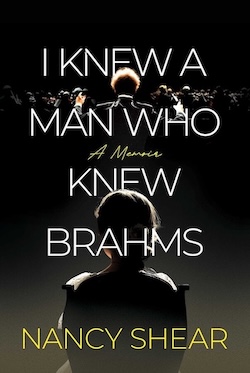
Meanwhile, Nancy Shear’s I Knew a Man Who Knew Brahms offered a portrait of a life lived with determination, purpose, and a little good luck — some of which was made, some of which just happened.
More whimsically, the year ending goes in the books as one that saw the elements memorably conspiring with a performance of Berlioz’s Symphonie fantastique at Tanglewood. And there were more than a few fine performances to be had out my way in Worcester, a couple of which I covered in these pages.
On a more somber note, 2025 was also the year we said farewell to, among many others, Edith Mathis, Per Nørgård, and Christoph von Dohnányi.
Aaron Keebaugh
Top Performances of 2025
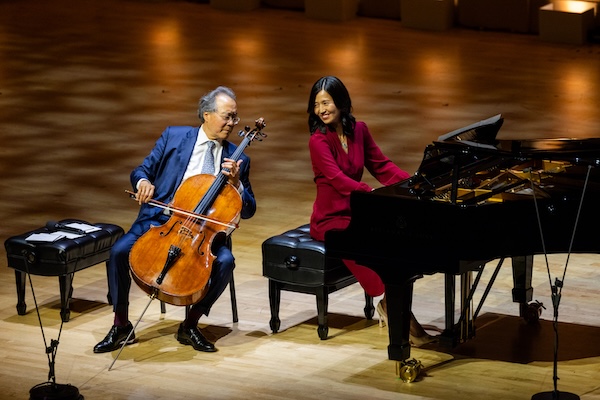
Cellist Yo-Yo Ma and Boston Mayor Michelle Wu performing at Symphony Hall. Photo: Robert Torres
Yo-Yo Ma plays Bach’s Cello Suites
Yo-Yo Ma may not be a superhero. But he’s pretty close.
In a Celebrity Series recital last month that lasted three hours without intermission, the celebrated cellist reprised pieces that he has known intimately for 65 years. But, rather than rely on any strict sense of form or style, Ma played Bach’s Cello Suites with beguiling finesse and understated humor while still generating more vitality than most cellists a third of his age. Bach’s pieces may be ideal for intimate settings, but Ma’s performance, broadcast live from Symphony Hall to more than 70 locations around Massachusetts, made this rendition of the music a truly communal event.
Pianist Asiya Korepanova and the Boston Landmarks Orchestra perform Amy Beach’s Piano Concerto in C-sharp minor
Few genres were more personal to Amy Beach than the piano concerto. In Boston alone, Beach as a pianist treated audiences to concertos by Chopin, Mozart, Beethoven, and Saint-Saens with the Boston Symphony Orchestra. Thus it seemed only natural that she would compose her own.
Unfortunately, beyond the performances she championed herself, Beach’s Piano Concerto failed to attract widespread attention. The piece hasn’t been heard in BSO performances since March 1917.
Leave it to the enterprising Boston Landmarks Orchestra to heap renewed attention on this neglected score. In its long belated Hatch Shell premiere this past summer, pianist Asiya Korepanova and conductor Christopher Wilkins took listeners on a tour through the concerto’s blazing difficulty with equal amounts of sensitivity and bravura that made it one of the top performances of the year.
Boston Modern Orchestra Project performing Ulysses Kay’s Frederick Douglass
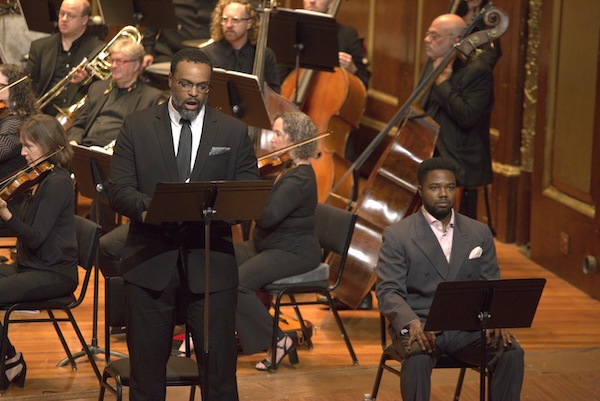
Kenneth Kellogg (l) and Leroy Davis in the BMOP production of Frederick Douglass. Photo: Jason J. Lachapelle
The political tragedy that all but derailed the career of abolitionist Frederick Douglass provides compelling fodder for flesh-and-blood drama. And composer Ulysses Kay stayed true to the complexity of the story in his rarely performed opera, Frederick Douglass. Supplying Verdian flourishes, emotionally powerful choruses, and an orchestral score that ties it all together beautifully, this composition stands as Kay’s most accomplished artistic statement. In this memorable performance, the Boston Modern Orchestra Project, aided by a starry cast of singers and led by conductor Gil Rose, reveled in the piece’s tension and intrigue.
Mercury Orchestra performs Gerald Finzi’s Intimations of Immortality
Poet William Wordsworth found hope when reflecting on his memories of the past. Composer Gerald Finzi’s journey back resulted in bittersweet resignation. His fascinating Intimations of Immortality — for tenor, chorus, and orchestra — was heard in a rare performance by the Mercury Orchestra and New World Chorale this past summer.
Conductor Channing Yu was brilliantly attuned to the music’s anxious uneasiness. Tenor David Rivera Bozón conveyed the wayward extremes the piece draws between warmth and desolation. The New World Chorale suggested complicating notes of understated tenderness in this memorable performance.
Handel and Haydn Society perform Handel’s Saul
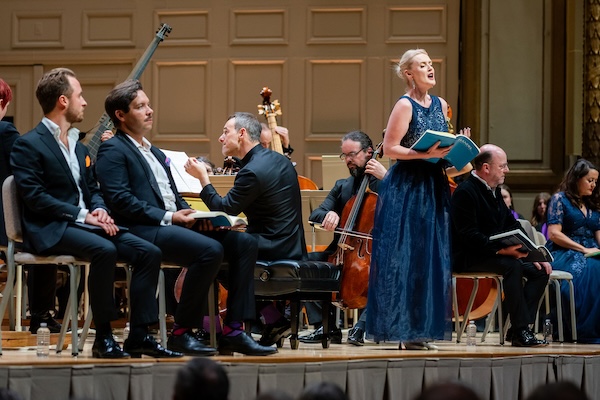
Soprano Sarah Brady sings the role of Merab in the Handel and Haydn Society’s performances of Handel’s Saul. Photo: Robert Torres
Fresh from his appearance at the Glyndebourne Festival this past summer, conductor Jonathan Cohen returned to Boston in October with a Handelian drama full of fire and vigor. The oratorio Saul limns the internal turmoil of the titular Biblical king as he plots to place the young upstart David into predicaments that could cost him his life. This performance made the conflict feel as rich and riveting as any operatic treatment.
Boston Camerata’s “Gallery of Kings” with the Boston Early Music Festival
The US premiere of Boston Camerata’s “Gallery of Kings” this past June was an evening made up of stories of regal deeds and misdeeds through songs and texts. But the singers and instrumentalists, directed by Anne Azéma, made sure to include plenty of jibes at rotten authority from all eras — particularly our own. The program, comprising songs, dances, and elaborate vocal works from the Middle Ages, provided solace by pointing out a truth: we have been through this struggle with despots before.
Wonderful summaries of musical events each of you heard, and some remarkable recordings as well! How lucky you both are to be living in the Boston area…. I take comfort that at least some of these performances will eventually be released as recordings (such as the fascinating Ulysses Kay opera).