
Locke’s List for 2025: Notable Operatic Recordings and a Few Non-Operatic Ones
By Ralph P. Locke
First recordings of major works and splendid recordings of some others, from Handel to Raff and from Boston’s Musicians of the Old Post Road to the astonishing operatic soprano Aleksandra Kurzak.
I’ve cut back the number of reviews that I do in a given year (because of some other projects that need attention). So I can make a simpler list this time, without having to organize the items into multiple categories.
Conveniently, all the CDs that I reviewed during the past 12 months fall into one of two categories: either the work was previously unrecorded (and is, in most cases, well performed), or else the performance is truly extraordinary, even though the repertory is otherwise relatively familiar.
Either way, listening to these various CDs makes me grateful anew that we live in an era in which such musical experiences are available at the touch of a button.
WORLD-PREMIERE RECORDINGS:
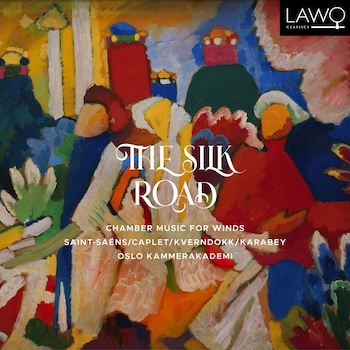 I was delighted to hear previously unrecorded pieces by two composers I had never known of: Mert Karabey (from Turkey) and Gisle Kverndokk (from Norway). This was on a CD by the Oslo Kammerakademi (a wind ensemble, plus double-basses and percussion), and the other two pieces were no less colorful and involving: by Saint-Saëns and by Debussy’s friend and musical assistant André Caplet. The CD is entitled The Silk Road, and each of the four pieces evokes in some way one or more lands stretching from the Eastern Mediterranean through the Middle East to India, China, and Japan. The stale arguments about whether “cultural appropriation” is morally defensible crumble in the face of so much musical imagination: do we necessarily need to care whether a given composer writes from the “subject position” of a, say, Norwegian (or a Turk, or a Frenchman from more than a century ago)? Well, we might, but first we should give ourselves a chance to encounter the piece and decide if it’s appealing and well structured, before jumping to render some kind of verdict about its unspoken politics (which are hard enough to define when the piece is purely instrumental, as is the case for all four pieces on this recording).
New Music for String Orchestra by Philadelphia-Area Composers carries no such elaborate politico-cultural baggage. Yet the results are no less intriguing to the musical ear and the discerning mind. The disc includes seven shortish pieces, by composers who are all associated with institutions of higher learning in and around Philadelphia. The best known of the composers is Richard Danielpour, but my favorites were perhaps the works by Ingrid Arauco and Heidi Jacob. Conductor James Freeman makes a strong case for each piece, and the whole adds up to a lively quasi-concert (though the recordings were made under excellent studio conditions) that is at once imaginative and accessible.
Speaking of admirable women composers, I was delighted to discover a previously unrecorded piece by Clémence de Grandval: her Stabat Mater (1870). Grandval’s works were often performed in her lifetime, sometimes in cities far from her native France. And then they drifted off into oblivion, as was the case with works by many other gifted and hard-working musical creators of the 19th century (whether female or male). Grandval’s Stabat Mater uses a very practical “orchestra,” consisting of two instruments: piano and harmonium. A harmonium (a small, easily moved organ) can sustain long notes more easily than a piano, in the manner of brass or woodwinds. Grandval’s piece could easily become a favorite of choral societies, much the way that a nearly contemporary work long was: the Seven Last Words of Christ by Théodore Dubois.
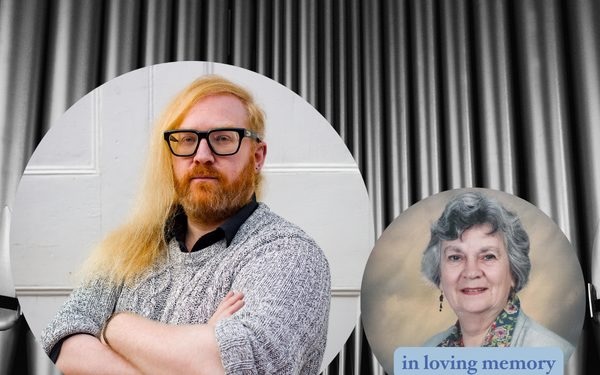
Longtime organist Justin J. Murphy-Mancini and the late Barbara Owen, the recognized scholarly authority on the history of organs in America. Photo: courtesy of the artist
Some American composers now rarely heard are featured in an organ recital by Justin J. Murphy-Mancini, recorded on a historic 1834 instrument in Newburyport, Massachusetts. Yet another female composer struts her stuff here — renowned theater organist Edith Lang — as do some males who remain somewhat better known than Lang, such as John Knowles Paine, George Whitefield Chadwick, Dudley Buck, and Daniel Pinkham.
Unusual operatic fare came aplenty: two operas (one serious, the other lighthearted) by Joachim Raff, a 19th-century composer whose instrumental pieces achieved wide renown, but whose operas often (as in these two cases) did not get performed in his lifetime. Samson is based, of course, on the same biblical tale as Saint-Saëns’s Samson et Dalila (which was composed a few years later). Die Eifersüchtigen (The Jealous Ones) is a comic romp in the manner of Mozart’s and Rossini’s Figaro operas. Both are engagingly performed by singers who can convey the German texts clearly and meaningfully. I hope that one opera or both will soon get a staging on our continent.
One of the most significant opera releases this year was the first fully satisfactory recording of the early version (1857) of Verdi’s Simon Boccanegra. You can read in Julian Budden’s magisterial 3-volume The Operas of Verdi about the major differences between this version and the 1881 reworking — overhaul, really — that gets performed and recorded far more often. But a splendid group of mostly youngish, very steady (not wobbly!) singers here, under experienced opera specialist Mark Elder, make a stronger case for the integrity of the 1857 version than ever before.
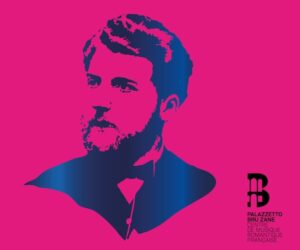
Another major opera composer, Bizet, popped up with a four-CD set of largely unknown works. The longest work included is his gorgeous one-act opera Djamileh (composed just before his final masterpiece, Carmen), but there are also splendid piano pieces, choral tableaux with orchestra (including one freely based on a Chopin prelude), two secular cantatas from early in his career and already showing his remarkable dramatic flair, plus a mature work entitled Vasco de [sic] Gama, in which we travel with the Portuguese explorer around the Horn of Africa and disembark on the coast of India.
An opera by Classic-era composer Paisiello, La finta amante, proves to be well worth reviving, though the performance is subpar. Another comic opera by Paisiello, La Claudia vendicata, fares much better: indeed, I found it completely captivating, even though most of the characters sing in Neapolitan dialect (fortunately well translated in the booklet!). Two 18th-century French operas similarly arrived in remarkably stylish performances: Philidor’s Ernelinde, princesse de Norvège and an Iphigénie en Tauride that was begun by Desmarest and ably completed by Campra, An Italian comic opera from 1737 that was widely performed for nearly three decades, Pietro Auletta’s L’Orazio, came in an extremely well-sung and -played performance.
RECORDINGS OF WORKS THAT ARE AT LEAST SOMEWHAT FAMILIAR….
An oratorio by Handel that is almost an opera-without-costumes, Jephtha, got a splendid new recording by Chicago-area Music of the Baroque, under Jane Glover. The singers were a delightful bouquet, including a young soprano making her splendid debut in the small role of the Angel who, in this telling of the biblical story, tells Jephtha that he does not have to sacrifice his daughter as he had promised God to do.
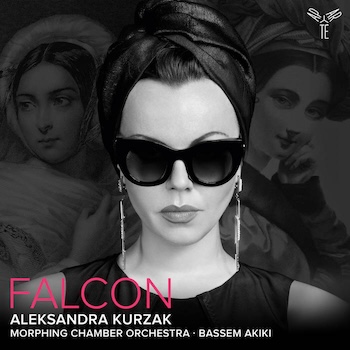
Soprano supernova Aleksandra Kurzak brought out an aria album that alternated familiar fare (Mozart and Beethoven) with arias from operas that are more rarely performed today — by Spontini, Rossini (Le Comte Ory), Meyerbeer, Halévy, and (a true rarity) Niedermeyer.
Two previously recorded but still somewhat unusual operas are worth mentioning: Czech composer Vilém Blodek’s charming village comedy V studni (In the Well) and the brilliant — if sometimes pretentious — Ferruccio Busoni’s philosophically ambitious Doktor Faust. As so often with opera recordings, one or another singer stands out: in the Blodek, I was enchanted anew by the fervent vocalizing of the great Czech tenor Ivo Židek (caught early in his distinguished career); and, in the Busoni, baritone Dietrich Henschel handles the title role with greater aplomb than in his previous recording and is surrounded by a fine cast, generally.
CHAMBER MUSIC AND SOME BOOKS….
And, lest I be accused of omitting nonoperatic items entirely, I should mention an enchanting recital of German Baroque chamber works (Graupner, Telemann, et al.) played by Musicians of the Old Post Road; Allen Shawn’s latest four piano sonatas (nos. 6-9), which I found consistently fresh and engaging; and a very satisfying collection of chamber-sized pieces by innovative American composer (and musical-instrument inventor) Harry Partch, including a work based on inscriptions made near a highway by hitchhikers.
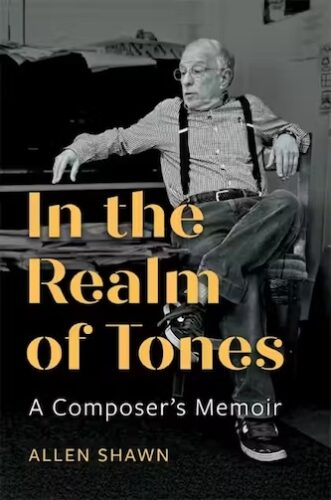
For your reading pleasure, I recommend Allen Shawn’s newly published — and touching and perceptive — In the Realm of Tones: A Composer’s Memoir. And a long-needed scholarly biography (by Natalie Dykstra) of Boston’s most renowned art collector, Isabella Stewart Gardner, who was no less passionately devoted to music.
All in all, 2025 provided a gratifying haul for people interested in exploring new corners of the repertory — and perhaps also for teachers, performers, and conductors who are in a position to help bring one or another of these forgotten works to performance in our own country and community. I’d sure like to see the Paisiello work, with its smoking volcano and genie-in-a-bottle, done by one of our many intrepid local opera companies!
Ralph P. Locke is emeritus professor of musicology at the University of Rochester’s Eastman School of Music. Six of his articles have won the ASCAP-Deems Taylor Award for excellence in writing about music. His most recent two books are Musical Exoticism: Images and Reflections and Music and the Exotic from the Renaissance to Mozart (both Cambridge University Press). Both are now available in paperback; the second, also as an e-book. Ralph Locke also contributes to American Record Guide and to the online arts-magazines New York Arts, Opera Today, and The Boston Musical Intelligencer. His articles have appeared in major scholarly journals, in Oxford Music Online (Grove Dictionary), and in the program books of major opera houses, e.g., Santa Fe (New Mexico), Wexford (Ireland), Glyndebourne, Covent Garden, and the Bavarian State Opera (Munich). He is part of the editorial team behind the wide-ranging open-access periodical Music & Musical Performance: An International Journal. The book series that he founded in the 1990s and still edits, Eastman Studies in Music (University of Rochester Press), has recently published its 200th title, on songs by Robert Schumann.