
Rock Concert Preview: The Cyrkle Returns — 1960s Hitmakers Play Boston for the First Time This Millennium
By Brett Milano
‘60s pop aficionados know there’s more to the Cyrkle than its Fab Four connections.
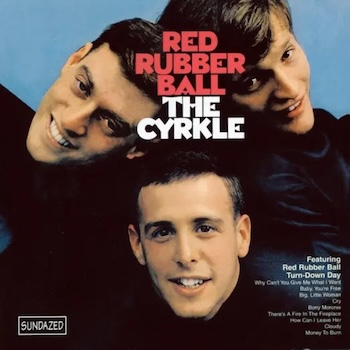 Ah, the magic of being a rock band in 1965. One minute you’re wearing Beatle wigs and playing a frat party. Then suddenly you’re being managed by Brian Epstein and named by John Lennon, opening Beatles concerts and competing with them on the charts.
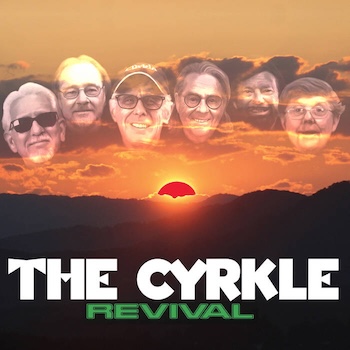
That’s how it went for the Cyrkle, but ‘60s pop aficionados know there’s more to this group than its Fab Four connections. They had their own hits in “Red Rubber Ball” and “Turn Down Day,” plus two collectible albums (1966’s Red Rubber Ball and 1967’s Neon) that split the difference between sunshine pop and the emerging folk-rock sound. After a half-century of inactivity the group reformed a few years ago around its two surviving ‘60s members, lead singer Don Dannemann and singer/keyboardist Michael Losekamp, and made a surprisingly good new album, Revival. They make their first Boston-area appearance of this millennium on Sunday at the Regent Theatre in Arlington (with another Epstein client, Billy J. Kramer, opening).
Reached by phone from his Pennsylvania home, Dannemann is friendly and generous with vintage Cyrkle stories. Originally called the Rhondells, the group formed around the friendship and writing partnership of him and Tom Dawes (who died in 2007). “We were a pretty good fraternity band. What we always loved was the harmony stuff, the Beach Boys and then the Beatles. I still remember Tommy saying, ‘I was up all night and I learned all the parts to “Good Vibrations”.’ So we’d do those songs and really nail the arrangements.”
One of those fraternity gigs indirectly led them to Epstein, after they got recruited to play with the Tommy Dorsey Orchestra in Atlantic City. “We’re playing on Labor Day 1965, and in walks this guy who tells us, ‘I’m Nat Weiss and I’m partners with Brian Epstein, and we’re forming a management company in America.’ Our first thought was, ‘Oh, yeah. Bullshit.’” So it took a few months before Dannemann decided it was worth getting in touch. “Sure enough, he takes me to a limo and I’m looking at Brian Epstein. Now, I’ll tell you what I think of my musical ability: I was a decent guitar player, I was no Eric Clapton. And I’m a pretty good light rock singer. But he introduces me and says ‘This is Don, one of the finest musicians I know.’ And Brian is being the soft spoken gentleman, nodding his head and saying ‘Ah, yes’.”
With Epstein’s interest the Cyrkle cut a bunch of demos, most of which made the first album. Dawes found “Red Rubber Ball” on a scratchy demo by Paul Simon, who wrote it during his brief collaboration with Seekers leader Bruce Woodley. It became their greatest hit along with the goodtime beach song, “Turn Down Day.”
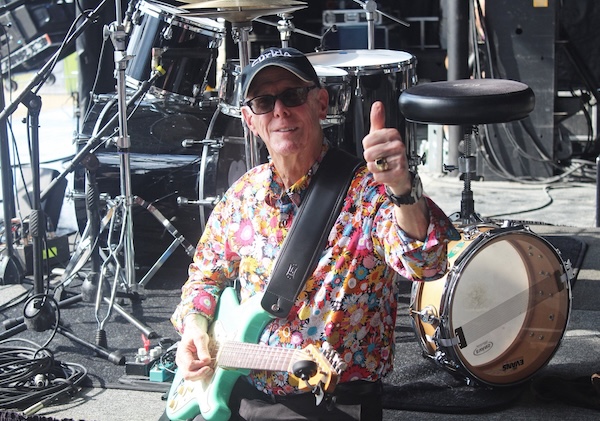
Don Dannemann of the Cyrkle today. Photo: Facebook
But it wasn’t all sunshine: Also on that first album was “Why Can’t You Give Me What I Want,” the story of a guy whose girlfriend wants him to bring her haunted things (“Three dozen dead roses, I could not deliver”). Did the Cyrkle see the goth movement coming? “To tell you the honest truth, it came from sitting around getting stoned one night. It was the early stages of hard rock — now, that’s not a hard rock song but there were songs with deep and dark messages. And we did a lot of listening.”
Simon & Garfunkel jokingly griped onstage about someone else getting the hit with “Red Rubber Ball,” but in fact they were friends with the Cyrkle and Tom Dawes played bass with S&G on one tour. The Cyrkle recorded a couple more Simon songs including the lovely semi-hit “I Wish You Could Be Here”—but there was one they turned down. “Yeah, we were in the studio and Paul Simon said, ‘Hey, our album’s not coming out for a while, and there’s this song on it that would be perfect for you guys.’ Somehow I had a brain freeze and we never got around to doing it.” That was “The 59th Street Bridge Song (Feelin’ Groovy)” which could easily have been a big hit — and was when another group, Harpers Bizarre recorded it. “I always say that I’m still in therapy over that one.”
 Dannemann enlisted in the Coast Guard between the album’s recording and its hitting, which likely made him the only ’60s pop star with a crew cut. “Yeah that was me — budding rock star and mess cook. What I remember is getting a three-day break so we could play [TV music show] ‘Hullabaloo,’ and then I was back in Cape May watching it. And I was praying ‘God, please don’t let them cut us and make me lose my credibility’.” He was still under Coast Guard contract when the offer came to tour with the Beatles in ’66. “You know how Andy Warhol’s 15 minutes of fame works — Nothing bad can happen when you’re in it. And in this case the US government said ‘Don Dannemann is in his 15 minutes of fame, so he has to do this Beatles tour’.”
That tour included the final official Beatles concert, at Candlestick Park in San Francisco. Also on that bill was Boston band the Remains, whose leader Barry Tashian has recalled it as an ominous bad-weather night. But Dannemann has a different memory: “The significant thing for me is that I saw George walking around taking pictures. And I said, ‘Why are you doing that when there’s a thousand photographers out there?’ And he said ‘We think we’re not really going to play anymore, we’re getting tired of traveling, and I just want to have some personal memories’. I told that story to [current Cyrkle member] Pat McLoughlin and he said ‘Wow, Don — That news didn’t come out for months. Do you realize you were the only one who knew’?”
Interestingly, Dannemann and Dawes went on to separate successful careers in the commercial jingle industry; the 7-Up “Uncola” jingle was Dannemann’s. Which meant that he didn’t think much about the Cyrkle for many years — at least not until a couple decades ago, when the Sundazed label reissued the ’60s albums on CD. “When the group broke up I was like, “been there, done that.’ And I was really thankful for my commercials. But when I got [the CD mixes] I was on an airplane with headphones, and I nearly jumped out of my seat. I listened to ‘Red Rubber Ball’ and heard how it starts, with the guitar and the organ together, and the voices come in — My first thought was, ‘I can hear why this was a hit.’ And the second was, ‘This really sounds like the Cyrkle. Nobody else sounded like that’.”
Brett Milano has covered music in Boston since the mid ’80s, when he appeared regularly in the Globe and the now legendary magazine Boston Rock. He had worked record label publicity in Los Angeles and edited the New Orleans music magazine OffBeat. His four books include Vinyl Junkies: Adventures in Record Collecting and Don’t All Thank Me at Once, a biography of pop cult hero Scott Miller. Currently he maintains a weekly music column in the Herald and in another realm entirely, writes for Harvard Law Today. His book on Boston rock history, The Sound of Our Town, will be reissued this month.
Tagged: "Neon", Don Dannemann, “Red Rubber Ball”