
civil rights

David Greenberg has brought to life not only one unusual man but also the tumultuous racial history of our country in the second half of the 20th century and into the early years of the 21st century.

The Rabbis Go South tells the story of a little-known episode in the fight for desegregation: 16 rabbis were invited by Martin Luther King to be part of the 1964 civil rights march in St. Augustine, Florida.

In this valuable history, Thomas E. Ricks looks at the critical events of “The Second Reconstruction” as a series of campaigns in a nonviolent war.
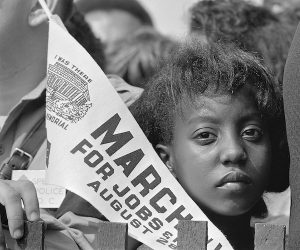
The Movement works best as a stripped-down, high-speed introduction to the struggle for civil rights, nothing more.
Selma doesn’t dare to offer the viewer anything new.
“I think a lot of people around town are fairly aware of the Red Sox’s checkered history in terms of race.”
“If you’re dead you won’t have a movement, and guns kept people alive. In particular, kept people who made the movement alive.”
Fanny Lou Hamer’s life and the political struggle, which gave us the Voting Rights Act, is the basis of Mary Watkins’ two-act opera.
In the mesmerizing “The Last White Knight,” documentary filmmaker Paul Saltzman chronicles a five-year dialogue with the man who assaulted him during the civil rights movement.
Recent Comments