
Andris Nelsons

The Latvian conductor can sometimes overindulge in pieces that demand shifts in emotional direction on a dime, so the frenzied eclecticism of Mahler’s Fourth feels tailor-made for him.
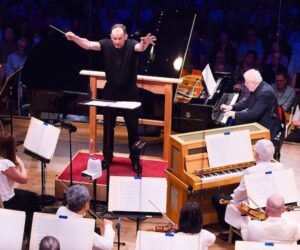
John Williams’s concert music may be intended to enrich and edify, but there’s always room for a little fandom, particularly on occasions like this. At 93, and after a lifetime of firsts, the composer deserves every accolade.
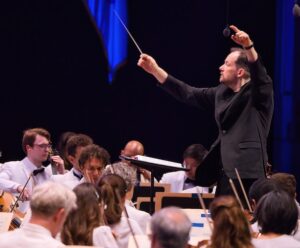
Pianist Daniil Trifonov’s no stranger to playing Rachmaninoff with Nelsons and the BSO—they delivered a memorable outing of this very piano concerto in 2019—and, while Saturday’s traversal was periodically rusty, it built in spirit and tightness as the evening proceeded.

Some unfortunate misfires in a collection that, otherwise, has a lot going for it.
Russian composer Dmitri Shostakovich was both a rebel and a conformist, a fascinating hybrid of courage and cowardice.
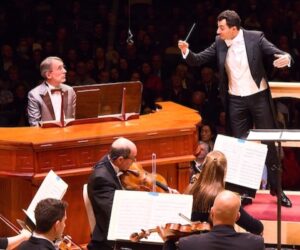
It is only a month into the current season, and the Boston Symphony Orchestra has offered three pieces that have either been heard for the first time in Symphony Hall or given that more rare honor that evades most premieres — the deuxième performance.
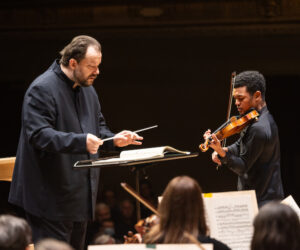
Given its considerable strength and vitality, Ethel Smyth’s music deserves its newfound place in the limelight. Let’s hope the BSO programs more of her music again soon.
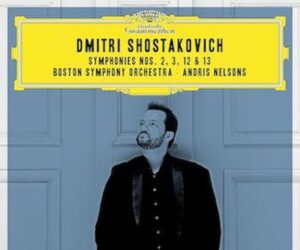
The final installment in the Boston Symphony Orchestra’ s Shostakovich symphonies series is not nearly as overwhelming as its kick-off disc.
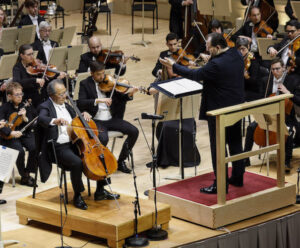
A concert whose music served as a prayerful elegy for a world spinning out of control.
Arts Commentary: The Nelsons Case
Ultimately—and regardless of one’s take on Andris Nelsons as an artist—it’s hard to see how the institution’s long-term interests are served by last week’s developments.
Read More about Arts Commentary: The Nelsons Case