
Coming Attractions: February 15 through March 2 — What Will Light Your Fire
Compiled by Arts Fuse Editor
Our expert critics supply a guide to film, visual art, theater, author readings, television, and music. More offerings will be added as they come in.
EDITOR’S NOTE: Boston area theaters have decided to pretty much ignore what is happening in America and beyond — mounting threats to democracy, the country’s slide toward authoritarianism, the climate crisis, growing economic inequality, ICE’s violent round-up of immigrants, the expansion of internment camps, ongoing genocide in Gaza, transphobia, the grueling war in Ukraine, etc. I have decided to point out a production in Coming Attractions — staged in America or elsewhere — that grapples with today’s alarming realities. Sometimes the stagings will be available via Zoom, sometimes not. It is important to present evidence that theater artists, maybe not here but elsewhere, are reflecting, and reflecting on, the world around us.
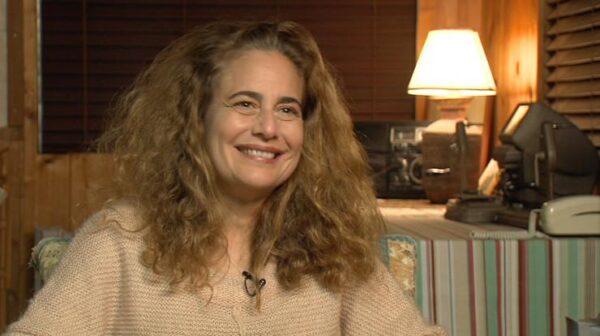
Dramatist Catherine Filloux. Photo: WikiMedia
Olivia, a two-woman drama by award-winning playwright and human rights activist Catherine Filloux will be given a staged reading on February 27 at 3 p.m. at NYC’s The Studio Studio Theatre, 520 Eighth Avenue, 9th Floor. Seating is limited for the free event, and attendance is by RSVP only to: [email protected].
The script explores fossil fuel, generational conflicts, and climate activism “through the intimate relationship between a mother and daughter. Olivia Williamson and her mother, Lina, navigate their tenuous bond as Olivia — armed with a Stanford degree — refuses to accept the family myths her mother clings to. Through oil-spilled rainbows and blood-stained family trees, Olivia makes her way to the mountains, determined to challenge the forces that shaped her childhood, disrupting Lina’s worldview along the way. Blood may be thicker than water — but will Olivia discover that oil is thicker than both?”
The reading will be directed by Elena Araoz and will feature Emily Arancio (Motherland) and Nadia Bowers (The Farnsworth Invention, Doubt, Metamorphoses).
“Following the presentation, invited guests will participate in a targeted conversation and call to action focused on climate accountability and policy advocacy, including support for the Packaging Reduction and Recycling Infrastructure Act.”
— Bill Marx
Film
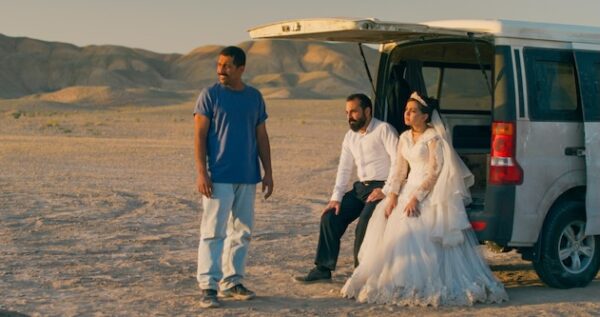
A scene from Iranian director Jafar Panahi’s It Was Just an Accident.
Boston Festival of Films from Iran
February 22
Museum of Fine Arts Boston
It Was Just an Accident
February 22, 2026 at 2 p.m.
Winner of the Palme d’Or at the Cannes Film Festival, and a nominee for Best International Feature and Best Screenplay at the 98th Academy Awards, the film has also led to Iranian director Jafar Panahi being sentenced by the Tehran Revolutionary Court to one year in prison, a two-year travel ban, and a ban on political/social group membership for “propaganda activities against the regime.”
Opposites Attract
Through February 24
Coolidge Corner Theatre, Brookline
For Valentine’s month, the theater is presenting a series of stories that focus on misfit romances:
February 18 at 7 p.m.: What’s Up Doc
February 25 at 7:30 p.m.: 10 Things I Hate About You
Bertolucci, Antonioni, Olmi Retrospective at Harvard Film Archive, Cambridge, through February 28
Partner (1968)
February 22 at 3 p.m.
Harvard Film Archive, Cambridge
Partner is the least often seen of the films in this Bernardo Bertolucci retrospective. Made when he was only 27, with a screenplay by Bertolucci and Gianni Amico, it is freely inspired by Dostoyevsky’s short novel The Double. It is the story an ineffectual young man who is taken over — and ultimately driven to madness — by his alter ego, who seems to be able to do all the things that he cannot. Other films in the retrospective include Spider’s Stratagem, The Conformist, and The Sheltering Sky.

A scene from Ermanno Olmi’s Il Posto.
Il Posto (1961)
February 27 at 8:45 p.m.
Often pointed to as an example of Italian neorealism, this poignant Italian comedy-drama, directed by Ermanno Olmi, also stands as a tender coming-of-age tale set against the grind of corporate bureaucracy. The story is a critique of the emerging middle-class dream of stable employment in 1960s Milan. It is the dawn of the country’s economic miracle, when factory and office jobs promised security. But those opportunities also ushered in alienation. Long corridors, endless desks, and regimented routines turn the office into a landscape of quiet existential anxiety.
Banff Centre Mountain Festival
February 16 – 20 at 7 p.m.
Regent Theater in Arlington
The Banff Centre Mountain Film Festival takes place annually in the small town of Banff in the Canadian Rocky Mountains. A selection of the best films in this event then goes on a world tour — which is making an annual stop at the Regent Theatre.
Snow Storm Make-Up Screening!
Brattle Theatre, Cambridge
Three films remain in the theatre’s annual series of the previous year’s best films.
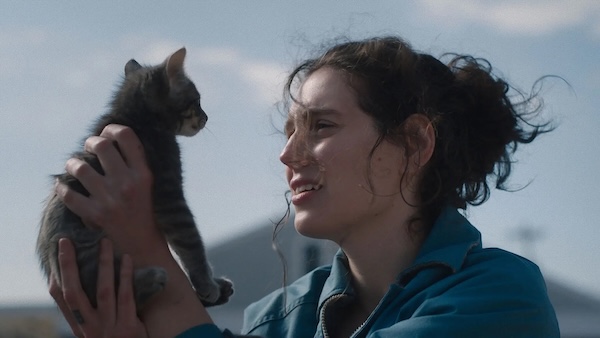
Agnes (Eva Victor) finds a new friend in Sorry, Baby. Photo: A24
Sorry, Baby
February 17 at 8 p.m.
Eva Victor’s darkly funny indie drama stars Victor as Agnes, a graduate student navigating the aftermath of a traumatic sexual encounter with a trusted mentor. Arts Fuse review
Fréwaka and Weapons
February 18
Fréwaka (6 p.m.) is a bone-deep horror film rooted in Irish folklore as well as the scars of generational trauma. A young caregiver is still reeling from her mother’s death when she is sent to a remote village to tend to Peig, an agoraphobic woman convinced that she was once taken by Na Sídhe — elusive, malevolent fairy-like beings spoken of in Celtic myth.
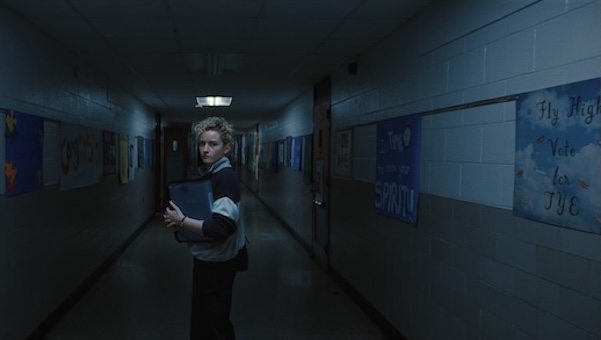
A scene from Weapons.
Weapons (8:15 p.m.) When all but one child from the same third-grade classroom mysteriously vanishes one night at 2:17 a.m., a community is left with nothing but increasingly despairing questions. The film features a creepy, award-winning cameo performance from Amy Madigan. Arts Fuse review
Holding Liat
February 19 at 7 p.m.
Coolidge Corner Theatre
Liat Atzili was kidnapped from her kibbutz on October 7. What begins as a chronicle of her parents, sister, and children’s efforts to secure her return becomes an exploration of how a grieving family deals with conflicting impulses of anger, indifference, and compassion. There will be a post-film discussion with director Brandon Kramer.
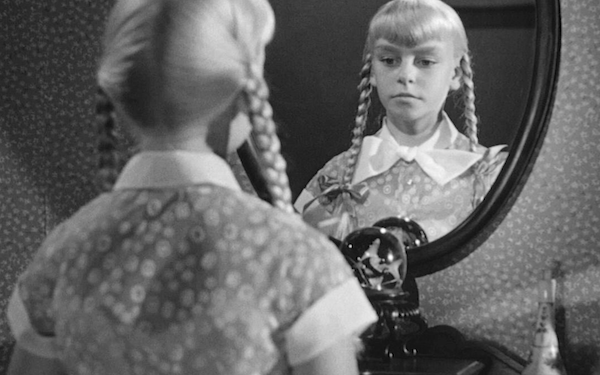
Patty McCormick’s Rhoda Penmark thinking homicidal thoughts in The Bad Seed.
The Bad Seed in a double bill with Wizard of Oz
February 20
Somerville Theatre in Davis Square
The Bad Seed
4:45 p.m. & 9:30 p.m.
Director Mervyn LeRoy’s The Bad Seed (based on playwright Maxwell Anderson’s drama, which was adapted from the 1954 novel of the same name by William March, centers on Christine Penmark, a devoted mother who begins to suspect that her seemingly perfect young daughter, Rhoda, may be responsible for a classmate’s mysterious death. A chilling family secret suggests that violent tendencies may be inherited, a grim notion for the 1950s.
Wizard of Oz
4:45 p.m. & 7:30 p.m.
Judy Garland’s Dorothy, swept away by a tornado to the magical land of Oz, journeys with three companions, sings, dances, and fights a witch as she makes her way to the titular honcho so she can return home to Kansas.
All God’s Children
February 22 at 1 p.m.
West Newton Cinema
Concerned about escalating tensions between Jewish and Black Brooklynites, the spiritual leaders of Congregation Beth Elohim in Park Slope and Antioch Baptist Church in Bed-Stuy embark on a radical experiment to nurture the change they hope to see in their communities. This is a Behind-the-Screen presentation; there will be a post-film panel discussion.
RPM Presents “Between Breaths”: Films by Kalpana Subramanian
February 22 at 4 p.m.
Brattle Theatre
Kalpana Subramanian is an artist-filmmaker, scholar of experimental film and media and Assistant Professor at the Department of Cinema Studies and Moving Image Arts at the University of Colorado Boulder. There will be a post-screening Q&A with Subramanian and Shira Segal.
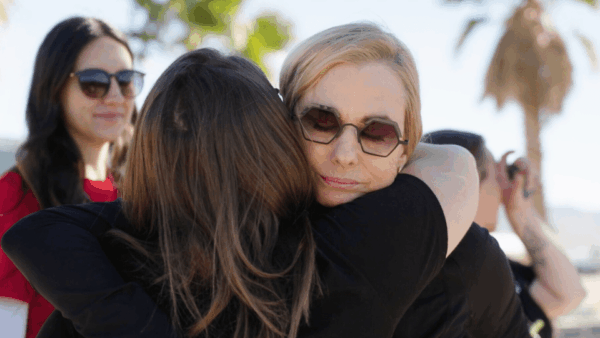
A scene from The Right Track.
The Right Track
February 23 at 7 p.m.
Somerville Theater
Shareen Anderson’s gripping documentary shines a light on the relentless fight to end sex trafficking and sexual exploitation across North America by amplifying the voices of survivors of sex trafficking, revealing their resilience, heartbreak, and courage as they fight for freedom, justice, and a future where exploited individuals are no longer criminalized, but protected.
Baltic Film Festival
Emerson Paramount Center at 559 Washington St, Boston
Live February 27–March 1
Virtually March 2–23
The festival begins on February 27 with a panel discussion at 4:30-5:30 p.m., followed by a filmmaker and Baltic community reception from 9 to 11 p.m.
Pick of the Week
Belén (2025) Streaming on Amazon Prime
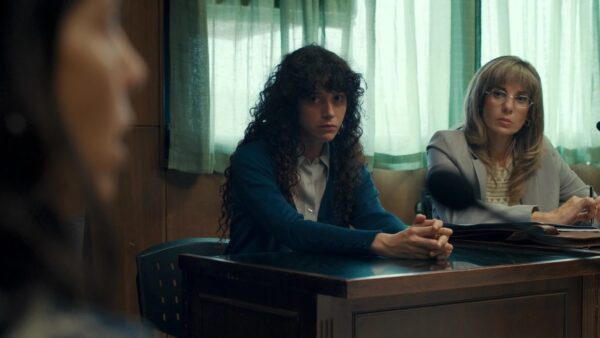
A scene from the Argentinian drama Belén. Photo: Amazon Prime
Belén, Argentina’s official Oscar submission for Best International Feature, is a fact-based legal drama about the precedent-setting court case that helped pave the way for the country’s 2020 legalization of abortion. Directed by and starring Dolores Fonzi, who co-wrote the screenplay with Laura Paredes, the film unfolds like a Kafkaesque procedural thriller, charting the relentless invasions of privacy and presumption of guilt faced by its young protagonist. Both women are also featured in the cast. Beyond its specific national context, the film resonates in our own country where women’s bodily autonomy are under similar threat. Overlooked when it played in theaters, Belén deserved far wider distribution. It is now available to stream free on Amazon.
— Tim Jackson
Television
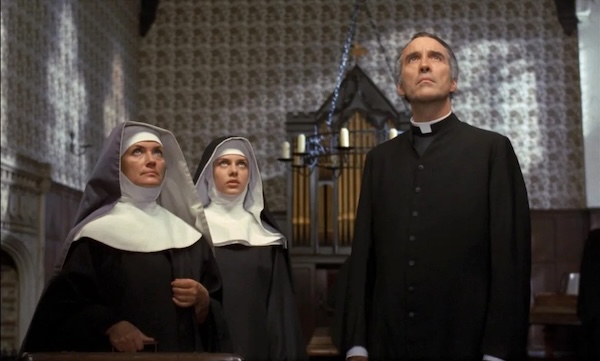
A scene from 1976’s Hammer Studio production To the Devil a Daughter.
Well, you made it through Friday the 13th and Valentine’s Day, and now you’re ready for anything, I guess. Here’s some programming to watch if you want to be distracted from whatever you need to be distracted from (eating half‑price chocolates while watching is optional).
Did you catch all those great films leaving the Criterion Channel at the end of the month? Good! Here’s some more you shouldn’t miss before they’re gone: The Children’s Hour (1961), directed by William Wyler and starring Shirley MacLaine and Audrey Hepburn; Cat on a Hot Tin Roof (1958), directed by Richard Brooks from Tennessee Williams’s steamy play and starring Paul Newman and Elizabeth Taylor; Starting Over (1979), directed by Alan J. Pakula from a screenplay by James L. Brooks, starring Burt Reynolds, Jill Clayburgh, and Candice Bergen; and the last 1970s‑era Hammer horror film, To the Devil a Daughter (1976), starring Christopher Lee, Richard Widmark, and Nastassja Kinski.
The Winter Olympic Games continue through February 22 (streaming on NBC and Peacock). I’ve watched a bit of skiing and skating. They are always thrilling, but of course this year there’s the meta‑problematic issue. The United States team isn’t quite sure whether members should acknowledge our nation’s slow descent into authoritarianism. But you can always root for Norway.
Midwinter can be cold and miserable; I recommend watching comedy. This month there are plenty of options across multiple networks. February 25 brings a new reboot of Scrubs—the fantastic, quirky comedy‑drama series set in a California hospital, starring Zach Braff and a bunch of other fine actors. It was so good it ran for nine excellent seasons. Not sure how I feel about this return from the dead. Why all these reboots? Are they ever any good? This revival will be on ABC and will feature many of the original cast members.
On February 26, a number of series will premiere new seasons with their “B” installments (why is this “B” thing happening so much lately? I don’t know, but it may be designed to soothe our nerves after we feel we’ve waited way too long for new episodes to appear). These will include Season 5B of Ghosts (a darn good American version of the original UK comedy series), Season 2B of Matlock (another reboot! With Kathy Bates!), and Season 3B of Elsbeth (starring the inimitable Carrie Preston and Michael Emerson—superior actors who are married in real life). All are on CBS
— Peg Aloi
Theater
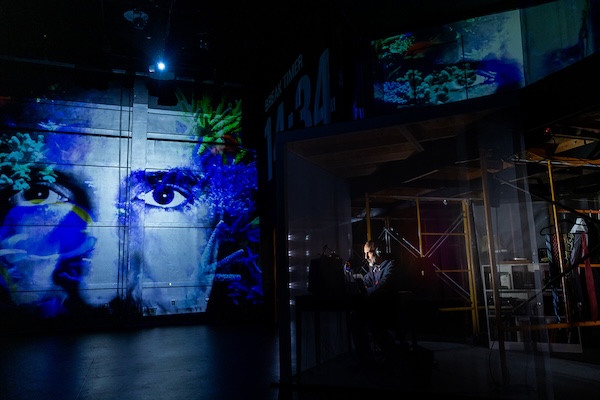
Nael Nacer in the Catalyst Collaborative@MIT Production of The Moderate. Photo: Nile Scott Studios.
The Moderate by Ken Urban. Directed by Jared Mezzocchi. A Catalyst Collaborative@MIT Production at the Central Square Theatre, 450 Massachusetts Avenue, Cambridge, February 5 through March 1.
The grueling job of being a content moderator for a soulless social media company inspired the drama Job (running at the SpeakEasy Stage Company) and this world premiere play by Drama Desk Award-winning dramatist Urban. The plot: “Estranged from his wife and son during the pandemic lockdown, Frank accepts a job as a content moderator for the world’s largest social media company. As he evaluates a never-ending stream of questionable content, the work takes an emotional and psychological toll. However, everything changes when Frank sees an opportunity to help a stranger and save himself in the process.” Note: “The play contains mature themes including images, video, and audio depictions of violence, nudity, and racism.” Arts Fuse review
Little Women by Kate Hamill. Based on the novel by Louisa May Alcott. Directed by Shana Gozansky. Staged by the Actors’ Shakespeare Project at the Dorothy and Charles Mosesian Center for the Arts, 321 Arsenal St.,Watertown, through March 1.
Another go-round for the Alcott classic: “In the Victorian-era idylls of Concord, Jo March is anything but your classic Victorian heroine. Ambitious and headstrong, her dreams of being a novelist press against the starchy boundaries of societal expectations. But while her country comes of age as the Civil War rages, Jo and her sisters must also come of age — negotiating gender roles, politics, and romance as they define womanhood on their own terms.”
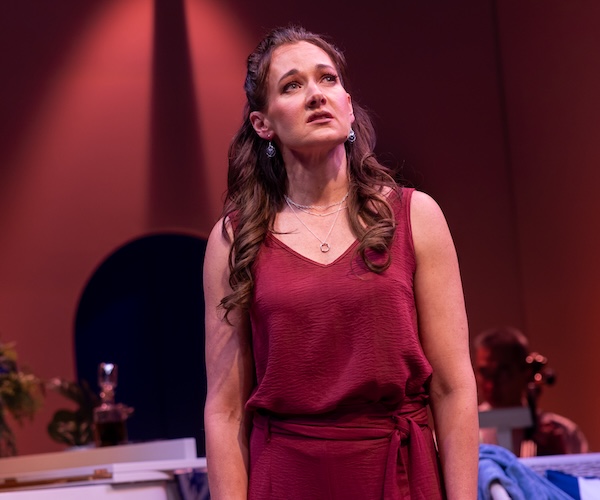
Aimee Doherty in the Lyric Stage’s production of Penelope. Photos: Nile Hawver/Nile Scott
Penelope, based on writings in The Odyssey by Homer. Book, Music, Lyrics, and Arrangements by Alex Bechtel. Book by Grace McLean and Eva Steinmetz. Directed by Courtney O’Connor. Staged by Lyric Stage Company, 140 Clarendon Street, Boston, through March 1.
A one-woman musical version of the Odyssey — reflecting Penelope’s point of view. The plot: “A generous glass of bourbon, a five-piece band, and ninety minutes is all Penelope needs to tell her side of the story as she embraces her heartache, loneliness, and resolve during the wait for her husband Odysseus to return from a seemingly endless war. Her son has disappeared. Relentless suitors prance before her. Days drone on as she is left to wonder who she is if she is alone. From jazz to folk to indie rock, Penelope dishes the dirt …” Starring Aimee Doherty. Arts Fuse review
The Roommate by Jen Silverman. Directed by Curt Columbus. Staged by Trinity Repertory Company in the Dowling Theater, Lederer Theater Center, 201 Washington Street, Providence, R.I., through March 19.
Here is the Wikipedia summary of this 2015 script: “Sharon is recently divorced and lives in Iowa and invites Robyn, relocating from New York City, to be her roommate. As the two get to know each other better, secrets are revealed and they learn more about themselves in the process.” This will be the final show Curt Columbus directs at Trinity Rep’s Lederer Theater Center as the company’s Artistic Director.
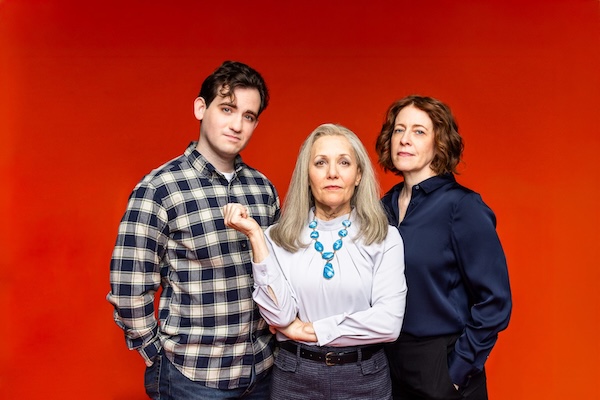
The cast of the Huntington Theatre Company production of We Had a World. L to R: Will Conard, Amy Resnick, and Eva Kaminsky. Photo: Nile Hawver
We Had a World by Joshua Harmon. Directed by Keira Fromm. Staged by the Huntington Theatre Company at the Calderwood Pavilion, 527 Tremont Street, Boston, through March 15
This script by the author of Prayer for the French Republic was inspired by “thirty years of family fights, monstrous behavior, enduring love, and unexpected dishes of home-cooked spaetzle.” More about the inspiration for the drama on the HTC website: “A dying woman calls her grandson and asks him to write a play about their family. ‘But I want you to promise me something,’ she says. ‘Make it as bitter and vitriolic as possible.’”
The Bald Soprano & The Lesson by Eugène Ionesco. Directed by Bryn Boice. Staged by Hub Theatre Company of Boston at the Boston Center for the Arts, Black Box Theatre, 539 Tremont St., Boston, February 20 through March 8.
I agree with Hub Theatre Company in its publicity release that “given current ICE policies [director] Bryn’s vision for Ionesco’s show has become all too timely and we would love to share it with you. Now more than ever artists and journalists must work together to ‘hold a mirror up to nature’ and speak out against the threat of fascism. Trust us — these absurdist masterpieces have never been so timely or so true!” So on board with the mordant relevance of “absurdist masterpieces,” though it will be interesting to see how these two Ionesco plays, which focus on the breakdown of language, can be tailored to condemn fascism. Other of the dramatist’s scripts serve that useful purpose more directly: Amédée, or How to Get Rid of It spotlights (literally) a corpse that won’t stop growing, eventually it pushes a couple out of its home; The Killer focuses on a serial murderer run amok in “Radiant City” (one of the characters is a fascist rally leader); and, of course, Rhinoceros, which Yale Rep, to its aesthetic and political credit, will be staging in March.
Ghosts by Henrik Ibsen. Adapted and directed by Tony Estrella. Staged by the Gamm Theatre at 1245 Jefferson Blvd., Warwick, RI, February 26 through March 22.
Be still my heart! Could we be having a local Ibsen boomlet? First a couple of productions of Hedda Gabler and now a version of his masterpiece from 1881, the dramatist’s splendidly acidic response to the critical rejection of A Doll’s House. In 1934, James Joyce wrote a poem, “Epilogue to Ibsen’s Ghosts,” in homage to the play. In it, Captain Alving, the play’s deceased patriarch, supplies some excuses for his amoral behavior. The first stanza: “Dear quick, whose conscience buried deep / The grim old grouser has been salving, / Permit one spectre more to peep. / I am the ghost of Captain Alving.”
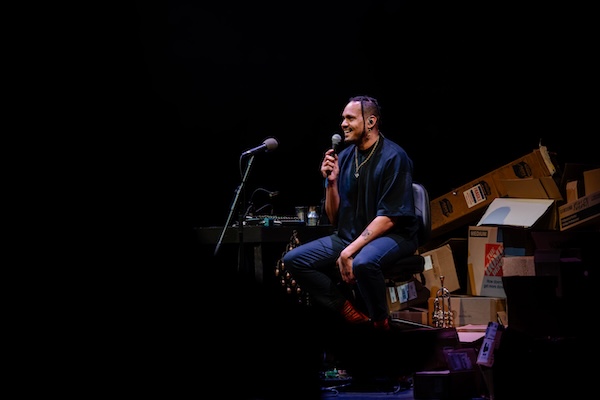
Ahamefule J. Oluo in The Things Around Us. Photo: Alex Dugan
The Things Around Us, composed, written, and performed by Ahamefule J. Oluo. Presented by ArtsEmerson at the Emerson Paramount Center, the Robert J. Orchard Stage, 559 Washington Street, Boston, February 20 through 22.
“With a trumpet, live looping technology, and an expertise for rhythm and narrative, Oluo builds an entire symphony onstage, layering sound and story. Weaving personal anecdotes with moments of emotional depth, the one-man show invites audiences to rethink what surrounds them and discover the extraordinary in the ordinary.” The Things Around Us is the third in a trilogy of shows from Oluo, following Now I’m Fine and Susan.
Kween by Vichet Chum. Directed by Pirronne Yousefzad. Staged by the Merrimack Repertory Theatre at the Nancy L. Donahue Theatre at Liberty Hall, 50 E. Merrimack Street, Lowell, February 25 through March 15.
The world premiere of a new work set in Lowell “that celebrates queer identity, Cambodian American heritage, and the courage to speak one’s truth. An MRT Commission, Kween follows Soma, a queer Cambodian American teenager navigating family, culture, and self-expression.”
Zabel in Exile by R.N. Sandberg. Directed by Megan Sandberg-Zakia. At Boston Playwrights’ Theatre, 949 Comm Ave, Boston, February 19 through March 8.
“Yerevan, 1937. Armenian writer and activist Zabel Yessayan sits in a Soviet prison cell, awaiting execution. But what exactly is her crime? Writing novels? Knowing how to speak French? Being a woman? As Zabel confronts her captors, past and present blur, and she reckons with the injustices she has witnessed and confronted—from schoolyard bullying to the horrors of genocide.” The script is a memory play “that honors the strength of a woman unafraid to stand up to tyranny and wrestles with whether it is possible to continue to believe in light during times of endless darkness.”
A timely historical drama for an America staggering towards authoritarian rule. The play was developed at Merrimack Repertory Theatre and The Armenian Museum in Watertown.
The Winter’s Tale by William Shakespeare. Directed by Ben Steinfeld. Staged by Trinity Repertory Company at the Dowling Theatre, 201 Washington St., Providence, Rhode Island, through March 22. (Running in rotating repertory with The Roommate).
Poet W.H. Auden claimed that Act III, Scene iii of this play was the most beautiful scene in Shakespeare. “Set on the desert coast of Bohemia, it is beautiful not in actual words, but in its situation. You could tell the story and describe the scene in other words and one would know at once that it is beautiful in a way that a dream can be beautiful. We have had Leontes’ storm of jealousy versus the physical beauty and peace in the description of the oracle at Delphi, and Polixenes’ storm in Arcady versus the music of the shepherds. We now have the final music of reconciliation. In the middle of the desert near the scene, there is a storm and there are beasts of prey, hunters hunting bears and bears hunting hunters. We have an innocent baby, a weak and too obedient servant who has become Leontes’ accomplice, the careless youth of hunters, the good poor — the shepherd and his son.” (W.H. Auden, Lectures on Shakespeare, Edited by Arthur Kirsch, page 293)
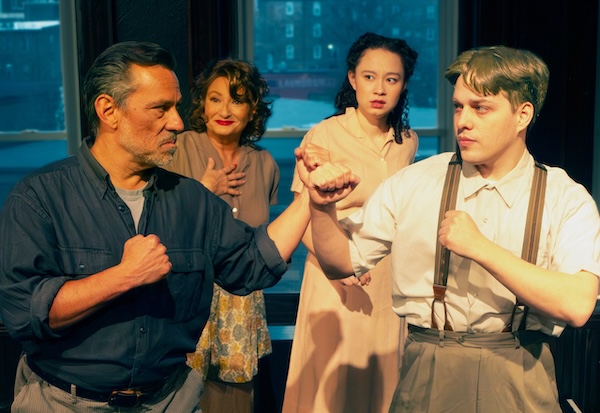
Jorge Rubio as Eddie, Sehnaz Dirik as Beatrice, Naomi Kim as Catherine, Andres Molano Sotomayor as Rodolfo in the production of A View from the Bridge. Photo: Danielle Fauteux Jacques
A View from the Bridge by Arthur Miller. Directed by David R. Gammons. Staged by the Apollinaire Theatre Company at the Chelsea Theatre Works, 189 Winnisimmet St., Chelsea. February 20 through March 22.
Arthur Miller’s celebrated 1955 drama “explores the complex reality of the immigrant experience and the pursuit of the American dream. In an Italian enclave where loyalty is everything, forbidden desire wracks a family and their tight-knit community.”
— Bill Marx
Visual Art
As Isabella Stewart Gardner evolved from socialite to Boston legend and museum builder, she grew ever more careful about her public image. In particular, she became increasingly careful about how and where she was photographed. She collaborated only with photographers she trusted and often posed while veiled or turned away from the camera, part of an attempt, scholars have deduced, to cultivate “a public persona that was both dramatic and enigmatic.”
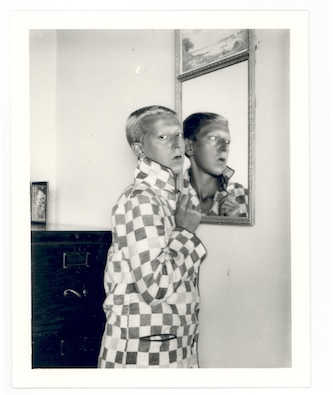
Claude Cahun, Self-portrait (reflected image in mirror with chequered jacket), 1927. Photo: Isabella Stewart Gardner Museum
Picturing Isabella, an exhibition opening at Mrs. Gardner’s eponymous art museum on February 19, traces, the museum says, “Isabella’s complicated and evolving relationship to her image, fame, and legacy.” It includes photographs and archival material from her childhood, her many foreign travels, carefully posed portraits, and images from news stories, all relating to a woman “whose camera-shy behavior guaranteed her Museum as her most enduring portrait.”
The Gardner’s Persona: Photography and the Re-Imagined Self, also opening on February 19, “explores the often liberating re-envisioning of identity through an alter ego” created by the camera. The more than 80 works in the show are international in scope and date from the early 20th century to the present. They “engage with a character, an icon, an avatar—a persona” and they “time-travel and gender-bend, mythologize, mask, and mirror… They represent possibility.”
The latest group show at MASSMoCA, Technologies of Relation, opens February 21 with more than a dozen artists exploring (for a change) fairly optimistic views of our technological future. Instead of concentrating on the spread of misinformation, hateful memes, conspiracy theories, romance scams, and social media bullying, these artists “avoid the binary views that frame technology as good or bad, as tool or monster” and envision “a technological future that is inclusive and liberatory.” Their works, says the museum, “look to ancestral traditions as models for making technology more accessible, and for ways of imagining (or remembering) how we can employ more ethics and care in the technological sphere.”
Neighbors, friends, and “pioneers of geometric abstraction,” Carmen Herrera and Leon Polk Smith fostered a decades-long artistic dialogue while struggling with an art world that ignored or marginalized their work. Cuban-born Herrera and Smith, a gay man born in Indian territory, “shared a commitment to pushing the boundaries of abstraction in a mid-century art world that too often overlooked them.”
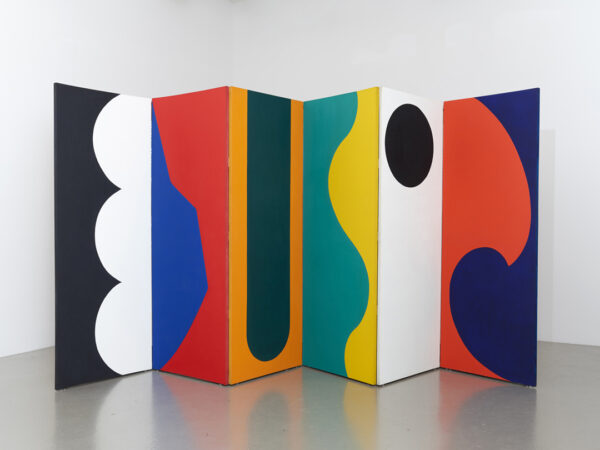
Leon Polk Smith, Six Involvements in One, 1966. Photo: Lisson Gallery
The 45 works in the Addison Gallery exhibition Both Sides of the Line: Carmen Herrera & Leon Polk Smith, opening on February 21, represent the first major show featuring the two artists together. The paintings, works on paper, and three dimensional work on view weave together and diverge as they explore “abstraction, identity, and the power of friendship.”
Anyone who has gone lobstering on a bright Maine summer afternoon can feel the appeal: the slow trawling between colorful buoys, the traps that rise and fall from the depths, the smells and sounds of the sea, the clear, white light on the water. In Maine, lobstering is open to anyone with a license and a boat, which can be anything from a small dinghy to an ocean-worthy craft. It’s open to teens and seniors, part-timers and those who lobster as an occupation. For generations, nothing has been more typically Maine than this.
But perhaps not for long.
At its WinCam (Winchester Community Access and Media) satellite gallery, the Griffin Museum opens Cheryl Clegg: The Endangered Lobstermen on March 2. As lobstering declined after lobsters were declared an endangered species, Clegg began to photograph endangered Maine lobstering communities to show, she says, “the human faces that are at risk of losing their livelihood & way of life…capturing the strength, resilience, and uncertainty of the people behind the industry”
— Peter Walsh
Classical Music
Mono e Mono
Presented by Boston Modern Orchestra Project
February 21, 8 p.m.
Jordan Hall, Boston
Gil Rose leads BMOP in a trio of monodramas: William Bolcom’s Medusa, Ronald Perera’s The White Whale, and Carlisle Floyd’s Flower and Hawk. They’re sung, respectively, by soprano Julia Mintzer, baritone Michael Chioldi, and soprano Sarah Coburn.
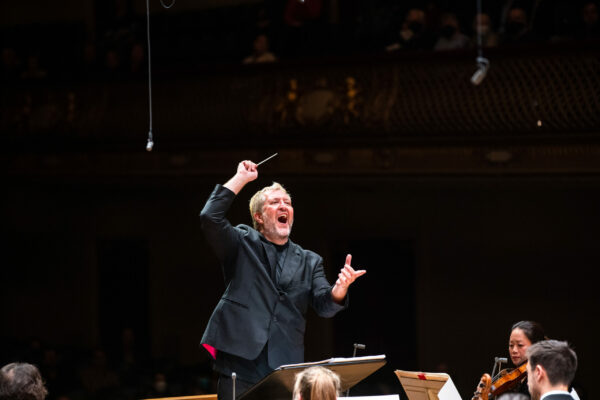
Thomas Adès conducts the BSO in his Inferno Suite. Photo: Robert Torres
Adès conducts Adès
Presented by Boston Symphony Orchestra
February 26 at 7:30 p.m., 27 at 1:30 p.m., and 28 at 8 p.m.
Symphony Hall, Boston
The BSO’s former artistic partner returns to conduct a pair of his own works—the violin concerto Concentric Paths (with Augustin Hadelich) and Aquifer—as well as Beethoven’s Symphony No. 6.
Zander conducts Mahler
Presented by Boston Philharmonic Youth Orchestra
February 27, 8 p.m.
Symphony Hall, Boston
Benjamin Zander and the BPYO return to Symphony Hall with a pair of fin de siècle favorites in tow: Debussy’s La mer and Mahler’s Symphony No. 1. Also on the docket is the rousing “Putnam’s Camp” movement from Charles Ives’s Orchestral Set No. 1.
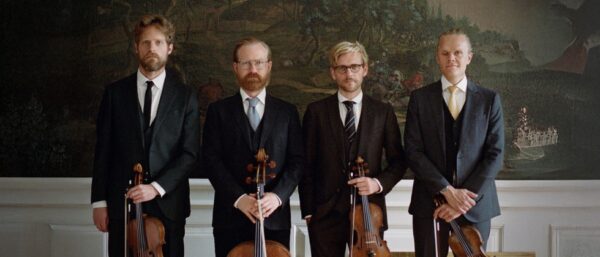
The Danish String Quartet. Photo: courtesy of Vivo
Danish String Quartet
Presented by Vivo Performing Arts
February 27, 8 p.m.
Jordan Hall, Boston
The DSQ returns to Boston with a program of works by Alfred Schnittke, Johnny Greenwood, and Ravel—plus maybe (hopefully?) some Nordic folk music encores.
— Jonathan Blumhofer
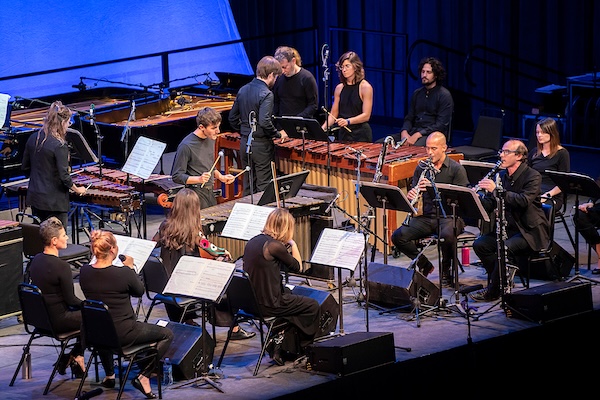
Ensemble Signal in action. Photo: Stephanie Berger
Steve Reich: Music for 18 Musicians with Ensemble Signal
February 26 at 7 p.m.
Calderwood Hall at Isabella Stewart Gardner Museum
Tickets $50, $40 (members), $45 (seniors), $20 (students).
Composer Steve Reich’s 1976 minimalist masterwork Music for 18 Musicians will be receiving a rare professional group performance in Boston. This staging will feature Ensemble Signal in the Gardner’s tiered, cube-like Calderwood Hall. The group’s 2015 recording of the hour-long piece serves as a suitable successor to its best-known versions from 1978 (one of David Bowie’s 25 favorite albums) and 1997. The composition calls for multiple mallet instruments, pianos, strings, clarinets and female voices that build from a pulse to slowly phased layers of hypnotic repetition, drawing on the influences of gamelan, plainchant, and jazz. And this concert, which kicks off the museum’s new Thursday Night Music series, appears well-timed to coincide with the approaching 50th anniversary of the piece’s premiere as well as Reich’s 90th birthday. Arts Fuse feature.
–Paul Robicheau
Jazz
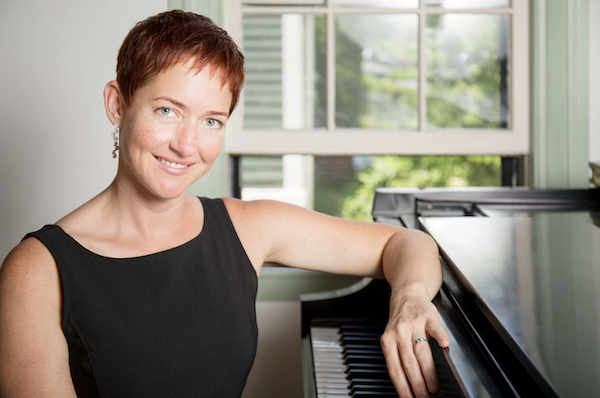
Latin-fluent, kinetic pianist Rebecca Cline will be performing at the Long Live Roxbury Brewery & Taproom this week. Photo: courtesy of the artist
Rebecca Cline Trio
February 19 at 6 p.m.
Long Live Roxbury Brewery & Taproom, Boston
FREE
The superbly Latin-fluent, kinetic pianist Rebecca Cline leads her trio with bassist Keala Kaumeheiwa and drummer Bertram Lehmann as part of the free early-Thursday night series at the Long Live Roxbury Brewery & Taproom. Cuban grooves are Cline’s bread and butter, but her musical curiosity has led her to equally deep explorations of Puerto Rico and Brazil.
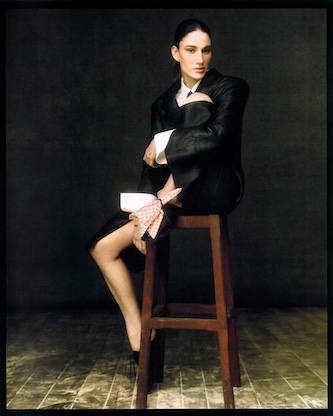
Vocalist Niia. Photo: Szilveszter Mako
Niia
February 19 at 7 p.m.
Regattabar, Cambridge, Mass.
At the Regattabar, the singer Niia makes her second stop on a short tour that includes Philly, D.C., Portland, Ore., and New York’s Blue Note. Her repertoire includes American Songbook standards like “Angel Eyes” and “I Get Along Without You Very Well” and, on her most recent disc, V, edgy originals like “f****** happy.” Her band at the Regattabar will include bassist Paul Thompson, drummer Luke Titus, and Jonathan Huber on keyboards.
Revolutionary Snake Ensemble
February 21 at 7 p.m.
Scullers Jazz Club, Boston
The venerable Boston-based Revolutionary Snake Ensemble — who use the New Orleans second-line tradition as a base for wide-ranging musical exploration — delivers its annual Mardi Gras season show with their regular Fat Tuesday special guest Henri Smith, a glorious NOLA vocalist. Other special guests include saxophonists Temidayo Balogun, Mark Zaleski, Sam Spear, and Noah Preminger. The RSE core group comprises alto saxophonist/composer Ken Field, tenor saxophonist Tom Hall, trombonist/tubist Dave Harris, trumpeter Jerry Sabatini, and drummer Phil Neighbors.
Brandee Younger Trio
February 21 at 7 p.m.
Regattabar, Cambridge, Mass.
Rising star jazz harpist Brandee Younger — extending the instrument’s jazz identity forged by Dorothy Ashby and Alice Coltrane — ronts her trio, with bassist Rashaan Carter and drummer Allan Mednard.
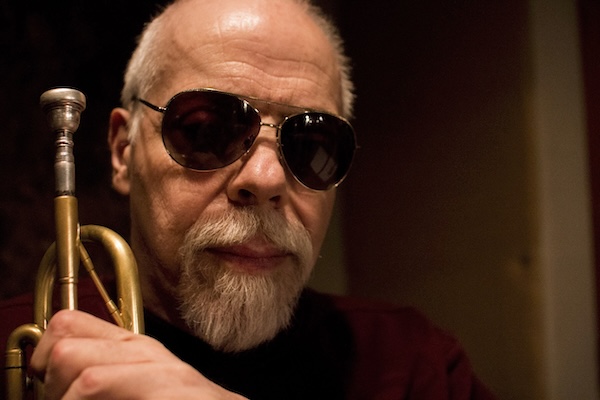
The late trumpeter, composer, and educator John McNeil. Photo: Edon Philips
John McNeil Memorial Concert
February 23 at 7:30 p.m.
Jordan Hall, Boston
FREE
The tribute last November at the Lilypad to the late trumpeter, composer, and educator John McNeil, who died 2024, was one of the high points of the fall concert season. Here was a whole trove of music that deserves to be more widely discovered: lyrical, deeply textured, and swinging. It turns out that that show was a kind of warm-up for this concert at New England Conservatory, where McNeil taught for decades. Many of McNeil’s former students and colleagues will again take part, including saxophonists Allan Chase, Jerry Bergonzi, Noah Preminger, and Jeremy Udden; pianists Frank Carlberg, Randy Ingram, Ethan Iverson, and Mark Shilansky; trumpeters Jason Palmer, David Adewumi, and Mark Tipton; and singer Allegra Levy. The day’s events will also include two discussions: “Memories of John McNeil” (Williams Hall, 2-4 p.m.) and “John McNeil’s Teaching of Jazz Improvisation” (4-6 p.m.) The events are free and open to the public, but tickets are required for the Jordan Hall concert. Details at necmusic.edu.
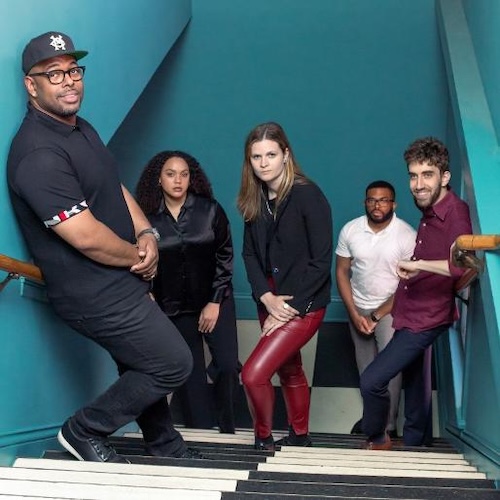
Christian McBride and Ursa Major. Photo: Mallory Turner
Christian McBride and Ursa Major
February 27-28 at 7 p.m. and 9 p.m.
Scullers Jazz Club, Boston
Master bassist and bandleader Christian McBride, 53, brings his funk-fusion-y Ursa Major band to Scullers for four shows over two nights. The talented youngish band includes saxophonist Nicole Glover, guitarist Ely Perlman, pianist Mike King, and drummer Savannah Harris.
Joel Ross
February 28 at 7:30 p.m.
Jimmy’s Jazz & Blues Club, Portsmouth, N.H.
The exciting vibraphonist and composer Joel Ross is just coming off his expansive new Blue Note release, Gospel, which segues from layered, probing post-bop to latter-day extensions of the sacred music tradition.
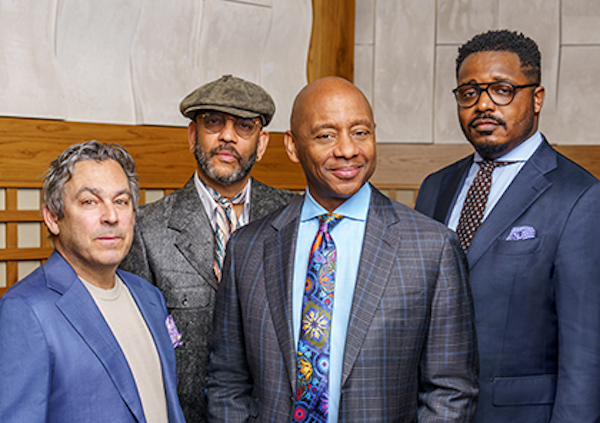
Branford Marsalis Quartet. Photo: courtesy of the artist
Branford Marsalis Quartet
February 28 at 8 p.m.
Groton Hill Music Center, Groton, Mass.
The Branford Marsalis Quartet’s daring retake of Keith Jarrett’s 1974 Belonging was one of the more gratifying releases of 2025. As Branford has explained, the album release is coincidental to the “Belonging Tour” — “We’re always touring.” But don’t be surprised if they play most or all of this daunting work. His longtime bandmates are pianist Joey Calderazzo, bassist Eric Revis, and drummer Justin Faulkner.
— Jon Garelick
Roots and World Music

German Cornejo & Gisela Galeassi. Photo: Fuentes/Fernandez/WikiMedia
Tango After Dark
February 20, 8 p.m.
Berklee Performance Center
Mention tango and some think of daring and dramatic dance moves, while the minds of others navigate toward the adventurous and moving music of Argentine composer Astor Piazzolla and his nuevo tango movement. This group, led by champion dancer German Cornejo, takes up a wide range of modern and traditional tango music. Their appearance is produced by Global Arts Live.
Catherine Bent’s Brasil Sonoroso
February 22, 5 p.m.
Eustis Estate, Milton
Mandorla Music’s ongoing Wintersounds series at the Eustis Estate brings in the sounds of Brazil just as Carnival season is wrapping up. Boston cellist Catherine Bent, who is behind a number of innovative choro and forró projects, will be joined by one of the great American practitioners of traditional forró accordion, Rob Curto, along with the exciting percussionist Seba Ramírez.
Michael Prentky with Jose Soto
February 28, 8 p.m.
Zumix, East Boston
A terrific double bill for those who like their traditional music on the experimental side. Experienced klesmer trombonist Michael Prentky is celebrating his deeply personal sad boy : ADD : apocalypse recording. Also performing is Costa Rican pianist Jose Soto and his Ancestral Call ensemble.
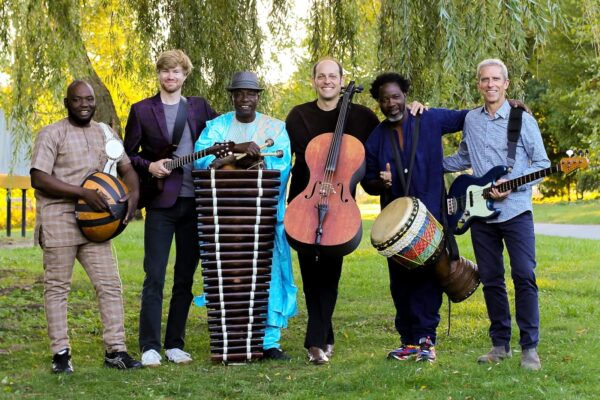
Djékady will performing at Somerville’s Arts at the Armory. Photo: courtesy of the artist
Djékady with Balla Kouyaté and Mike Block
March 1, 5 p.m.
Arts at the Armory, Somerville
Two of Boston’s finest and most accomplished musicians are balafon player Balla Kouyaté and bassist Mike Block. Both have numerous outlets for touring and recording, but every so often they get together as Djékady, a group that deftly mixes West African, classical, and jazz. The sextet also includes fellow masters percussionists Idrissa Kone and Sekou Dembele, guitarist Luke Okerlund, and bassist/sintir player Michael Rivard. They’re celebrating the recent release of their debut album Benkan.
— Noah Schaffer
Author Events
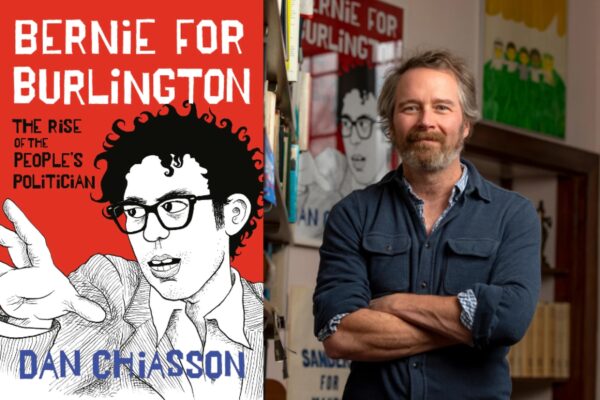
Dan Chiasson in conversation with Sam Huber — Brookline Booksmith
Bernie for Burlington: The Rise of the People’s Politician
February 16 at 7 p.m.
Tickets are Free or $41.64
“The early days and inexorable rise of the young Bernie Sanders, the one-of-a-kind visionary who changed American politics forever, told by a son of the People’s Republic of Burlington, Vermont.
“In this symphonic origin story of an era-defining politician, Dan Chiasson, a Burlington native who had a ringside seat to Bernie Sanders’s development, reconstructs the rise of an American icon. With in-depth reporting and remarkable remembered scenes, Chiasson tracks a faint political signal that traveled from the Vermont communes, hard luck neighborhoods, traditional businesses, and county fairs to the town meetings and ballot boxes of his home state, and finally to Washington, D.C., to transform our national political landscape.”
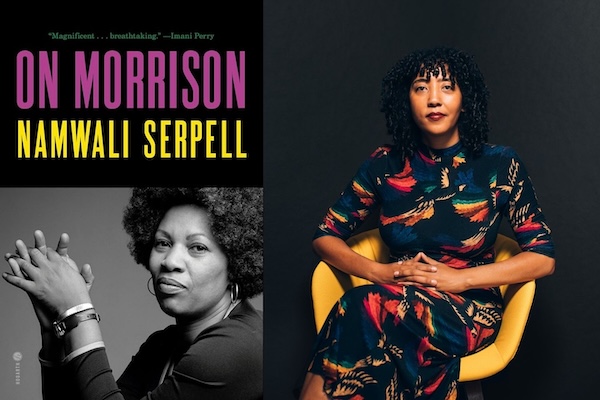
Namwali Serpell
On Morrison
Feb 16 at 6 p.m.
First Parish Church, Cambridge MA
Tickets are free or $36 with book
“An illuminating, electrifying exploration of the work of Toni Morrison by an award-winning novelist and Harvard professor. Toni Morrison, Nobel Laureate and one of our most beloved writers, has inspired generations of readers. But her artistic genius is often overshadowed by her monumental public persona, perhaps because, as Namwali Serpell puts it, “she is our only truly canonical black, female writer — and her work is highly complex.” In On Morrison, Serpell brings her unique experience as both an award-winning writer and professor who teaches a course on Morrison to illuminate her masterful experiments with literary form.
“This is Morrison as you’ve never encountered her before, a journey through her oeuvre — her fiction and criticism, as well as her lesser-known dramatic works and poetry — with contextual guidance and original close readings. At once accessible and uncompromisingly rigorous, On Morrison is a primer not only on how to read one of the most significant American authors of all time, but also on how to read great works of literature in general. This dialogue on the page between two Black women artist-readers is stylish, edifying, and thrilling in its scope and intelligence.”
Kate Brown with Kenda Mutongi — Brookline Booksmith
Tiny Gardens Everywhere
February 17 at 7 p.m.
Tickets are free or $38.23 with book
“From the eighteenth century to the twenty–first, the surprising history and inspiring contemporary panorama of urban gardening: nurturing health, hope, and community.
Nurturing health, hope, and community, gardeners in cities and suburbs are reclaiming lost commons, transforming vacant lots into vibrant plots, turning waste into compost, and recreating what was once the most productive agriculture in recorded human history. Tilled into this rich history of urban agriculture is an inspiring layer of contemporary activism. Each chapter includes contemporary stories of people from all walks of life who, in their gardens, are continuing a great tradition of mutual aid, political resistance, and bold experiments in sustainability.
A manifesto for the next food revolution, Tiny Gardens Everywhere blends past and present, archive and experience, to offer a truly inspiring vision of the transformative potential of gardening and urban life.”
Jenna Blum with Mark Cecil — Brookline Booksmith
Murder Your Darlings
February 24 at 7 p.m.
Tickets are free or $35.97 with book
“Known for such brilliant historical novels as Those Who Save Us and The Lost Family, New York Times bestselling author and A Mighty Blaze co-founder Jenna Blum now offers a contemporary, suspenseful novel about love, loss, and revenge in the world of books.”
Anne Fadiman in conversation with George Howe Colt – Porter Square Books
Frog
February 24 at 7 p.m.
Cambridge Edition, 1815 Massachusetts Avenue, Cambridge, MA
Free
“In Frog, Anne Fadiman returns to her favorite genre, the essay, of which she is one of our most celebrated practitioners. Ranging in subject matter from her deceased frog, to archaic printer technology, to the fraught relationship between Samuel Taylor Coleridge and his son Hartley, these essays unlock a whole world—one overflowing with mundanity and oddity—through sly observation and brilliant wit.
The diverse subjects of Frog are bound together by the quality of Fadiman’s attention, and subtly, they come to form a slantwise portrait of the artist, a writer dedicated to chronicling the world as it changes around her, in ways small and large, as time passes.” Arts Fuse review
The Public Intellectual in American Life – Arts & Humanities Division, Harvard University
February 25 from 7-9 p.m.
Free
“America has sometimes been described as a pragmatic, anti-intellectual society. But in fact, from the Puritans to the Founders to the New York intellectuals and the Civil Rights movement, many major movements in American life have drawn language and inspiration from public intellectuals who delve deeply into the problems of their age, and talk about them in a broad-ranging, non-specialist register.
Today, alas, our mainstream public conversation seems to be dominated more by punditry, overconfident number-crunching and political spin than genuine, deep reflection. Some intellectual energy and creativity can be found in the precinct of anonymous online posters, many of whom traffic in big words and scintillating edginess, but scant wisdom or intellectual maturity.
Is there a future for genuine public intellectuals in America? Where are the signs of hope? Is there anything worth retrieving from the past? For decades, George Scialabba has been one of America’s premier chroniclers of public intellectual life. His new book The Sealed Envelope: Toward an Intelligent Utopia reflects on the work and impact of thinkers like William F. Buckley, Barbara Ehrenreich, Allan Bloom, Christopher Hitchens, Michel Sandel and many others.
On February 25th, the Public Culture Project will host him for a conversation with Jesse McCarthy, the John L. Loeb Associate Professor of the Humanities and of the Social Sciences, and Anastasia Berg, Assistant Professor of Philosophy at UC Irvine. Both are editors at The Point, one of our moment’s premier public intellectual magazines.”
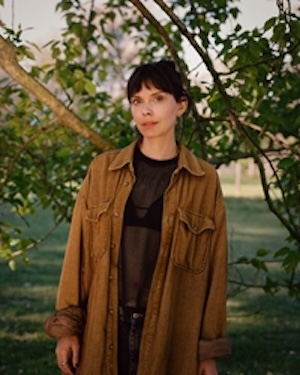
Amber Husain, author of Tell Me How You Eat.
Amber Husain in conversation with Jason Bryan Silverstein – Porter Square Books
Tell Me How You Eat
February 26 at 7 p.m.
Free
“Inspired by writer Amber Husain’s unorthodox route to healing from anorexia, Tell Me How You Eat examines not just how society views the refusal to eat, but how we understand the meaning and power of food.
Suspecting that the standard courses of treatment—as disempowering as they are ineffective—might in fact be part of the underlying problem, Husain took part in an experimental psilocybin treatment study. Where the medical model typically tries to fix the difficult non-eater, this trial opened her mind to the idea that there might be more to fix beyond the self—that our relationship with food might be closely entwined with our outlook on the world.” The event will also feature writers Saeed Jones and Jill Damatac.
“Pencils Up!” Porter Square Books Writer’s Hour – Porter Square Books
March 1 at 5 p.m.
Free
“Hello Writing Enthusiasts!
Pencils Up! is an informal monthly gathering for anyone interested in writing. Whether you’re a casual journaler or a poet laureate, join us for an hour of silent writing (and a few minutes of optional sharing at the end). Bring something you’re already working on or start something new (informal prompts will be provided). Pencils, pens, and actual paper are encouraged!”
— Matt Hanson
Tagged: Bill-Marx, Jon Blumhofer, Jon Garelick, Matt Hanson, Noah Schaffer, Peg Aloi, peter-Walsh