
Book Review: Tracing the Mind’s Decline — George Scialabba’s “The Sealed Envelope” and the Follies of Conservatism
By Daniel Lazare
Some might complain that the essays have not aged well since they deal with thinkers who are no longer fashionable or who wrote at a time very different from our own. But it’s the contrast between their time and ours that makes them interesting as well as problematic.
The Sealed Envelope: Toward an Intelligent Utopia by George Scialabba. Yale University Press, 288 pages, $32.50.
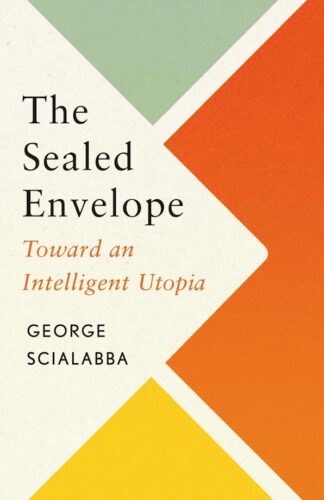
George Scialabba’s The Sealed Envelope is a collection of essays and book reviews that appeared in the Boston Phoenix, the Boston Review, The Nation, and other such outlets from the early 1980s onward. Some might complain that the essays have not aged well since they deal with thinkers who are no longer fashionable or who wrote at a time very different from our own. But it’s the contrast between their time and ours that makes them interesting as well as problematic.
Allan Bloom, the subject of an essay that Scialabba published in 1991, was the author of The Closing of the American Mind, a critique of liberal campus culture that caused a sensation when it came out four years earlier. Yet today, Bloom is little more than a historical footnote. William F. Buckley Jr., the subject of a 1989 essay in Grand Street, remains relevant for those interested in the history of U.S. conservatism. But does anyone still remember how he held the country in thrall with his magazine columns, spy novels, TV talk shows, and yachting articles in The New Yorker? The same goes for Irving Kristol, whom Scialabba wrote about in The Nation in 2011. Neo-conservatism, the movement Kristol helped launch in the 1970s and ’80s, was an intellectual splinter group that started small but ended up capturing virtually the entire foreign-policy establishment in Washington and New York. But the “forever wars” that followed in response to 9/11 were so disastrous that most people would like to forget the neocons ever existed.
Scialabba’s treatment of Bloom is generous to a fault. The Closing of the American Mind was a rightwing tirade about annoying undergraduates who think that prejudice is bad, open-mindedness is good, and that’s all you need to know. This was enough to make a crusty old conservative like Bloom tear his hair out. “The mind that has no prejudices at the outset is empty,” Closing proclaimed. But all he could offer in response to such vacuousness was Leo Strauss-style conservative claptrap in which the highest goal was to turn back the clock to the days of ancient Athens – which was enough to make crusty old leftists tear their hair out as well.
“To dismiss Bloom out of hand as elitist, authoritarian, anti-democratic, regressive, and a crank,” Scialabba writes, “would be, in a way, to repeat the error of our noble democratic forebears, the Athenian citizens who condemned Socrates to death. Bloom is indeed all those unpleasant things. But by making a clever and influential, though specious, case against popular sovereignty, Bloom and Socrates offer its defenders an opportunity to refine and deepen the case for equality.” Scialabba is undoubtedly correct about Bloom being influential. But clever? In that respect, he’s less convincing. In any event, his answer to Bloomsbury elitism is to haul out another authority, in this case Walt Whitman and his 1871 book, Democratic Vistas, which argued that ordinary people in ordinary circumstances were capable of coming up with extraordinary things, “outvying … all that has been hitherto shown in best ideal pictures” in more classical epochs.
It’s a good response. But is Whitman’s exuberant westward-ho democracy enough when the conservatism that Bloom helped give rise to is now tearing the country apart? The answer is no: we need more. But Scialabba’s elegant put-down shows how far we’ve traveled in the last four decades – and how desperate the American predicament is as a consequence.
Scialabba’s dissection of William F. Buckley is equally adept. With his TV shows, novels, and columns, Buckley accomplished more in a week than most of us do in a month. Yet he never found time to sort through a problem that has bedeviled conservatives from Edmund Burke on. Where Bloom looked to ancient Greece, Buckley, fittingly enough for a Catholic conservative, looked to the high Middle Ages when an all-powerful church stretching from Iceland to the crusader kingdom of Jerusalem dominated western society from top to bottom. This was his ideal, pernicious and reactionary as it might be. What made it worse, however, is that his other lodestar was laissez-faire capitalism, a system marked by ceaseless change and innovation that usher in bouts of “creative destruction” in which “all that is solid melts into air [and] all that is holy is profaned,” to quote Schumpeter and Marx respectively.

George Scialabba Photo: Robert Birmingham
One ideal is traditional and static, the other dynamic and ever-changing. As Scialabba notes, “modern conservatism affirms values that cannot be reconciled: on the one hand, social stability, sustained by an immutable moral order and religious orthodoxy; on the other, a minimal state and an unregulated market.” He quotes Whittaker Chambers, the Soviet spy turned Christian convert who became an editor at Buckley’s National Review. “The Church did well to mistrust Roger Bacon,” Chambers reminded his boss at one point, referring to the 13th-century philosopher-naturalist whose works were so unsettling that the church placed him under arrest.
“What did Buckley make of that?” Scialabba wonders. And how on earth did Buckley balance his association with an ultra-reactionary Chambers with stardom on super-modern TV? It’s like inveighing against modern medicine while being wheeled into the operating room.
But, again, Scialabba’s musings remind us of how far we’ve come from an age in which people could still regard Buckley as an amusing curmudgeon to one in which such forbearance is no longer possible now that we’re on the edge of Civil War 2.0.
Kristol, who died in 2009, comes in for rougher treatment (fortunately). In contrast to Bloom and Buckley, who were pretentious and shallow but at least made an effort, he was too lazy even to try. As editor of The Public Interest, the journal he founded in 1965, his specialty was the 2,000-word knock-off essay that was as formulaic as a sonnet. A typical piece, Scialabba wrote in The Nation in 2011, began with:
….the liberal conventional wisdom, laced with scare quotes, about ‘root causes’ or ‘participatory democracy’ or ‘American imperialism’ or ‘international law.’ The liberal fantasy in question is refuted by a combination of one-liners, daringly commonsensical contrarianisms, and historical allusions or statistical snippets. By way of conclusion, the deeper, perennial conservative wisdom is restated. It is all genial, effortless, tension-free. Never does Kristol struggle to find his way through some tangled thicket of arguments or to reconcile some apparently contradictory lessons of history.
The man “appears to write on cruise control,” Scialabba added. Kristol used his literary skills, such as they were, to attack radical intellectuals and anti-poverty activists at home while skewering anyone who dared question US intentions abroad. For America, Kristol wrote, “realpolitik … is unthinkable” for the simple reason that the country is incapable of taking a calculating, hard-edged view of the world. If “every American administration has felt compelled to use our influence” to advance “individual rights as the foundation of a just regime and a good society,” Scialabba quotes him as saying, it’s because goodness is central to American character, “the very grain of our political ethos.” The result was a syllogism as simple-minded as anything Bloom encountered at the University of Chicago, one in which the United States is intrinsically good while anyone who opposes US power in the slightest must be bulldozed aside. Even international law winds up on the chopping block because it occasionally gets in America’s way (although never for long). It’s “one vast fiction” Kristol thus wrote, one that has been “abused callously or ignored ruthlessly, by those nations that, unlike the Western democracies, never took it seriously in the first place.” Better to cast it aside so Washington can visit its unalloyed goodness upon the world unimpeded.
Scialabba’s analysis of Kristol is bracing, although whether it’s bracing enough in view of the wreckage neoconservatism has caused is another question. Given how Kristol and his ilk have given way to the mad egotism of Donald Trump, maybe bracing is no longer enough. Maybe we need something more, something along the lines of a thermonuclear excoriation.
The Sealed Envelope zeroes in on numerous other intellectuals. Scialabba likes some such as the philosopher Alasdair MacIntyre, the conservative thinker John Gray (highly overrated, in this reviewer’s opinion), and the political scientist Robert Dahl while slashing away at less estimable figures such as Henry Kissinger and Christopher Hitchens. His takedown of New York Times columnist Thomas L. Friedman is especially good. Reviewing Friedman’s 2005 bestseller, The World is Flat, he quotes him on the “globalution” – rhymes with revolution – that was locking the world in an iron-clad free-market grip. What’s great about such policies, Friedman wrote, is that they were self-directing:
Governments which deviate too much from the core rules will see their investors stampede away, interest rates rise, and stock market valuations fall. The only way to get more room to maneuver in the Golden Straitjacket is by growing it, and the only to grow it is to keep it on tight. … The tighter you wear it, the more gold it produces and the more padding you can then put into it for your society.
“There’s no one in charge!” Friedman added. Observes Scialabba: “Capital attraction and capital repulsion are neutral processes, like gravitation.” The result is an impersonal worldwide dictatorship from which there is no escape. Scialabba wrote this three years before the 2008 financial meltdown turned globalution into globaloney. Once again, Scialabba’s discussion of Friedman in a (slightly) gentler and calmer time shows us how far we’ve come – and not in a good way.
Daniel Lazare is the author of The Frozen Republic: How the Constitution Is Paralyzing Democracy (New York: Harcourt Brace, 1996).
Tagged: "The Sealed Envelope", Allan Bloom, George Scialabba, Irving Kristol, Thomas L. Friedman, conservative thought