
January Short Fuses — Materia Critica
Each month, our arts critics — music, book, theater, dance, television, film, and visual arts — fire off a few brief reviews.
Books
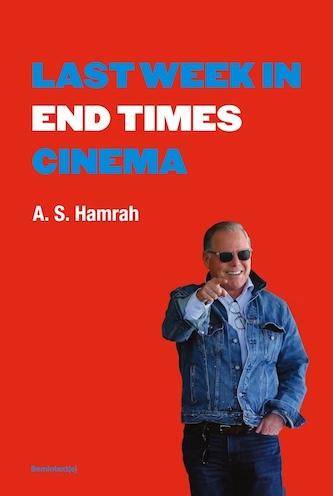
In the Afterword of his new book, A. S. Hamrah points out that Last Week in End Times Cinema (the second in a month along with The Algorithm of the Night) started out as an email by the same title sent to subscribers and containing weekly items gleaned from his reading of online movie trade publications. He continued the doomscrolling for a year, and the increasingly absurd, horrifying, and surreal items, beginning with “Civil War director Alex Garland announces he can’t choose sides, can’t tell good from bad” on March 17, 2024, and ending with “Animated Sneaks will feature talking footwear” on March 16, 2025, record an industry and a culture in perpetual, self-destructive decline.
On the bright side, some of the benighted projects he mentions have not come to pass, such as a film about the Rock’ Em Sock ’Em robots with Vin Diesel. But a reboot of Anaconda starring Jack Black will grace theaters on Christmas Day, and, most depressingly, Melania, the documentary about the First Lady sycophantically produced by Jeff Bezos and Amazon for $40 million, is scheduled to open on January 30.
Unsurprisingly, Jeff Bezos and Amazon, not to mention Jack Black and Vin Diesel, are among the bêtes noires in Hamrah’s mordant diary. The guilty oligarchs, entrepreneurs, corporations, journalists, and others devouring the film industry range from “[b]izarre, eyebrowless OpenAI CEO Sam Altman” to Warner Bros. Discovery CEO David Zaslav, whose picture graces the book’s cover.
These are the people, products, technology, and institutions that have reduced the movies to tiny dreams for tiny minds on tiny screens. A litany of idiocy darkened by tragedies such as the death of Gene Hackman, Hamrah’s book ends with a warning. He notes that industry insiders insist that changing the way things are done is like “turning around a battleship” and that it is much more profitable going after the “low-hanging fruit.” “[Now] is the time to turn the battleship around,” Hamrah tells them. “We are not in an orchard blossoming with ripe fruit. We’re swirling in the Pacific Trash Vortex and the ocean is on fire.”
A.S. Hamrah will be coming to the Porter Square Book Store in Cambridge at 7 p.m. on January 28.
— Peter Keough
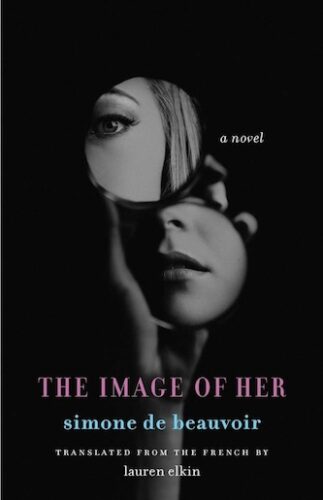
Simone de Beauvoir’s last novel, 1966’s The Image of Her, is an entertaining, but superficial, exercise in ’60s class cancellation—an existentialist shooting privileged, foie-gras-munching French ducks in a barrel. Smoothly translated by Lauren Elkin, the novel revolves around the entitled life of Laurence, an attractive, self-satisfied woman who is an efficient advertising copywriter (“Everything she touches turns into an image”). Of course, activist de Beauvoir is supplying her own disparaging image of the self-absorbed fat cats in society’s upper crust—her distanced protagonist is surrounded, schematically, by an architect husband who forecasts a utopian technocratic future, a father who worships the past, a sister who is into Christianity, a self-absorbed mother who has just lost her wealthy lover to a teenager, and a clothes-horse co-worker of a lover. All is sailing richly along—until one of Laurence’s two daughters befriends a Jewish orphan, who informs the sensitive girl about real life tragedies—hunger, poverty, Vietnam, etc. What’s Laurence to do but attempt to protect her child from a world that both she and her mother don’t understand?
Sardonic one-liners and wry critiques of the fashionable abound as de Beauvoir pokes in and out of Laurence’s perspective, the predominance of dialogue intimating the influence of the nouveau roman, particularly the work of Nathalie Sarraute. Much of the corrosive satire remains pointed, but what has dated badly is just how hermetically sealed off these characters are from themselves and reality, though that distance may be the result of de Beauvoir’s condescension. The Image of Her would have been a much more powerful narrative if Laurence weren’t made so conveniently clueless. And the children of the well-to-do today are not nearly as isolated; they have a pretty direct, if dismally distorted, idea of what is going on around them—for better or worse—courtesy of TikTok and social media, entities that would most likely be owned now by the boorish electronics mogul who leaves Laurence’s mother.
— Bill Marx

In his 2017 book Haifa Republic, Omri Boehm, Associate Professor of Philosophy at the New School for Social Research, insisted that Israel’s insistence on Jewish sovereignty would inevitably lead to ethnic cleansing in Gaza and the West Bank. His alternative was to call for a “common concept of citizenship,” one that would bypass the illusory two-state solution in favor of a federative, binational framework. That quixotic embrace of shared humanity — built on a deep respect for human dignity — lies at the heart of his provocative new volume, Radical Universalism: Beyond Identity. Here, Boehm confronts those — on the right, the left, and the center — who rationalize distinctions that render some people human and others not.
Boehm suggests that permission to act with inhumanity is anchored in submission to some “absolute” authority — whether transcendent, autocratic, or the democratic will of the people. Against such demands for obedience, he posits the demand posed by “radical” disobedience driven by an elemental moral directive: to recognize our commonality and act on that belief. He traces the origins of this impulse through the Declaration of Independence, Kant’s 1784 essay “What Is Enlightenment?,” and the biblical story of the Binding of Isaac. What unites these texts, he argues, is their conviction that true authority arises from ethics.
Boehm finds support for this “radical universalism” (“We hold these truths to be self-evident, that all men are created equal”) from the writings of Martin Luther King Jr. and Abraham Joshua Heschel, while crossing swords with John Dewey, Richard Rorty, and John Rawls. He challenges the atomizing vision of identity politics — “The commitment to such an ideal of humanity doesn’t erase identities; to the contrary, it is identities that cancel each other out” — and warns that moderate liberals, by privileging order over justice, help sustain barbaric laws and actions. What we need, he insists, is the courage to be extremists in the cause of love and justice: “The only way to take the lives of people on either side as infinitely important,” Boehm writes, “is to take as equally infinitely important the lives on both sides.”
— Bill Marx
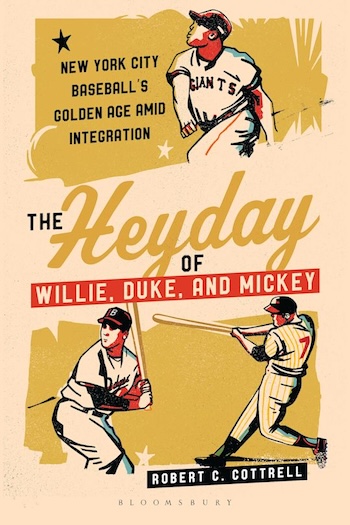
When the Giants and Dodgers relocated to California, I was nine years old. I lived in a New Jersey suburb of New York City. I’d seen the Giants play at the Polo Grounds. I knew as certainly as I knew anything that — though Mickey Mantle was a talented ballplayer and Duke Snider was beloved by fans of the Brooklyn team — Willie Mays had no peer.
Robert C. Cottrell’s book The Heyday of Willie, Duke, and Mickey: New York City Baseball’s Golden Age Amid Integration chronicles the seasons during which Mays, Mantle, and Snider each played centerfield for a team in New York provides a sense of how fortunate baseball fans in the area were. They not only saw three memorable centerfielders, they had something to argue about every day of the baseball season and beyond. I know this. I participated in the arguments when I was a kid. I still recall my disdain for the fools who regarded Mantle as superior to Mays. I can’t remember anyone seriously maintaining that Snider, pleasant as he seemed to be, was in the same category.
The Heyday of Willie, Duke, and Mickey — and how in heck did Cottrell not understand that it’s “Willie, Mickey, and the Duke” — depends on newspaper accounts and statistics. It includes some of the politics and treachery involved in Walter O’Malley’s decision to move the Dodgers to Los Angeles. The author, described in the notes as “a longtime history professor,” also includes material describing the Negro League teams operating at the same time that Mays, Mantle, and Snider were at work in their respective centerfields. It’s a fine thing to have this history, though there’s little of the passion those ballplayers — especially Mays — inspired in kids during those days during the early and middle fifties. Take it from one who was there.
— Bill Littlefield’s most recent book is Who Taught That Mouse To Write?
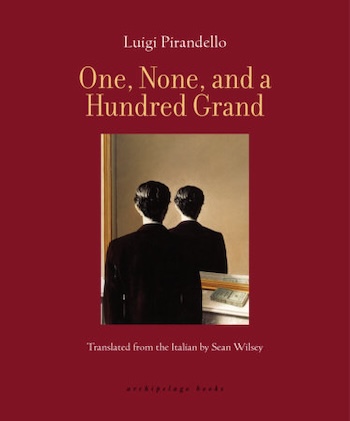 My favorite novel of 2025 was One, None, and a Hundred Grand, a robust new translation (by Sean Wilsey) of a madcap existential breakdown served up — with tasty metaphysical trimmings — by the master of identity crisis, Luigi Pirandello. A fable-like aura clings to this dark comic yarn, in which a sudden, superficial revelation triggers its protagonist to suddenly discover that truth is relative, which leads to him abandoning his place in society. Maggot, the feckless scion of a successful local banker, has a meltdown after his wife casually remarks that his nose skews somewhat to the right. Suddenly, all that he thought was solid in himself and others quickly liquifies. The narrator’s self-image is blown apart as he concludes that he sees a different version of Maggot than others see, and that he perceives his own unique versions of others. Maggot’s final dizzying multiplication: he realizes that his perception of himself is constantly changing (“life is always in motion and can never really be stopped”).
What holds things together? Maggot decides that it is a matter of will, and sets out to create an image of himself that will shake up the community’s misconception that he is nothing but a clown living off his family’s money. He chooses to liquidate the bank and to donate the funds to a charity run by the (corrupt) Catholic Church. Predictably, Maggot is punished by all for this quixotic action — his wife leaves him, officials at the bank accuse him of madness, and a potential love interest tries to kill him. Wilsey’s translation tends toward the zany, so it takes a little time to get used to its playful tone (those desiring a more earnest version should turn to William Weaver’s 1990 translation). But the approach highlights the slapstick humor in what Pirandello said was a book about the “disintegration of a personality.” “Better to never see yourself. Because, no matter how hard you try, you’ll never know how others see you. And what’s the use of knowing yourself in isolation?”
— Bill Marx
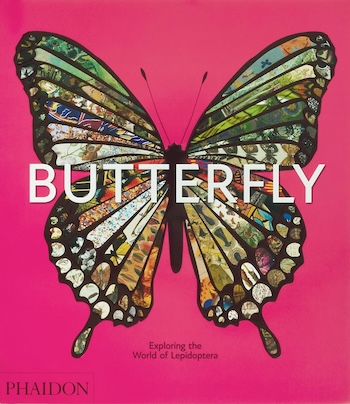 Many years ago, I edited an academic journal to which Vladimir Nabokov had been an acerbic and witty contributor. No, it wasn’t a literary review nor did it publish scholarly essays on modern literature. The publication’s subject was animal taxonomy and Nabokov had contributed from his shadow career as a lepidopterist and research associate in Lepidoptera at Harvard University’s Museum of Comparative Zoology in Cambridge. It was the late 1940s; he lived nearby on Sparks Street.
Nabokov appears briefly in Butterfly: Exploring the World of Lepidoptera (Phaedon). “Although professional lepidopterists did not take Nabokov’s work seriously during his life,” entomologist David G. James writes in an introductory essay, “contemporary studies have vindicated many of his theories and conclusions.” Fifty pages later the book reproduces one of Nabokov’s many scientific illustrations, noting that the Russian writer, like most of us, had been fascinated by butterflies since childhood.
A lavishly illustrated, coffee-table-crushing tome with brief, though absorbing, texts, Butterfly is neither a scientific nor artistic study. It exists, well, largely because butterflies have always attracted and inspired. Curator Tamar van Riessen: “Known for their dramatic metamorphosis, butterflies embody themes of change, renewal, and the fleeting nature of existence, connecting to spiritual ideas of transformation and rebirth.” Professor James: “…butterflies create an inner glow across the spectrum of humankind.”
Beautifully reproduced, full-page illustrations include an astonishing 35-million-year-old fossil, contemporary furniture, paintings by Frida Kahlo, Dali, and Van Gogh, winged costumes, movie posters, richly colored drawings of butterflies, moths, caterpillars, and chrysalises. You don’t have to be a lepidopterist to love this book.
I have two reservations: the type is too small for comfortable reading and the illustrations ignore the rich Lepidoptera-inspired designs in British pottery. Then again, when it comes to butterflies, you could never have it all.
— Peter Walsh
Art and Design

MIT’s Ray and Maria Stata Center, Cambridge, MA, opened in 2004, Photo: Mark Favermann
On December 5, 2025, world-acclaimed architect Frank Gehry died at the age of 96. Not since his even more celebrated predecessor, architect Frank Lloyd Wright, passed away in 1959 has so much praise, adulation, and press attention been given to a star American architect. Though both men came from extremely different backgrounds, and stood for distinct aesthetics, they had many things in common. Each changed his name, and their careers didn’t really take off until after they were fifty years old. They were both rather short; iconic Guggenheim Museums were among their seminal architectural creations; both designed buildings that leaked, and each worked intensely into his nineties.
On a personal level, my esteemed friend and Harvard Graduate School of Design classmate, Michael Lehrer, FAIA, worked for Gehry from 1984-1985. He described his year with Gehry as the most important in his professional training, a seminal experience marked by solving problems that triggered creative explorations that significantly influenced his own future practices. Along with 15 others, Lehrer worked directly with Gehry during that period. His project was Camp Good Times for children with cancer, the unbuilt first collaboration between Gehry and sculptors Claes Oldenberg and Coosje van Bruggen. Lehrer was deeply inspired by working with with superstar artists and architect.
Lehrer remembers working on a design that Gehry made a sketch for him to develop. “I felt I could feel the folds in my brain cortex bending — more as I tried to make sense out of the drawing than attempting to develop it.” The honeymoon between the two men lasted about a year; the last month turned into a more conventional studio experience filled with heightened tension. Lehrer sensed, correctly, that those who worked with Gehry stayed until they were fired. He decided that that wasn’t going to be him, and left to start his own practice.
Like Wright, Gehry disrupted conventional views of architecture and art. He changed how we see the world by shifting our perspective and rearranging our sense of the built environment. Gehry made architecture art.
— Mark Favermann
Jazz
Roots and Things (Fresh Sound New Talent) is th e third album by the German-born acoustic bassist Jakob Dreyer, who’s been making the rounds in New York since 2014. He’s a solid player in the mode of Dave Holland, with a subdued sound and a sophisticated sense of swing.
He’s assembled a sympathetic quartet to realize his vision for this set of post-bop originals (and one standard). It features two excellent soloists, vibraphonist Sasha Berliner and tenor saxophonist Tivon Pennicott. Drummer Kenneth Salters is a busy and interactive drummer, and he does fine work keeping everyone’s blood pressure up.
It’s always great to hear Berliner. Apart from her thoughtful and well-structured solos, Roots and Things is an opportunity to appreciate her fine accompanying. She is acutely aware of dynamics, and she works the pedals beautifully to let the ringing overtones delineate the harmonies over, above, and around the notes she plays.
Pennicott has been in the bands of Kenny Burrell and Roy Hargrove, among others, and he plays with swing and a steady intelligence (if a bit on the academic side, relying heavily on familiar scale patterns at times). He has a dry tone along the lines of Joe Lovano or Ernie Watts, which is effective with the ringing vibes and well-mixed bass.
A good example of Dreyer’s compositions is “Fight or Flight,” which seems to borrow from Wayne Shorter’s “Yes or No.” It’s an uptempo vehicle that highlights Berliner’s chops, Dreyer’s steady walking, and the interplay with Salters. I wish there was a bit more grit in Pennicott’s sound for a swinger like this one. Pennicott excels on the ballads, such as “Downtime,” and the songs with complex changes, like “June Tune.”
Roots and Things is rewarding (if not essential) listening, especially recommended for the growing number of Sasha Berliner fans.
— Allen Michie
Classical Music
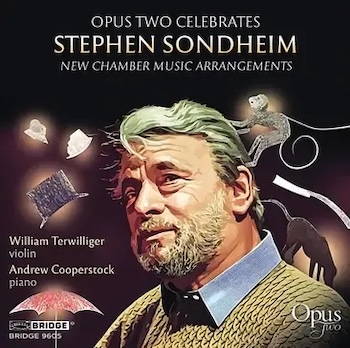 Given his way with words, it’s no surprise that so much ink has been spilled on Stephen Sondheim’s abilities as a lyricist. But the focus on his texts has, paradoxically, meant that the New York native’s abilities as a composer have passed relatively unacknowledged.
For that reason alone, a survey of instrumental arrangements of the Broadway great’s output is overdue: even if he didn’t always operate at the level of Gershwin, Rodgers, or Styne, Sondheim was a much better composer than not. Opus Two—comprised of violinist William Terwilliger and pianist Andrew Cooperstock—present just such a recording (Bridge), courtesy of arranger Eric Stern and including a little bit of help from soprano Elena Shaddow, baritone Andrew Garland, and cellist Beth Vanderborgh.
Their program leans heavily into two shows, 1973’s A Little Night Music and 1979’s Sweeney Todd. The latter gets a thorough treatment in the Fleet Street Suite, which brings together such numbers as the “Ballad of Sweeney Todd,” “Wait,” and “Pretty Women.” Early on the disc, the duo also takes “Not While I’m Around” out for a spin. Meanwhile, a substantial Suite from A Little Night Music shares billing with “Every Day a Little Death.”
Follies is represented by “Broadway Baby,” while Merrily We Roll Along’s “Now You Know” and Company’s “Sorry/Grateful” fill out the instrumental contributions. Shaddow sings “I Remember” from Evening Primrose and Garland contributes “Finishing the Hat,” from the Pulitzer Prize-winning Sunday in the Park with George.
Though individual performances aren’t always ideal—Terwilliger sometimes sounds a bit stiff, his tone occasionally forced—Cooperstock’s fizzy sense of style holds everything together. The big star of the album, however, is Stern, whose adaptations of this fare are idiomatic and fresh: to be sure, these are arrangements that deserve wide currency.
— Jonathan Blumhofer
Rock
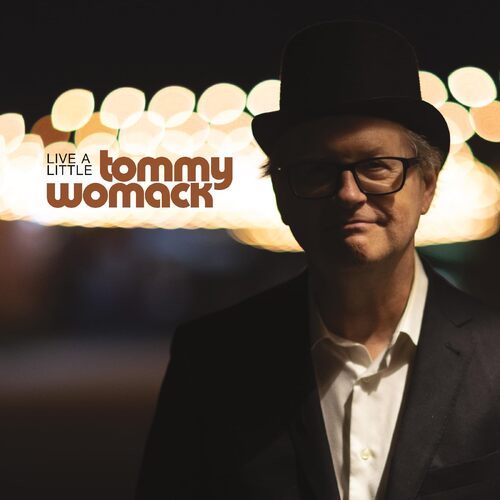
Tommy Womack’s latest album Live a Little takes a trio of classic ingredients — sex, drugs, and rock ’n’ roll — and adds another that has been practically forbidden in rock songs — aging.
Womack is a smart wordsmith who has a knack for framing his musings with bristling rootsy music. He got his start in the early ’80s, an explosive era for alt rock. He played in the band Government Cheese, a regional outfit born in Kentucky that, as he points out in the song “Under the Water Tower Again,” ripped off the Scorchers.
The new album opens with “Speed, Weed and Alcohol,” a look back on his early days of being a young guy living the wild life in a traveling rock band. Womack serves up the tune as if it were a photograph from another time — his 60-something-self of today is no longer interested. Likewise, “Hoboken” is a signature Womack story song that ambles along, supplying vivid detail and imagery as it recounts a time when his band was chased by hoodlums in the tune’s titular city.
These memories share space with contemporary observations about funerals, illness, and the scourge of gun violence.
His songs about current losses eschew cheap sentiment. Instead, Womack draws on a skilled, steady hand as he maneuvers from regaling the hijinks of “Speed, Weed and Alcohol” to registering the palpable ache of “I Guess We’re at that Age,” a song that tallies the loss of friends. Womack slices into impregnable reality with the line “She’s gone and gone forever/ She wasn’t a couple days ago/ God answers every prayer/ Sometimes the answer’s no.”
Womack, who lives in Nashville, wrote “Just Another Shooting” after the 2023 deadly shooting at the Covenant School. He writes from the perspective of an ardent gun control advocate, loading the song with irony to condemn a national madness.
The self-explanatory “Horny Mormon” and self-deprecating “Ten Feet Tall’ inject smart humor into the album, while the self-lacerating “A Little Help Here!” has Womack back on punk rock terrain, taking on the role of a rocker who is proudly basking in his deterioration. Credit goes to producer Eric Ambel and the band he put behind Womack for keeping the record uncluttered and visceral.
Live a Little ends with a song about a funeral, though at this one there’s some flirting and philosophizing, as Womack reminds us, “Remember, we have no control.”
— Scott McLennan
Tagged: "Last Week in End Times Cinema", "Radical Universalism: Beyond Identity", "Roots and Things", "The Heyday of Willie, "The Heyday of Willie Duke and Mickey", "The Image of Her", A.S. Hamrah, Andrew Cooperstock, Frank Gehry, Jakob Dreyer, Lauren Elkin, Omri Boehm, Opus Two, Robert C. Cottrell, Simone de Beauvoir, Stephen-Sondheim
1 Comment
Leave a Comment

Both Wright and Gehry created buildings that are visually arresting but engineering disasters. Many of their creations are plagued by leaks and suffer from other structural flaws. Sometimes engineering firms are blamed for the problems, but Gehry’s aesthetic is hubristic. Ignoring anything save creating an entity that calls attention to itself. Sure it’s different, but so is chocolate sauce on oysters.