Film Review: Resurrecting the Dream — Bi Gan’s “Resurrection”
By Neil Giordano
Bi Gan’s sumptuous elegy to cinema is an artistic triumph, but the dreamy narrative may leave some viewers restless.
Resurrection, directed by Bi Gan, opens Jan 2 at Coolidge Corner Theatre and the Boston Common AMC Theatre. It will stream on the Criterion Channel later in 2026.

A scene from Resurrection. Photo: courtesy of Cannes Film Festival
Bi Gan, the wunderkind of contemporary Chinese cinema, roared onto the scene with 2015’s Kaili Blues and followed that triumph up with Long Day’s Journey Into Night a few years later. The two films draw on an intimate verisimilitude, with autobiographical details from Bi’s upbringing in the mountainous southwestern region of his country. The two films are dotted with mine shafts and petty gangsters, and their protagonists are forever seeking connection or reconnection to their lost pasts, to relationships and loves. Yet they are almost mythical in their psychological texture. Dreams and memories predominate, and Long Day’s Journey Into Night garnered critical fame for its 59-minute dream sequence — the film’s entire second half — a hypnotic unedited single shot (and in 3D, if you were so inclined to find a theater that offered that option).
Resurrection broadens Bi’s dramatic canvas immensely, the product of the ambition of an artist who is determined to challenge himself. The film’s gorgeous set pieces represent high leaps in his craft, and its surreal structure frees him from the conventions of realistic narrative that anchored his first two works. Resurrection retains Bi’s magical visual style, but now it is illuminating not a single story, but a series of tales that pay homage to the power of cinema. But it is a force that is fading: this is an elegy for cinema as a place that furthers understanding through its visions of dreams and desires.
The plot, if the film can be said to have one, involves a futuristic world in which humans have lost the ability to dream. A visual prologue nods to what has been lost via diffuse homages to the beginnings of cinema, with glimpses of the work of the Lumières, F. W. Murnau, and Carl Dreyer, as well as a brief look at an early Chinese silent film. This preface gives way to another meta-frame narrative: A soulful, solitary woman, played by Shu Qi (star of a number of films by Taiwanese director Hou Hsiao-hsien) discovers a ‘dreamer’ creature: an exiled entity, deformed in appearance, who is being hunted by society. She follows him and ends up experiencing his dreams, just as we do, in each of the episodes that follow.
Each dream envisions a tale set during the history of twentieth-century China. Early on, a noir detective story, set in the 1930s, maintains a sense of urgency — palpable but surreal — as if the dreamer is searching for meaning through the recovery of a lost memory. As the dreams move forward in time, each conveyed through its own distinct style, they are unified by a desire for reclamation, or reconnection, which weaves through each storyline. That said, each dream refuses to be understood or to suggest forward motion. These irrational scenarios tap into, or wander about, emotions and thoughts, but they never fully make sense. The ghosts of longing and loss linger with compelling passion throughout the strongest of the tales, a story of a street grifter and his adopted daughter who are pitted against a gangster who is mourning the loss of his own child.
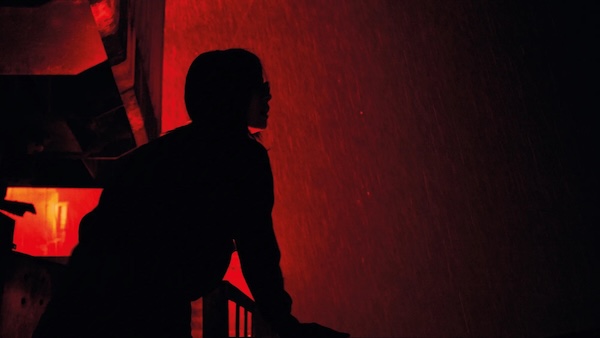
A scene from Resurrection. Photo: courtesy of Cannes Film Festival
Two long sequences, one set in a monastery, the other a New Year’s Eve finale set in contemporary cityscape, are the most memorable of the lot, but the pair are also symptomatic of the film’s weaknesses. Beautiful to watch but overly long, these two sequences will test the patience of most viewers, even those who favor the satisfactions of slow cinema. Bi’s visual artiness immerses us in the dreamscapes, but the turgid circularity of their dialogue and themes are more repetitive than illuminating. By the final tale––a modern-day vampire love story of sorts, shot in one of Bi’s signature handheld tracking shots (nearly identical in form and function to Long Day’s Journey Into Night) — the film seals the self-involved aesthetic deal, with visual indulgence cancelling out dramatic depth.
Still, the indulgences can be forgiven because they are part of Bi’s tribute to aesthetic bliss. Among the film’s many other assets is its soundtrack, modern, but somehow timeless, by electronica band M83. I detected tributes to Bernard Herrmann’s Vertigo score amid other motifs from film history. Also on display: the surprising versatility of Jackson Yee, the young Chinese actor and boy-band singer (perhaps familiar to American viewers from 2021’s Oscar-nominated Better Days). Yee has been cast as the lead in each tale; he is the disfigured dreamer in the frame narrative, a figure who shape-shifts from one story to the next.
The film revolves around a familiar trope — cinema allows us to dream. But, at its best, Bi’s grand auteur ambitions put a fresh spin on that formulaic idea. By demanding that film probe the unconscious, he gives himself––and us––a means to understand ourselves and the world anew. In today’s landscape of stale franchises and Netflix slop, Resurrection is a valuable reminder that film’s future requires an audience willing to dream and filmmakers like Bi Gan, capable of resurrecting its elemental power.
Neil Giordano teaches film and creative writing in Newton, MA. His work as an editor, writer, and photographer has appeared in Harper’s, Newsday, Literal Mind, and other publications. Giordano previously was on the original editorial staff of DoubleTake magazine and taught at the Center for Documentary Studies at Duke University.