Arts Remembrance: Jimmy Cliff (1944-2025)
By Scott McLennan
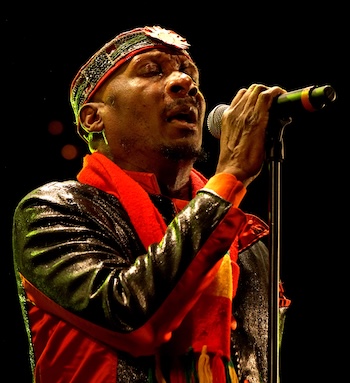
The late Jimmy Cliff performing in 2012. Photo: WikiMedia
On the day news broke that reggae legend Jimmy Cliff had died at age 81, singer Patti Smith had a concert in Boston later that night.
Deep into her show at the Orpheum Theatre on Monday, Smith acknowledged how Cliff and his 1972 breakout The Harder They Come film soundtrack opened a whole new world of art and music to her. Smith then proceeded to honor Cliff with a version of the rarely played “Ain’t It Strange” from her Radio Ethiopia album.
It was a fitting tribute, because the song wraps Smith’s chilling lyrics in a muscular reggae groove, illuminating not so much Cliff’s particular sound or themes as offering a moving example of how Smith adapted Cliff’s approach, turning a contrast between words and groove-rich music into a combustible experience.
Cliff’s signature song “The Harder They Come” is the perfect example of his strategy. The music is buoyant and full of hope, while the lyrics are a plea for justice in an unjust world. It’s a song that makes you want to dance and fight evil.
Cliff differed from other reggae luminaries because he willingly explored various genre off-ramps from the Jamaican sound. “Many Rivers to Cross”, for example, is more gospel than reggae. Conversely, he pulled Cat Stevens’s “Wild World” into the reggae orbit by skillfully blending in a bit of orchestral pop. His songwriting was not bound by Rastafarian tenets like other reggae stars, though he often communicated the same messages coming from other emissaries of the Jamaican sound, such as Bob Marley and Toots Hibbert.
Cliff’s warm vocal style worked well across many song styles. He was just as effective putting the necessary bite in the protest song “Vietnam” as he was conjuring the spiritual ache of “Sitting in Limbo.”
What more’s his early catalog of original songs served as a trove of staples for others to cover. Jerry Garcia played “The Harder They Come,” “Struggling Man”, and “Sitting in Limbo” throughout his solo band career, while Tedeschi Trucks Band and Jorma Kaukonen have occasionally chosen “Sitting in Limbo” as a setlist gem. Bruce Springsteen added Cliff’s “Trapped” to his live sets in ’80s, and a recording of The Boss singing the tune at a New Jersey stop on the “Born to Run” tour was included on the multi-million-selling We Are the World album. “Many Rivers to Cross” has been covered by UB40, Linda Ronstadt, and Joe Cocker, among others.
As good as he was, Cliff’s career was erratic after its initial explosion. A 2000 concert in Worcester yielded a dismal turnout. And his recorded output notched intermittent successes, with the slick “Reggae Night” landing as a commercial hit in the early ’80s and the album Cliff Hanger earning a 1985 Grammy. Cliff’s 1993 cover of Johnny Nash’s “I Can See Clearly Now” rose to the recognition level of such earlier hits as “Wonderful World, Beautiful People” and “You Can Get It If You Really Want.”
 Cliff was inducted into the Rock & Roll Hall of Fame in 2010, and that marked the start of an artistic and commercial resurgence. His 2012 album Rebirth, made with Rancid’s Tim Armstrong, is essential listening. The record blends lyrics about struggle and kinship into an earthy sound mix that took a few cross-generational leaps, including Cliff singing The Clash’s “Guns of Brixton” (a song that references Cliff’s role as Ivan Martin in the film The Harder They Come) and Rancid’s “Ruby Soho.” Rebirth won Cliff another Grammy in 2013.
In stark contrast to the tepid response Cliff got when I saw him play in Worcester, his set at the Boston Garden opening for Dave Matthews as part of the “Rebirth” tour in 2012 was markedly different. Cliff and his nine-piece band galvanized an arena with a flawless set of classics and new numbers that had me using the word “limber” in my original review of the show for the Boston Globe.
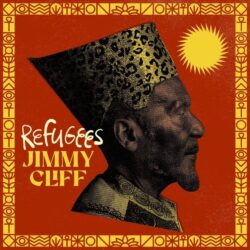
Released in 2022, Refugees is a solid endnote to Cliff’s discography. Produced by Wyclef Jean, who also performs on the album, the recording finds the musician drawing inspiration (still) from protesting racism and demanding social justice. Cliff, though, gives these rootsy sounding songs a contemporary spin, placing a focus on the plight of global refugees and the rapid rise of greed and economic disparity. The tracks are sonically uncluttered and spiritually full.
Up until the end, it seems, Cliff was still seeing clearly — and eager to share that vision with us.
Scott McLennan covered music for the Worcester Telegram & Gazette from 1993 to 2008. He then contributed music reviews and features to The Boston Globe, Providence Journal, Portland Press Herald, and WGBH, as well as to The Arts Fuse. He also operated the NE Metal blog to provide in-depth coverage of the region’s heavy metal scene.