Book Review: “A Dog in Georgia” — The Gap Between Privilege and Peril
By David Mehegan
This is a well-crafted story about the gulf between well-off Americans who can safely ignore power politics in their daily lives (and how many of us are doing just that!) and those at the edge of being oppressed or crushed by them.
A Dog in Georgia by Lauren Grodstein. Algonquin Books of Chapel Hill/Little, Brown. Cloth. 297 pp, $29.
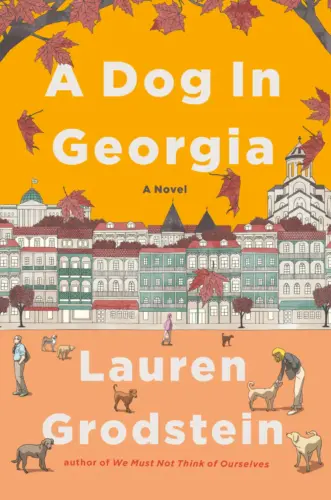
It’s a surprise that a novel of such quality would be published in August, a season in which publishers historically flushed the bilge. Perhaps Little, Brown seeks to avoid anticipated fall competition, or perhaps they’re thinking movies all the way, that book sales don’t matter much. (Who buys novels, anyway? Not men, or so we hear.) Still, the weight and breadth of the publicity campaign for A Dog in Georgia (a “national author tour”! How ’90s!) shows high confidence in the writer’s brand. Judging by this novel, rightly so.
Amy, 46, is married to lusty gourmand Judd Bernstein (her last name is never given), a well-off owner (family money) and chef of Le Coin, a popular New York bistro. She began work there in 2006 as a line chef, fell in love with the boss (he has “ice wolf” blue eyes), and they were married two years later. Judd’s first wife, also named Amy, is a hopeless drug addict who stumbles in and out of the picture throughout the novel. Her accidental child with Judd is Ferris, called Ferry, a sweet perfect boy now at Cornell. Amy the second has raised him as her own, his mother in truth if not in blood.
Judd is allegedly a compulsive fanny-pincher, though we have to take Amy’s word for it — we don’t see it and the details are left out — but she has forgiven his amours, painfully. One night in bed, his cell phone pings. He doesn’t wake up so she looks at it and sees a string of photos sent by the foxy hostess at Le Coin, naked in provocative poses. In a rage, Amy wakes Judd, shows him the phone and demands that he leave immediately. He stumbles out, protesting his innocence, and next day returns, swearing there’s nothing going on with the hostess; she must have meant to send the pictures to a boyfriend. Given his history, she doesn’t believe him. Still, she loves him, doesn’t want to lose him, loves Ferry equally or more and doesn’t want to disrupt his young life, what with the never-ending craziness of his natural mother.
Amy is also a dog lover with a gift for finding lost dogs. In her misery, she comes across a YouTube video from Tbilisi, Georgia, about a beloved dog who has gone missing. The dog, named Angel, had been a self-taught crossing guard who for years had led children across a busy street en route to school. Someone, it appears, has kidnapped Angel.
The creator of the video, a middle-aged school administrator named Irine Benia with a dog-walking sideline and a houseful of dogs, is hoping for help in finding Angel. Amidst her grief and confusion, Amy seizes on this story, writes to Irine and offers to come to Tbilisi to find Angel. Irine is amazed that a rich (to her) New Yorker would take on such a project, but offers to accommodate her in her own home. So Amy, desperate to escape the mess with Judd at least for a while, flies to Georgia, refusing to tell Judd or Ferry why, on what she knows is a nutty quest to find Angel. The heart and bulk of the story take place in Georgia, which Lauren Grodstein has clearly researched and experienced in depth.
In addition to her dogs, Irine has several senior women relatives living with her, as well as Maia, a fearless, politically engaged 17-year-old daughter. A tenant in her house, to Amy’s surprise, is Andrei, a Russian software engineer who has left wife and daughter in Russia to avoid the war in Ukraine. Amy notices that he has “ice wolf” blue eyes. Uh-oh.
Although she is here to find a dog, Amy finds herself in the middle of a bitter mother-daughter conflict over the fierce political strife consuming Georgia, whose independence Putin’s Russia has been trying to crush since before the Ukraine war. First Irine, then Amy, are afraid that Maia is going to get herself killed in demonstrations confronting heavily armed police. Of course, all the major characters speak excellent English.

Lauren Grodstein, a gifted and skillful storyteller. Photo: courtesy of the author
While one would probably categorize this story as women’s fiction, that is no dismissal. Its central theme is not dogs or sex or female friendships or family conflict. It is about the gulf between well-off Americans like Amy and Judd, who can safely ignore power politics in their daily lives (and how many of us are doing just that!), and people like Irine and Maia, who are at the edge of being oppressed or crushed by them. They’re not much worried about the S&P 500. Amy gradually wakes up to this reality, but Judd, on the phone, is oblivious. When tough-minded Maia meets Amy and hears of her mission, she says, “As you can see, we have lots of dogs right here in this house. You don’t really have to go look for them.”
With all that is going on in tormented Georgia, finding Angel soon seems, even to Amy, like a fool’s errand. Tbilisi is overrun with stray dogs. Amy nearly gets busted by a grim cop, who does not speak English, while trying to send up a search drone which she brought with her (apparently that technique had found lost dogs in the past). Meanwhile, Judd and Ferry keep calling. They want her to come home, but she isn’t ready. Not yet. Tbilisi and Irine’s family are bursting with unrest and Amy finds herself literally in the middle of it. And then, of course, there is Mr. Ice Wolf Blue Eyes. The outcome of the story, for Amy at least, is ambiguous though not unhappy. Maybe that leaves room for a sequel.
Along with everything else, the fate of Angel has to be resolved, and it is, with a plot surprise that I found … well, I was reminded of one of my late mother’s expressions: “She’s drawing a longbow on that one.” Yet given the dog’s name, there might be a thematic subtext here, too.
Lauren Grodstein is a gifted and skillful storyteller, the seasoned author of seven previous books. She has a traditional style and manner. Yet there’s nothing dated or antiquated in her narrative. The political, cultural, and social settings are as current as Tik-Tok and John Boos countertops. Grodstein would not elicit praise for “gorgeous prose,” which usually means a lot of clever and gratuitous metaphors. You don’t notice her prose, in fact, which is high praise from me, given that its clarity masks the difficulty of the achievement.
Men might not read novels these days, but this man finished Lauren Grodstein’s latest wanting to try her others.
David Mehegan, the former Book Editor of The Boston Globe, can be reached at [email protected].