
Film Reviews: This Year’s Provincetown Film Festival — Exploding with Queer-Subject Features and Documentaries
By Gerald Peary
This year was the 27th annual festival, and blessed as always by the fairy-dust magical presence of summertime resident John Waters.
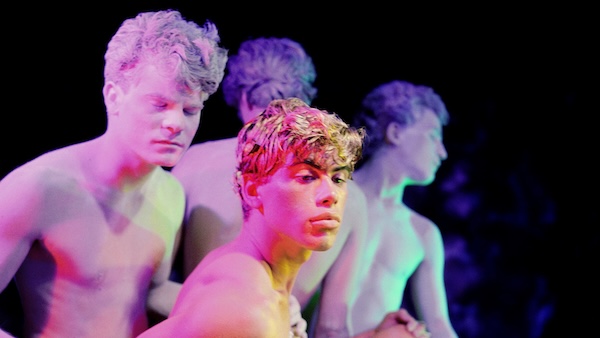
A scene from 1971’s Pink Narcissus. Photo: Wikimedia Commons
It’s hard to fathom, but some people don’t like Provincetown. We saw a disgruntled teenager on Commercial Street complaining to his parents, “Are we just going to walk up and down this street every single day that we’re here?” As if there could ever be anything boring about the colossal people-watching, the daily and nightly gala parade of fabulously coiffed transvestites, the festive queer vacationers joyfully FREE to be their true-blue selves. Is there any place on earth than Commercial Street with more gay and lesbian handholding? It’s lovely.
Come here in mid-June, you are also privy on Commercial Street to several theaters hosting the ever-enjoyable Provincetown Film Festival, also exploding with queer-subject features and documentaries. This year was the 27th annual festival, and blessed as always by the fairy-dust magical presence of summertime resident John Waters. As always, Waters held a probing, spirited, irreverent conversation with the guest artist chosen for the Filmmaker on the Edge Award, this time Hereditary and Midsommar’s “auteur” Ari Aster. And he hosted and curated the screening of what I would suggest is “A Film Over the Edge,” the lovably narcissistic 1971 gay fantasy Pink Narcissus. This subterranean wet dream is assuredly not for everyone, though Waters deems it “As beautiful and timeless as The Wizard of Oz.”
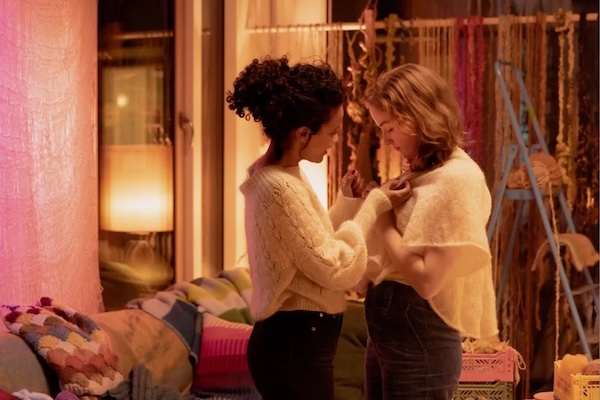
A scene from Dreams (Sex Love). Photo: courtesy of Motlys
The best film I saw this year at P-Town was Dreams (Sex Love) from Norway’s Dag Johan Haugerud, the Golden Bear winner at Berlin, in which a precocious Oslo teenage girl, Johanne, gets a wild crush on her hipster female teacher. The crush is so overpowering that Johanne goes to the teacher’s apartment and, sobbing with unrequited love, throws herself into the educator’s arms. BLACKOUT. When later on, Johanne writes an autobiographical diary novel which includes hot sex scenes involving the teacher, are these true or fiction? Was the teacher acting appropriately, the belief of Johanne’s liberated ’60s poet grandma? Or was the educator a molester, the view of Johanne’s feminist mom? Dreams (Sex Love) is a film that can be read and argued about in many ways, and it’s even better with its shifting experimental voiceover and its three-generation voices of fascinating, articulate women.
But what about the sudden entrance of two males at the end of the film, one a therapist and one Johanne’s new boyfriend? Has patriarchy and heterosexual “normative” sex taken over the narrative because the director, Haugerud, is male? Watch out for one loopy surprise.
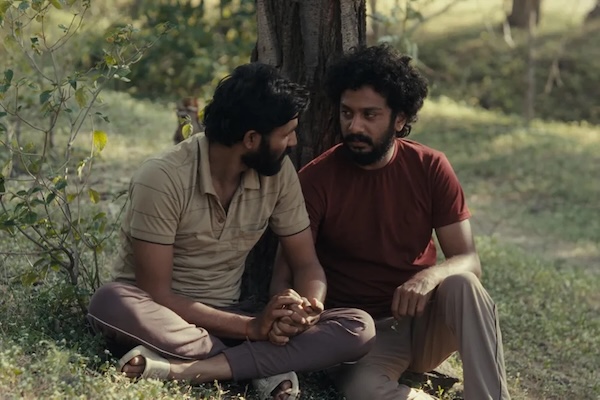
A scene from Cactus Pears/ Sabar Bonda. Photo: Courtesy of Lotus Visual
The Provincetown Fest was fortunate enough to lure one more queer-themed prizewinner, Cactus Pears/ Sabar Bonda, an Indian film in the Marathi language which won the Grand Jury Prize-World Dramatic at Sundance 2025. The director is Rohan Parashuram Kanawade. This one is about a thirty-something man, Anand, who works and lives in Mumbai, and there it’s possible to have discreet gay relationships. But, when his father dies, the closeted Anand must return to the rural town where his family resides. Everyone there questions him, suspiciously, about why he’s not married. I believe gay-subject movies are still quite new in India and, courageously, there are lots of male-on-male tight hugs, one awkward lip kiss, one daring episode of two naked men on top of each other, and one revealed male crotch.
Cactus Pears has some interesting scenes, anthropologically speaking, which dramatize the formal ten-day Hindu ritual of how a person is grieved and buried. But the character of Anand is too passive to really get behind and root for, and Kanawade’s direction is somewhat languid, even sluggish. It’s a film more thematically worthwhile than a total dramatic success.
Not all P-Town movies are LGBTQ+, just lots of them. But then there’s The Baltimorons, a 100% hetero rom-com romance, directed by Jay Duplass and written by Duplass and the movie’s star Michael Strassner. Strassner spoke at P-Town about his grand luck being discovered by Duplass when he was doing comic bits on social media, and that led, gradually, to their creative partnership. The Transparent TV star Duplass wanted to return to his indie film roots, on display when he served as the co-director in 2025’s The Puffy Chair. He opted to collaborate on a dramatic film based somewhat on Strassner’s wobbly real life in Baltimore as a recovering alcoholic and failed suicide. And to try to make it funny. The Baltimorons is fairly funny, a bit slim, but mostly comes to life because of the casting of a dazzling actress I’ve never seen before, Liz Larsen, as Strassner’s new dentist-and-grandma love interest. Intentional shades of Harold and Maude as Strassner is thirty-something and Larsen an alluring, seductive 66.
On to documentaries. I was slightly disappointed by Folktales from the acclaimed team of Heidi Ewing and Rachel Grady, best known for Jesus Camp. They’re back with teenagers trying to find themselves, this time at a year-long boot camp in the Polar zone of Norway. Here, high school grads hang out in the frozen outdoors, building character by making friends with and grooming husky dogs and then learning to drive a sled team. The filmmakers rely on a too-trod documentary path: they follow three teenagers through the seasons as they maneuver a path toward self-reliance and self-confidence. We don’t learn enough about any of the teeners to make their journeys psychologically or spiritually meaningful.
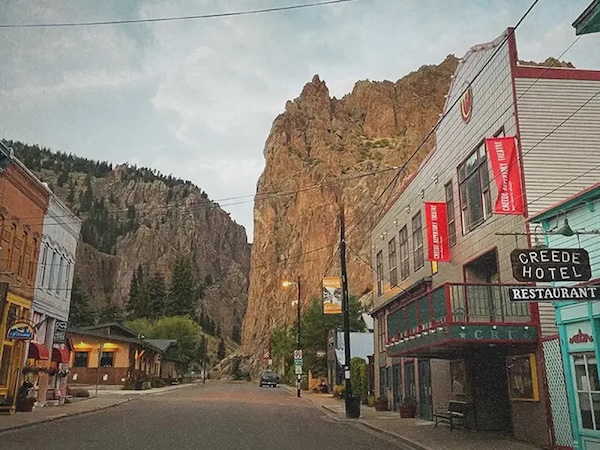
A scene from Kahane Corn Cooperman’s Creede USA. Photo: Courtesy of the Provincetown International Film Festival
Much more arresting was Creede USA, with filmmaker Kahane Corn Cooperman spending many months embedded with the citizenry of Creede, Colorado, a tiny ex-silver mining town of 300 permanent residents high up in the mountains (five hours by car from Denver). What makes this deeply conservative spot unusual is that it also houses a working theater since the ’70s, and 100 or so theater types—weird, liberal, multicultural, and sometimes queer—descend on Creede each summer. This film shows how this influx of creativity has made a quiet difference, and that there’s a civility and tolerance from some of the locals which wouldn’t have happened without this rubbing together of unlike cultures. The New Jersey-based female filmmaker told the audience at Provincetown, “I had never really talked to a Trump person before making this documentary.” Cooperman succeeded admirably in her ambition: to locate common ground and humanity in a rough and right-wing American community.
Alas, there’s none of that conservative humanity evident in Kim A. Snyder’s The Librarians. This is a volatile call-to-arms against the ultra-right Republican siege of public and school libraries, the banning of books everywhere in the USA wherever a “woke” agenda is suspected. See this potent documentary and really get frightened: it’s much worse and far more prevalent than you suspect, not only in Florida and Texas but even in New Jersey. Fahrenheit 451 is happening all over our country, down to Nazi-like rally bonfires of forbidden books.
I’ve often noted that the true heroes in our country are not to be found in faux superhero fictions, but in the modest world of documentaries. This film is packed with librarians who can’t take any more of this assault on First Amendment rights. They’re fighting mad, they’re speaking out, and they’re being fired by cowardly school boards and city councils. Hooray for this weighty and necessary film! Hooray for mighty librarians!
Gerald Peary is a professor emeritus at Suffolk University, Boston; ex-curator of the Boston University Cinematheque. A critic for the late Boston Phoenix, he is the author of nine books on cinema; writer-director of the documentaries For the Love of Movies: The Story of American Film Criticism and Archie’s Betty; and a featured actor in the 2013 independent narrative Computer Chess. His last documentary, The Rabbi Goes West, co-directed by Amy Geller, played at film festivals around the world, and is available for free on YouTube. His latest book, Mavericks: Interviews with the World’s Iconoclast Filmmakers, was published by the University Press of Kentucky. With Amy Geller, he is the co-creator and co-host of a seven-episode podcast, The Rabbis Go South, available wherever you listen to podcasts.
Tagged: "Cactus Pears/ Sabar Bonda", "Creede USA", "Dreams (Sex Love)", "Folktales", :The Baltimorons", Dag Johan Haugerud, Heidi Ewing, Jay Duplass, Kahane Corn Cooperman, Kim A. Snyder, Provincetown Film Festival 2025, Rachel Grad
Great review, but I’m sorry that you didn’t mention Everything Moves, a new documentary about Provincetown painter Salvatore Del Deo. Sal has been a fixture in P-town for many years, not only as an artist, but also as a restaurateur, and gentle man about town. It was a wonderful film about a beloved man, and it was also a love song to Sal’s late wife Josephine, who played a pivotal role in the creation of the National Seashore.
I also want to mention that Liz Larsen is a fabulous actor and has done a lot of theater over the years. I saw her in Beautiful: The Carole King Musical several years ago. She played Carole’s mother and she was terrific!
I could only see one film at a time at P-Town, which meant I didn’t see two other films playing simultaneously. I am mortal! So I missed Everything Moves. And thanks for filling me in more about the great Liz Larsen.