
Artist Remembrance: Brian Wilson — An Appreciation
By Jason M. Rubin
Brian Wilson’s clear falsetto voice may be stilled but his amazing trove of timeless music lives on.
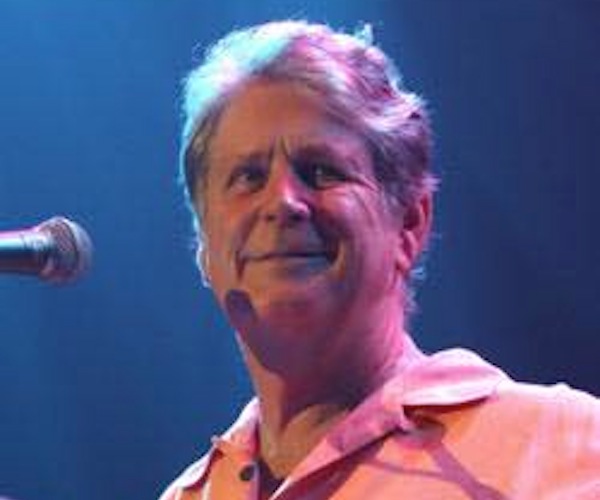
The late Brian Wilson at Boston’s Blue Hills Pavilion.
The life of pop music genius Brian Wilson, who died on June 11, 2025, just nine days shy of his 83rd birthday, is like a tapestry: there are any number of threads one could focus on in writing an appreciation of the Beach Boys’ co-founder and leader. There’s the low-hanging fruit that make up much of the myths behind the man: the verbal and physical abuse he received from his father, which may have been the cause of his partial deafness in one ear; the addiction to drugs, which may have helped him to create his best material; the mental illnesses that made him believe that Phil Spector was bugging his swimming pool and kept him bedridden for two or three years until he ballooned to more than 300 pounds; and the devious doctor who made him physically healthy enough to resume his career, which was to the doctor’s benefit as he helped himself to ever-larger slices of the Rock & Roll Hall of Famer’s prodigious pie.
These are all legitimate threads, but they are incidental to what is really important: Brian Wilson’s music, which so far has lasted more than 60 years and will continue to be played and analyzed for centuries to come. Wilson was a nonpareil composer, arranger, producer, and singer. From the very first Beach Boys album in 1962, Wilson was a certified hitmaker. That year and the next he put out such stone-cold classics as “Surfin’ Safari,” “409,” “Surfin’ USA,” “Shut Down,” “Surfer Girl,” “Catch a Wave,” “Little Deuce Coupe,” and “In My Room.”
 The Beach Boys were the preeminent American pop group of the time, planting a fantasy of California beach life with bikini-clad bathing beauties and hot rods in the minds of landlocked teenagers and those on the relatively staid Atlantic coast. Then in 1964, the Beatles came to America (on Capitol Records, no less, which the Beach Boys also called home). Wilson responded with the album Shut Down, Vol. 2, featuring indelible hits like “Fun, Fun, Fun,” “Don’t Worry Baby,” and “The Warmth of the Sun;” and All Summer Long, with the title track and “I Get Around” proving that Wilson had a competitive streak no doubt beaten into him by his father. Wilson produced two more Beach Boys classics before 1964 was out: Beach Boys Concert, the first live album to reach number one on the pop charts; and The Beach Boys Christmas Album, which launched that rarity — a legitimate modern holiday staple in “Little Saint Nick” (“Little Deuce Coupe” in a fat suit and beard).
The pressure of writing, producing, and performing eventually took its toll on the talented but sensitive Wilson. He suffered a panic attack on an airplane in 1965 and decided to quit the road completely. Instead, while the rest of the group (with Glen Campbell and then Bruce Johnston subbing for him on concert dates) toured the world, Wilson took up residence in the recording studio along with the Wrecking Crew, the brilliant session musicians behind countless hits in the ’60s and early ’70s. There he began to paint on a larger canvas, using an eclectic palette of colors that hinted he was on the verge of something new and innovative. When the Beach Boys came home, they put their vocals on the finished backing tracks.
The first product of this unusual arrangement was The Beach Boys Today!, side one of which had expertly crafted uptempo dance songs such as the definitive cover of “Do You Wanna Dance,” as well as “Help Me, Rhonda” and the Spectorian “Dance, Dance, Dance.” Side two, however, was gentler and more introspective, with songs like “Please Let Me Wonder” pointing to Pet Sounds, still a year away. Meanwhile, few people at the time — and even now — realized that Wilson hadn’t written a car or surf song since Shut Down, Vol. 2. He was turning inward, experimenting with form and instrumentation. Summer Days (and Summer Nights!!), despite its goofy title, featured the first of his classic songs written under the influence of drugs, “California Girls.” Even though the lyrics (by his cousin and oft-times nemesis Mike Love) are youth- and hormone-oriented, the orchestral prelude is a master class in harmonization and surprising chord sequences — well beyond what anyone, even the Beatles, was doing at the time.
A largely throw-away unplugged album called Beach Boys Party ended 1965 and fulfilled Capitol Records’ desire for holiday product. Mostly filled with covers, the album is a testament to Wilson’s talent, in that even a faux-informal record like this would birth a worldwide smash hit, “Barbara Ann,” by a band called The Regents (but forevermore considered a Beach Boys song).
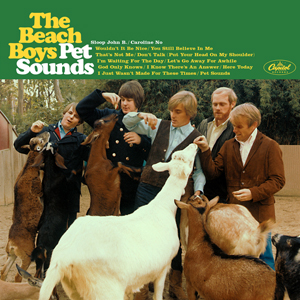 Albums at this time were largely collections of already-released singles and B-sides with filler. The Beatles’ Rubber Soul excited Wilson because it was “all good stuff.” That led to Pet Sounds, the culmination of Wilson’s restless probing of his own consciousness as fodder for a new kind of pop music. The Beach Boys were in Japan, so there were no distractions. Accompanied by the Wrecking Crew and a new lyricist, ad writer Tony Asher, Wilson crafted an album that many call the greatest of all time. It’s a song cycle of romantic love and all the emotions that go along with it. Starting with the most optimistic and hopeful tune, “Wouldn’t It Be Nice,” and ending with the haunting “Caroline No,” a beautiful song of loss (of love, of innocence, and of long hair), the album doesn’t just tug at your heartstrings, it plays them like an angel’s harp. No one who has ever been in love or wished for it can emerge from a listening of Pet Sounds unscathed.
In the middle of the album is “God Only Knows,” which Sir Paul McCartney has called one of the greatest songs of all time. Not bad for a 24-year-old kid. But the best was yet to come. Several months in the making — using several different studios — “Good Vibrations” was the apotheosis of Wilson’s experimental approach to pop, bringing together such disparate sound sources as cellos and electro-theremin. Written and recorded in sections, and pieced together like a jigsaw puzzle, “Good Vibrations” is not just a great song, it’s a cultural touchpoint. It turned the industry on its head and was a precursor to progressive rock.
Then, one could argue, Wilson’s reach exceeded his grasp. He decided to adapt his modular style on “Good Vibrations” to an entire album. Had he completed Smile at the time, many believe it would have rivaled the Beatles’ Sgt. Pepper’s Lonely Hearts Club Band. Though the album was eventually abandoned by Wilson, many believe it still does. People blamed the drugs, the paranoia, the lack of support from his band and record label. This writer thinks Wilson was in a manic period and had too many ideas jumping around in his brain. He wanted to do a humor album. He wanted to record actual bar fights. He wanted to write a suite about the elements. With new lyricist Van Dyke Parks (soon to be an important artist in his own right), Wilson began creating pieces of music that he hoped to mold into a concept album depicting an east-to-west bicycle ride from Plymouth Rock to Hawaii.
Smile would put together on a single platter the hit single “Good Vibrations” and its equally complex follow-up, “Heroes and Villains,” along with the cinematic “Cabinessence” and a composition that this writer believes is Wilson’s greatest, “Surf’s Up” (not a surf song). The Leonard Bernstein-hosted Inside Pop: The Rock Revolution television special, which aired in 1967, featured a segment of Wilson performing the latter epic solo, accompanying himself on piano. The introductory voiceover noted, “There is a new song, too complex to get all of the first time around. It could come only out of the ferment that characterizes today’s pop music scene. Brian Wilson, leader of the famous Beach Boys, and one of today’s most important musicians, sings his own ‘Surf’s Up.’” After the performance, the voiceover returns: “Poetic, beautiful even in its obscurity, ‘Surf’s Up’ is one aspect of new things happening in pop music today. As such, it is a symbol of the change many of these young musicians see in our future.”
Mental illness also played a role in Smile’s demise. After recording an instrumental called “Fire” — with strings and whistles and drums eerily evoking a conflagration — a building in the neighborhood burned down and Wilson believed he had caused it. Long past due in delivering the album, Wilson killed it instead. This began an interesting period in the Beach Boys’ history. After a couple of less ambitious (but enjoyable) albums, Smiley Smile and Wild Honey (both 1967), Wilson began stepping back from writing and producing whole albums and instead made only sporadic contributions. This forced the rest of the band to pick up the creative slack, and Wilson’s younger brothers, Dennis and Carl, came into their own as writers, helping to make subsequent albums Friends (1968), 20/20 (1969), Sunflower (1970), Surf’s Up (1971), and Holland (1973) underrated gems.
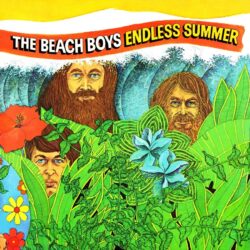
In 1974, Capitol threw together a haphazard collection of hits and deep cuts and released it as Endless Summer. Though the Beach Boys had been experiencing years of dwindling sales and respect, Endless Summer became a number one platinum album. They were hot again, and their concert repertoire swiftly became stripped of more recent songs in favor of Wilson’s ’60s classics. In 1976, Wilson made a premature return to the stage but renewed his writing. The Beach Boys Love You (1977) was, for all intents and purposes, a Wilson solo album, with him writing everything and playing most of the instruments. Some consider it slight and strange, others a harbinger of lo-fi recording techniques. Count this writer among those who think it’s an exceptional recording, evidence that his prodigious skills and uncanny instincts were still intact.
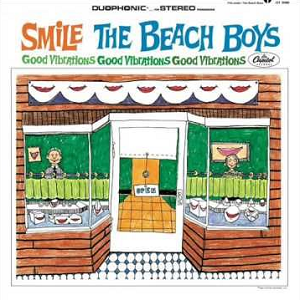 For much of the next decade, however, Wilson was in the snares of Dr. Eugene Landy (their bizarre relationship was documented in the biopic Love & Mercy, starring Paul Dano as the ’60s Wilson and John Cusack as the ’80s Wilson). Wilson ultimately survived the cure and launched his solo career with an eponymous 1988 album. All told, he recorded 12 studio and two live solo albums, including a 1995 collaboration with Van Dyke Parks and, in 2004, Brian Wilson Presents SMiLE, a new recording of the old Smile material with his longtime backing band, who always performed his music with passion, reverence, and skill. In a wonderful bit of delayed justice, Wilson won a Best Rock Instrumental Performance Grammy for “Mrs. O’Leary’s Cow,” the “fire” song that was one of the factors that contributed to the original album’s flameout.
Wilson’s solo tours almost always included Boston-area dates, and his two SMiLE and several Pet Sounds tours were highlights. He did a signing at the Newbury Comics in Faneuil Hall once, and his Facebook page features a photo of him sitting on a bench in Boston Common. Over the years, however, Wilson’s health began to deteriorate. He needed back surgery and began having to use a walker and a pair of helpers to get on and offstage. One tour was postponed because of mental health issues (he’d experienced auditory hallucinations beginning in 1965). Regardless, his fans always showered him with love and adoration. Most recently he was diagnosed with dementia, which was announced just a month after his second wife, Melinda, died in early 2024.
Ultimately what made Wilson unique is that, while most ’60s rock and pop stars were influenced by American blues, English Music Hall, and ’50s rockers, Wilson loved the Four Freshman and George Gershwin. He incorporated jazz chords and harmonies into a stew that also included the likes of Chuck Berry and Little Richard. His intricate vocal arrangements were a marvel and, though difficult to replicate (not to mention perform), he influenced countless harmony groups from America to Fleet Foxes, and inspired bands from the Beatles to Weezer.
All three Wilson brothers are now gone, leaving Al Jardine, David Marks, and Love as the only living original Beach Boys. The latter continues to tour under that name and played Lowell Memorial Auditorium on June 10, the day before Wilson died.
Brian Wilson’s clear falsetto voice may be stilled but his amazing trove of timeless music lives on.
Jason M. Rubin has been a professional writer for 40 years. He has written for The Arts Fuse since 2012. His books include Villainy Ever After (2022), a collection of classic fairy tales told from the villains’ point of view; and Ancient Tales Newly Told (2019), a pairing of two historical romances: The Grave & The Gay, based on a 17th-century English folk ballad, and King of Kings, about King Solomon and the Queen of Sheba, told primarily from the Ethiopian tradition. In addition, Jason teaches journaling workshops and is a member of the New England Indie Authors Collective. He holds a BA in Journalism from the University of Massachusetts Amherst. He can be reached at http://www.jasonmrubin.com.
2 Comments
Leave a Comment

Outstanding article with great insights by a terrific author. Much Thanks!
I thoroughly enjoyed reading this. It is an easy read but clearly intricately crafted with words and phrases conjuring visual images in my mind.