
Doc Talk: Fame and Obscurity at PIFF
By Peter Keough
If the destiny of documentaries is to become celebrity profiles, it could do worse than those screening at this year’s PIFF.
The Provincetown International Film Festival. Through June 15.
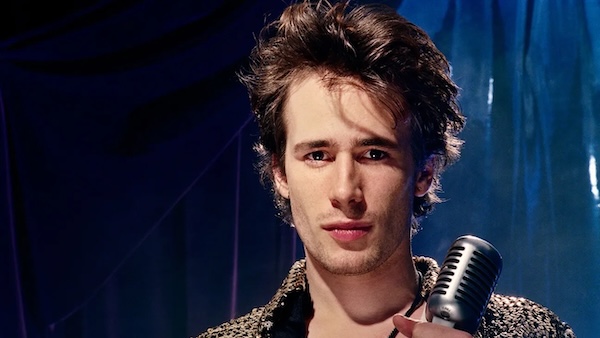
A scene from It’s Never Over, Jeff Buckley.
A recent article in the Hollywood Reporter warned that bland, upbeat documentaries about popular entertainment figures might eventually crowd out more artistically and politically ambitious fare. But if the destiny of documentaries is to become celebrity profiles, it could do worse than those screening at this year’s PIFF. These films transcend the inevitable anodyne conventions of the subgenre with their formal inventiveness, illuminating contextualization, and edgy, offbeat, and unexpected subjects.
That is certainly the case with Amy Berg’s It’s Never Over, Jeff Buckley (screening June 13 at 9 p.m. at the Art House and June 14 at 6:30 p.m. at the Water’s Edge). The son of famed folk-rock-fusion singer Tim Buckley, who died of an overdose in 1975 at 28, Jeff found himself overwhelmed by his father’s absence (Tim abandoned Jeff’s mother to pursue his career) and his inescapable presence. He was haunted both by the shadow cast by his father’s success, and the specter of his early demise.
Nonetheless, as his mother Mary Guibert (one of the film’s executive producers) recalls, Jeff found his own voice in infancy, singing in his bassinet along with Diana Ross’s version of “Ain’t No Mountain High Enough.” Wisely, Berg offers a generous sample of Buckley’s vocals, and Jeff’s four octave range is thrilling, intimate, and transcendent. Highlights include Buckley’s now-legendary, reluctant appearance at a 1991 tribute concert for his father at St. Ann’s Church in Brooklyn, where he sang several of Tim’s songs to resounding acclaim.
Berg shrewdly chooses to look back at that performance from the point of view of Rebecca Moore, a singer/songwriter and volunteer at the event who befriended Buckley and for a while was his partner. Other women in Jeff’s life also dominate the interviews, including his mother and a later romantic partner, musician Joan Wasser, highlighting Buckley’s identification with the female side of his nature. Though he could boast a macho image with his chiseled, James Dean good looks and exhibited a rock-god persona during the tours following the triumphant success of his one studio album, Grace, his chief inspirations and influences were female artists such as Nina Simone, Edith Piaf, and Joni Mitchell.
There were also male role models, ranging from the Pakistani qawwali singer Nusrat Fateh Ali Khan to Robert Plant. Perhaps his father also, at least inasmuch as Jeff wanted to have a longer life than him. That he achieved. In 1997, at the age of 30, in the midst of recording his second album, he walked fully clothed into the Wolf River, exultantly singing Led Zeppelin’s “Whole Lot of Love.” His body was found a week later. An autopsy found no drugs or alcohol in his system, nor did they rule it a suicide.
As he struggled to define his own identity and achieve success, Jeff Buckley had one reliable asset – his voice. Not so for Marlee Matlin, whose voice was more problematic.
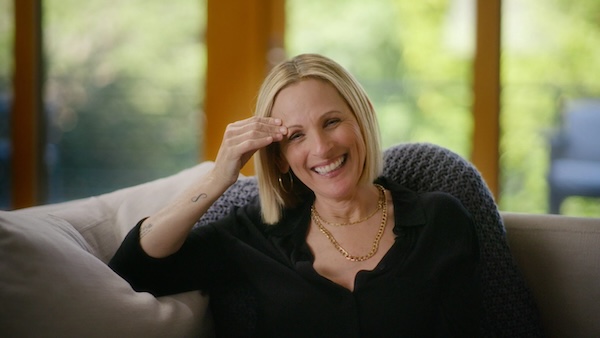
Marlee Matlin in a scene from Marlee Matlin: Not Alone Anymore
At 21, she was the first deaf actor to win an Academy Award and the youngest winner of the Best Actress Oscar for her performance in Children of a Lesser God (1986). That proved a mixed blessing as can be seen in the engaging and provocative Marlee Matlin: Not Alone Anymore (screening June 13 at the Town Hall and June 15 at 4 p.m. at the Water’s Edge), the directorial debut of Shoshannah Stern, herself a deaf actor and filmmaker.
Matlin accepted the award using sign language. But the next year, when she introduced the nominees for Best Actor, she decided to demonstrate that she had her own voice and spoke the nominees’ names rather than signing them. People in the deaf community were outraged, interpreting this as a snub. Up until then, Matlin had been an activist for the cause (as her interpreter and friend Jack Jason notes, it was because of her campaigning that we now have closed captions everywhere). But, confused and hurt after the Oscar controversy, Matlin shied away from public stands for a while.
Meanwhile, her storybook romance with Lesser God co-star William Hurt took an ugly turn as the actor proved to be an abusive partner. Matlin had to terminate the relationship. And despite her Oscar, substantive big-screen roles proved elusive. But TV provided opportunities, such as her scene-stealing performances in shows like Seinfeld. A recurring role on The West Wing introduced a new generation of fans to Matlin’s distinctive charisma and talents.
She was already an inspiration for generations of deaf actors, several of whom Stern interviews, including Troy Kotsur, Matlin’s co-star in Sian Heder’s CODA (2021). The film won Oscars for Best Picture, Best Adapted Screenplay, and Best Actor for Kotsur—the first such award for a deaf performer since Matlin’s 35 years earlier. Sadly, this award ceremony was also tainted by controversy after Matlin’s attempt to add a few words following the producer’s acceptance speech was cut short.
Though dealing at times with dark and vexing material, Stern often employs a deceptively light touch, with pointed uses of split screens, movie clips, archival material, and talk show appearances. Indeed, one of her more clever ploys plays on the latter: the director’s interviews with Matlin take place on a couch where they exchange repartee in sign language—a kind of “talk” show without the talk.
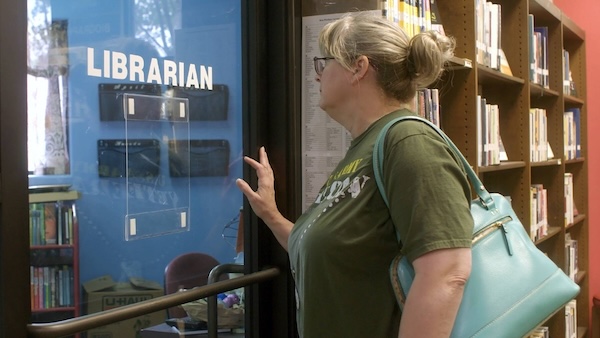
A scene from Kim A. Snyder’s The Librarians.
Unlike Buckley and Matlin, the subjects of Kim A. Snyder’s infuriating, inspiring, and expertly executed The Librarians (screening June 12 at 4 p.m. at the Art House and June 13 at 10:30 a.m. at the Water’s Edge) never sought fame. They were content to remain in the background, quietly accomplishing their underappreciated, utterly essential, and poorly rewarded jobs. As one of those interviewed remarks, “We are stewards of books and the resources in the library. We’re not supposed to be seen.” Perhaps because they are so unassuming and (seemingly) vulnerable, a coordinated network of right-wing hate groups such as Moms For Liberty have targeted them as part of their strategy to take over children’s education across America.
They might have underestimated their opponents.
Starting in small districts in deep red Southern states, rabid Republican politicians like Texas State Representative Matt Krause denounced school libraries for holding what they deemed to be pornographic material. To “protect” the children, these censorious ideologues sent lists of hundreds of books they found obscene and inflammatory and demanded they be pulled off the shelves. Unsurprisingly, these lists consisted largely of titles by non-white and LGBTQ+ authors or dealt with progressive, anti-fascist, anti-racist, or otherwise “woke” themes. They included books like Beloved, The Diary of Anne Frank, The Handmaid’s Tale, and of course Fahrenheit 451 (Snyder includes clips from Francois Truffaut’s adaptation of Bradbury’s book as part of her brisk, witty, and comprehensive treatment of the topic).
But not everyone complied. Many librarians resisted, and were fired, denigrated, and threatened. But they persisted. One of those is interviewed in silhouette, her name concealed. But, in the end, she comes out from the shadows, courageously identifying herself, a righteous and defiant beacon for the freedom to read.
At a time when we should seriously heed Heinrich Heine’s warning that “where they have burned books, they will end in burning people,” The Librarians is a bracing reminder that those with the quietest voices can offer the greatest resistance.
Peter Keough writes about film and other topics and has contributed to numerous publications. He was the film editor of the Boston Phoenix from 1989 to its demise in 2013 and has edited three books on film, most recently For Kids of All Ages: The National Society of Film Critics on Children’s Movies (Rowman & Littlefield, 2019).
Tagged: "It’s Never Over Jeff Buckley", "Marlee Matlin: Not Alone Anymore", "The Librarians", Amy Berg, Jeff Buckley, Kim A. Snyder, Provincetown International Film Festival, Provincetown International Film Festival 2025