
Book Review: “Of Loss and Lavender” — Sinan Antoon on Exile and Forgetting
By David Mehegan
I cannot recall reading a more poignant and persuasive description of the inexorable descent of Alzheimer’s disease, certainly not from inside the sufferer’s mind.
Of Loss and Lavender by Sinan Antoon. Translated from the Arabic, by Sinan Antoon. Other Press. 237 pp. Paperback original.
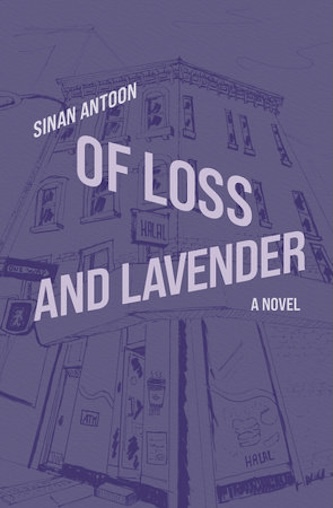 Published in Arabic in Lebanon in 2023, this story of two Iraqi exiles struggling to find a place in the United States preceded the Trump-era near-pogrom of immigrants. Sami and Omar therefore ask the old familiar immigrant questions: who am I, where do I belong in this strange country, how do I live and thrive and make a future, and how do I deal with health, money and bureaucracy, etc.? These prove to be more than challenging, and neither newcomer emerges unscathed.
The two are different ages, come from different social backgrounds, and arrived in America for different reasons. Both speak good English. Sami was a successful Baghdad surgeon, apolitical but, after the first Gulf War, he is attacked as a Ba’athist and loyalists of the new regime pressure him to sell his house. Harassment intensifies until he flees to Jordan and then to Brooklyn, where his married son lives. Not long after he arrives, he begins to show signs of the dementia that will erase his mind and memory.
Omar was a sensitive young draftee in Saddam Hussein’s army. Disillusioned by his situation, he deserts, is caught, and suffers the penalty for desertion: an ear cut off. After Saddam falls and his army is disbanded, Omar leaves the country for Jordan. Like Sami, he eventually chooses to become a refugee in the United States. Unlike Sami, he has no profession or valuable skills, and no contacts in the States. All he has is English, a willingness to work, a longing for personal connection, and a dreadful disfigurement that he hides from view as best he can.
Sinan Antoon, born in 1967, is an Iraqi-born poet, novelist, translator, and professor of literature at New York University. Like his two characters, he left Iraq for the United States after the fall of Saddam. Holder of a BA degree in English from the University of Baghdad, he earned a PhD in Arabic studies from Harvard. He has published four previous novels and three collections of poetry, as well as essays and reviews. His novel titles are evocative: The Book of Collateral Damage, The Baghdad Eucharist, and The Corpse Washer.
Of Loss and Lavender follows Omar and Sami in alternating sections by way of the quiet style of an omniscient narrator who inhabits their minds and is aware of their histories, speaking in the past tense while tracking everyday life and conversations. Omar is not ambitious; he only wants a safe, quiet, decent life. His first job is stocking shelves in a Detroit Kroger’s supermarket, a job he had had in Baghdad. Eventually, he moves to New Jersey, near Allentown, where he lands a pleasant job minding goats at a lavender farm, owned by a kind farmer and his wife. He is lonely; romantic encounters rouse his hopes, but there are no promising connections. Afraid of negative repercussions that may follow if his country of origin is revealed, he concocts a nutty scheme to pretend that he is from Puerto Rico.
Sami’s previous life is narrated in a general way, with sparse detail. Most of what happens in the present is the disintegration of his mind. I cannot recall reading a more poignant and persuasive description of the inexorable descent of Alzheimer’s disease, certainly not from inside the sufferer’s mind. That mind is aware of its own confusion, fears, and baffling predicaments but not of the reasons for it. One day, Sami wanders away from his son’s home, bumps into a person who speaks Arabic (outside a Yemeni bodega), and asks to be taken home. “Where do you live?” the man asks. “Baghdad,” Sami says.
The cruelties that Sami and Omar encountered in Saddam’s Iraq are described with relative restraint. In the United States both are treated, for the most part, with tolerance and kindness. The proud boys of today’s ICE — who resemble the notorious Black-and-Tans of the 1916-1921 war of Irish independence — have not yet been recruited and given their lawless orders. However, when he moves to New Jersey, Omar receives a visit from two FBI agents who question him closely about his politics and religion. He has none of either. It’s not clear how they know about him. They ask how he felt about the attacks of September 11, 2001.
“Angry and sad.”
“Why?”
“I don’t want people to die. I don’t like wars.” Their suspicions apparently allayed, the agents give him a card and leave. Now, someone like Omar would likely find himself in a Texas detention center, without the protocol of an interview.
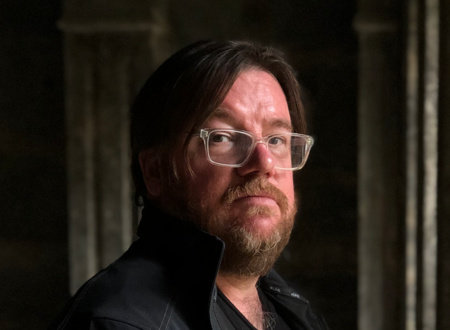
Iraqi poet, novelist, translator, and scholar Sinan Antoon. Photo: Ghaith Abdul-Ahad
The novel is filled with Arabic speech and expressions, as well as some Spanish. Antoon helpfully supplies a glossary at the end but, inexplicably, it is not in alphabetical order. If you want to find out what zayna means (“good”), you’ll find it in the middle of the list, between burma (“noodle-shaped baklava”) and ma’arib (“desires”).
As we read, we see what Omar and Sami, different as they are from one another, have in common: they both have lost everything they had known and treasured and do not know how to find a replacement. One of the novel’s verse epigraphs is from Act I, Scene 4 of Shakespeare’s King Lear: “Who is it that can tell me who I am?” Another is from Iraqi-American poet Sargon Boulus:
As if I woke up today in my home
Its ceiling blown away
I see clouds running
Goaded by harbingers across the sky
I have no kin
I have no country.
The parallel stories come together at the end in a coincidence that might raise a reader’s eyebrows, but it did not bother me. It is lightly handled. Yes, I know that coincidences, given the laws of probability, must happen in real life. Supposedly, they are verboten in fiction. In proper measure, though, I don’t understand why anything that happens in real life can never happen in art. In this novel, Sinan Antoon proves himself to be a skillful and gifted writer, well deserving of a pass.
David Mehegan is the former book editor of The Boston Globe. He can be reached at djmehegan@comcast.net.