
Arts Feature: Recommended Books, 2025
Compiled by Bill Marx
An eclectic roundup of the favorite books of the year from our critics.
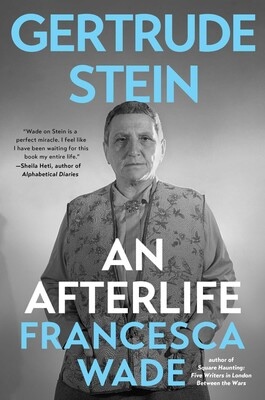
Gertrude Stein, An Afterlife by Francesca Wade. Scribner, 470 pages, $31
Although the title indicates that this is a biography of Gertrude Stein, it is really a double biography because it not only details, in wonderfully accessible prose, the life of Stein, but also tells the story of Stein’s partner, the enigmatic Alice Toklas. For the second half of the book, “Afterlife,” chronicles Alice’s “widowhood” in which her goal was to protect Gertrude’s legacy and make sure her work reached as wide an audience as possible.
What makes this book so appealing is that the details of Wade’s extensive research don’t overwhelm either the trajectory of their fascinating story or her compassion for these two Jewish lesbian women, who openly forged a life together at a time when gay people were often afraid to come out. One was a charming, sexy extrovert who lusted for fame; the other was a retiring homely woman who gave new meaning to the word “devotion.” For anyone interested in American literature or the way modern art came into our consciousness during the early years of the 20th century, this is a “necessary” book, enhanced with some marvelous photographs and a very useful index. But be warned: reading about Alice’s years alone is painful, and, in the end, utterly heartbreaking.
The Master of Contradictions, Thomas Mann and the Making of The Magic Mountain by Morten Høi Jensen. Yale University Press, 238 pages, $28
Here is another double biography, of sorts. Or perhaps a triple biography. For Morten Høi Jensen, a Danish-American critic, has shown how the writing of Mann’s greatest book, which was published in 1924, came out of the context of the Weimar Republic and Germany’s descent into the abyss. How it evolved from a short story to a work of genius that is one of the seminal works of the 20th century. How Mann grew into writer who was more interested in defending democracy while researching it. And, lastly and most indelibly, how this monumental novel has defined Jensen, himself.
This fascinating combination of history, literary criticism, mystery, biography, and memoir is one of a kind, a perfect example of how literary criticism can be many things, and, most of all, create a true and tender bond between the reader and a beloved work of literature. It also somehow instructs us in how to face these perilous times, for, as Jensen reminds us, the last line of The Magic Mountain is: “And out of this worldwide festival of death, this ugly rutting fever that inflames the rainy sky all around—will love rise up out of this too?”
One Day, Everyone Will Have Always Been Against This by Omar El Akkad, Random House, 222 pages, $30.
This heart-wrenching book won the National Book Award in November for Nonfiction. Born in Egypt and raised in Qatar, El Akkad came to Canada as a teenager and now lives in Portland, Oregon with his wife and children. He has written two novels, but this is his first foray into non-fiction. It is a searing look at what it means to live in the western hemisphere in a supposedly democratic country founded on high ideals and yet stand by and watch what is happening in this country and all over the world. To see a people in Gaza relegated to an apartheid state. To see the fundamental wrongs embedded in the War on Terror, the killings in Ferguson and during the Black Lives Matter movement. To ignore climate change and our penchant for racism and the aggression that led to the war in Ukraine.
In urging all of us to face the truth and read what has been called “a heartsick breakup letter with the West,” Akkad has tweeted: “One day, when it’s safe, when there’s no personal downside to calling a thing what it is, when it’s too late to hold anyone accountable, everyone will have always been against this.” This tweet has been viewed 10 million times, and even more millions need to read El Akkad’s brilliant and inspiring book.
Daring to Be Free: Rebellion and Resistance of the Enslaved in the Atlantic World by Sudhir Hazareesingh, Farrar, Straus and Giroux, 439 pages, $33
This is a beautifully researched historical study of exactly what the title says. Its author was born in Mauritius and teaches at Balliol College in Oxford and is a well-known scholar. Now he has written a ground-breaking account of the resistance by enslaved Africans and their descendants in our part of the world. Like the equally important 1619, this magnificent history of abolition resistance among the enslaved people who came to the North American continent adds to our knowledge of how we got to where we are now. It strips away some of the white-washed myths that have been so pervasive in our education and collective memory until recently. Enhanced by excellent maps and a timeline of Enslaved Resistance, it will surprise and inform you in ways you could not have imagined.
Predictably, there’s been a fair degree of overlap in the Best Books lists this year, from the NYT on down—or up, depending on your point of view. The Arts Fuse’s listings are among the few uninfluenced by the Big Five oligopoly and big-bucks advertising.
That said, let me contradict myself by first mentioning three widely lauded titles of 2025.
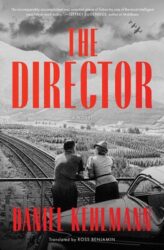 The Director by Daniel Kehlmann, translated by Ross Benjamin. I’ve been (mostly) shouting Kehlmann’s praise since his beginnings; this year the Great American Literary Consensus has finally caught on, charmed by a boldly imagined, historically based novel that melds the birth of movie-making with uber-creepy Nazi machinations. Leni Riefenstahl, Goebbels, Greta Garbo, all take their bows, with German director G. W. Pabst as the tragic? Culpable? All-too-human central figure. A book for which the word ‘tour-de-force’ was invented. (My personal Kehlmann choice remains Tyll. If you like wildly branching medieval road trips. And the Thirty Years’ War. Just sayin’.)
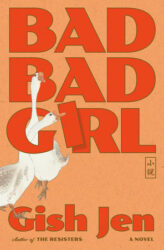 Bad, Bad Girl by Gish Jen. Fiction? Memoir? Autofiction? Gish Jen defines as fiction this engrossing work inspired by her difficult relationship with her immigrant mother, and that woman’s fraught relationship in China with her own mother. But who cares about labels, when a writer’s warm voice shares her wonder while delving deep into these children’s and mothers’ odd discoveries, gulfs of incomprehension, frustrations, and tender unspoken emotions. One such discovery: in the U.S., Jen’s mother kept her terse daily journal with vertical rather than horizontal entries (of course) but also without any division into weeks or months—an entirely different way of experiencing time!
Thirdly, if I may, an against-the-critical-tide recommendation that I can’t repress: consider giving the tables displaying Flesh by David Szalay, a wide berth. No, I haven’t read the whole Booker-Prized thing. But enough to a) label what I did read as a middling exercise in soft porn (Fifty Shades for the MFA set?) b) wonder whether brief single sentences as stand-alone paragraphs are the wave of the literary future. So portentous! So empty! (Is this a backlash against the no-punctuation-at-all gang, Fosse etc?)
As we cheerfully leave the Big Lists behind, it’s disclosure time: the next three books are by authors whom I happen to know—meaning that the bar for recommendation was set higher for these books than for any others.
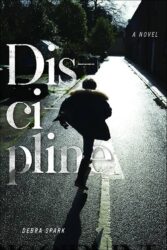
Discipline, by Debra Spark, is a rich braid of three lives struggling through three different eras—2018, 1978, and the 1930s Depression, eventually and fatefully connected by a trio of famous, disappeared paintings. While engaging with themes as challenging as whether art can embody truth over time, and the duality of the title—discipline toward the ‘difficult’ child, discipline as ascetic calling—Spark’s wry, original voice often had me snorting with laughter. And for nostalgic Mainers, or anyone curious about how cold — in both senses — a Maine island in winter can be, the gorgeous descriptions here will set your chilblains on fire.
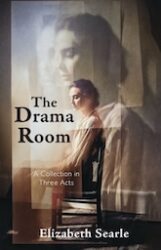 The Drama Room. by Elizabeth Searle, continues Searle’s fearless exploration of an ugly, particularly American pair of traits: corrosive envy of those more successful, and joy in tearing them down. The interplay between the powerful and powerless, reaching into the sexual, often changing places. Her work in film and as creator of the fab rock opera Tonya and Nancy provides ample raw material for these short stories, presented in three acts: ‘Openings,’ ‘Arias,’ and ‘Finales.’ The story ‘The Quiet Car,’ echoes long after the train trip is over.
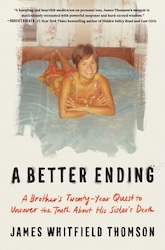
A Better Ending: A Brother’s Twenty-Year Quest to Uncover the Truth About His Sister’s Death, by James Whitfield Thomson, is a memoir as high-tension cold-crime investigation on one hand, and an act of self-examination and reparation on another. When Eileen in depression apparently shoots herself, the family soon accepts her sorrowing husband’s account and its back-up by the ‘Blue Wall.’ Only decades later, when Thomson wants to fictionalize his sister’s story, and starts gathering old files, does doubt take root. His great luck, and the reader’s, is the never-say-impossible private investigator who pulls in the most unlikely helpers and witnesses for the final confrontation.
Finally, two fascinating novels, both by French authors. Any similarity stops there.
The Endless Week, by Laura Vazquez, translated by Alex Niemi, has been hailed, not only here in the Arts Fuse, as one of the most challenging, funny, original, uncategorizable and ultimately rewarding books of the year in any language. To my mind it’s the first true internet novel, as written from the inside. Vasquez, winner of the 2023 Prix Goncourt for poetry, has a new novel out in France that is whipping up the same high waves of controversy as this one. (‘Genius!’ ‘Incomprehensible!’) I can’t wait to get my hands on it. Be there or be square.
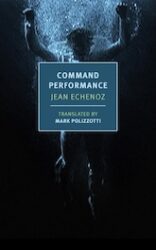
Command Performance, by Jean Echenoz, translated by Mark Polizzotti, might be described in a screenwriter’s pitch as The Pink Panther meets Veep. Our hero, a forty-five year old Parisian bachelor, refuses to see that he is one of life’s expendable losers. Broke and jobless, he hangs out a shingle: Fulmard Assistance Bureau, Information and Queries (etc.), with a smudgy second-hand diploma nailed over his desk. Soon he’s hooked into an elaborate spy-on-spy scheme that leads to the top political echelons and, naturally, some nude beauties sunning on the Côte d’Azur.It’s pure, intelligent entertainment, funny as l’enfer. What veteran popular novelist Echenoz shares with debutante Vasquez is this golden rule of good writers: rules cry out to be broken.
This year some of the best novels eschewed purely personal stories and took on the biggest issues of our times: climate change, unfettered use of AI, immigration, how to be politically engaged without being subsumed by it, and at what point turning a blind eye to authoritarianism becomes complicity with a dictator’s bidding.
Following are the five novels that best mix great writing and literary intent with wrestling with what the world has become – or might become if we don’t act. Some of them tackle the issues head on, while others take a more oblique approach. But every one of the novels shows that literature need not float above the world, freed from its woes but instead can dig into the sometimes ugly mess of it.
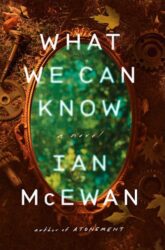
What We Can Know by Ian McEwan
You wouldn’t expect a novel by Ian McEwan, one of the world’s best novelists, to feature a world nearly 100 years in the future that has been remade by climate change, AI gone mad, and nuclear destruction. For decades he’s written about the world that is rather than the world that might be.
At the center of many of his books are people in the throes of moral complexities, struggling with grief and loss, or harmed and ennobled by love. This book is no different, despite its setting in the future. A literary scholar living 100 years from now who specializes in the years 1990 to 2030 tries to re-create a dinner in which one of the greatest poems of the 21st century is read by a giant of poetry. His yearning for the poem and the time in which it was written is made all the more acute by the barrenness of the world he lives in as he struggles to re-create a past that seems like an Eden to him. Read this book not just for a warning about what the world might become if we don’t confront the climate crisis and AI, but for a sense of what it would feel like to struggle to live a fully human life in it.
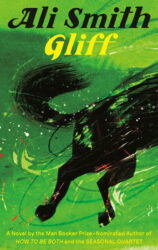
Gliff by Ali Smith
The British writer Ali Smith writes novels that are impossible to classify, experimental in form, language, and sentence structure, yet are often immediately accessible. She’s playful at times, yet always serious, particularly in her Seasonal Quartet of four novels published between 2016 and 2020 that tackle life in contemporary Britain, notably Brexit, its ongoing effects, as well as climate change, immigration, and the pandemic.
Gliff, perhaps the most accessible of her novels, is also the most politically engaged, taking place in a near future of total surveillance in which everyone is labeled and classified in accordance with strict rules that are never made clear. People who dissent or manage to evade surveillance are called “unverifiables.” They’re stalked, forced into re-education, used as slave labor, or simply made to vanish.
The book follows two children with names redolent of much earlier times – Rose and Briar – who have been separated from their mother, who has somehow managed to evade the surveillance state. There’s hope and fear wherever they go. Hovering above it all — Smith’s superb language and wordplay, which supplies light even in the darkest scenes.
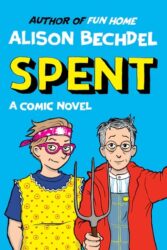
Spent by Alison Bechdel
Should anyone you know complain that progressives have no sense of humor, give them a copy of this semi-fictional graphic novel by the lesbian author of the memoir Fun Home and the comedy strip, “Dykes to Watch Out For.” It’s a loving sendup of the wokest of woke lands, rural Vermont, an affectionate look at how, sometimes, the best of intentions can turn out to be the funniest as well.
Bechdel portrays a Vermont where stands at the local farmer’s market sell Vermont Maple CBD beard oil and non-binary menstrual products. A place where, when an aging couple beds down with a female friend for a threesome, the husband ruefully notes, “We haven’t had sex with anyone else since Clinton got impeached.”
There’s plenty more like that as well…lots more. Bechdel manages to do the seemingly impossible: make gentle, laugh-out-loud fun at the foibles of the seriously goodhearted. Rather than make you want to tone down your commitment to doing good, it makes you want to embrace virtue with open arms, perhaps along with a friend or two along the way.
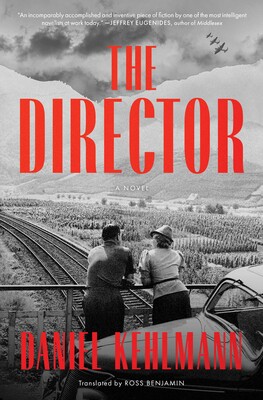
The Director by Daniel Kehlmann
It’s said you know you’re living in a dictatorship when the people censor themselves — no government strong-arming necessary.
That idea inspired this book by Austrian novelist Daniel Kehlmann. He noticed that, during the first Trump administration, Americans became extremely careful about what they said out loud, and who they said it to. It echoed what his father had told him life was like as a Jewish teenager in Vienna, when Hitler took power, seized Austria, and banned the word “Austria.” People started calling it “Ostmark,” even when they were just talking among themselves.
Out of that perception came this novel, based on the life of the great left-leaning Austrian director G. W. Pabst, who in his early years as an auteur in Germany was called “Red Pabst” because he turned Bertolt Brecht and Kurt Weill’s masterpiece Threepenny Opera into a film and directed the anti-war film Westfront 1918.
The narrative follows Pabst’s trials and tribulations when he fled Germany for Hollywood in 1933 after the Nazis took power. Unlike other German and Austrian cinematic emigres, such as Fritz Lang, Billy Wilder, and Ernst Lubitsch, he floundered in Tinsel Town. In 1939, he visited his mother in France and was trapped there because of the war. He ended up returning to Nazi Germany. Kehlmann traces how he initially refused to make movies for the Reich but, because he became desperate to direct, he gave in, inch by inch, refusing to see the horrors all around him. He eventually made several films under the aegis of Nazi propaganda chief Joseph Goebbels.
This summary may make the novel sound like a difficult, wearying read, it’s not. The book is a rich amalgamation of political drama and odd dark humor, a cautionary tale for how to deal with Trump, to be mindful that many have trod the path towards authoritarianism through compromise, beginning with self-censorship, moving towards acceptance, and concluding with adherence.
The Loneliness of Sonia and Sunny by Kiran Desai
This exquisitely written love story between an Indian-born man and woman centers on a number of conflicts: the clash between tradition and modernity, expectations and reality, living in one’s country of birth and emigrating to a new life, the demands families make and what lovers desire. But it’s also about immigration – how green cards and visas — or lack of them — can turn the world on its head in an instant.
The narrative is set in pre-Trumpian times, and there’s nothing overtly political about its approach. But, as Sunny and Sonia, the lovers at the heart of the book meet, fall in love, and try to build a life together, the illogical vagaries of America’s immigration decisions hound them every step of the way.
You’ll read this novel for its sharply drawn characters, beautiful writing, and moving love story, which spans decades and continents. But, inevitably, you’ll think about how the wrong-headed decisions made by nations about immigration can trump (or perhaps I should say Trump) people’s hopes. The message: it is important (when possible) to maintain open borders, rather than shut them down.
David Mehegan
 Albanian-born Lea Ypi, professor of political philosophy at the London School of Economics, in 2022 published Free: Coming of Age at the End of History, an eloquent and psychologically shrewd memoir of childhood and adolescence before and after the end of communism in Albania in 1996. Last November came her second book, Indignity: A Life Reimagined, a convincingly fictionalized biography of Ypi’s beloved grandmother, Leman Ypi (the central character of Free). Improbable as this sounds, it is a cool, moving, beautifully written blend of history and family dynamics; moreover, an exploration of the stubborn survival of love, dignity, and courage amid the political and social nightmares of 20th century Albania.
This past year, for me, was about history. Not because of our current political mess or the many unfolding global tragedies, but that’s what hit me hardest in terms of my reading. That’s the common thread that binds my fiction and nonfiction favorites for 2025. Do either of them shed light on a way forward? Maybe.
David Grieg’s The Book of I (Europa Editions) was far and away the finest novel I read this year.
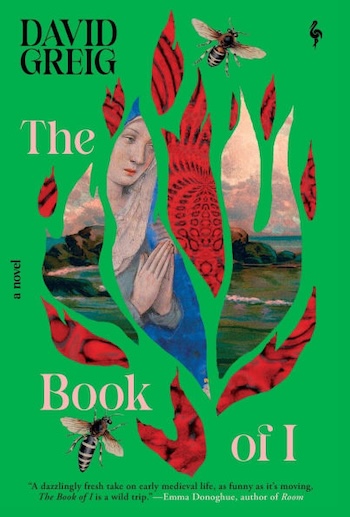 Set in A.D. 825, the Scottish playwright’s debut novel can be read as light entertainment (not a bad thing, especially in these times). The charming and refreshingly short (160 pages) book covers one year on a tiny Scottish island known then as I (now Iona). That year starts with a Viking raid and ends, well, just after another of these seasonal attacks.
What happens in between, as the aging marauder Grimur is left behind for dead and slowly finds his way to a new life with I’s few survivors (notably a furiously funny and tough-as-nails mead wife, whom Grimur has made a widow), becomes more than an amusing fish-out-of-water tale. In a narrative filled with humor, Grimur’s year turns out to be a profoundly moving experience, packed with insights and unexpected intimacies, including a platonic relationship with a recalcitrant cow. Enlivening all of this is Greig’s engaging prose, which is cut through with beautiful Anglo-Saxon phrasings. A battle is a “sword storm” and a ship a “wooden war-gull.” The novel is the perfect package of prose and portent.
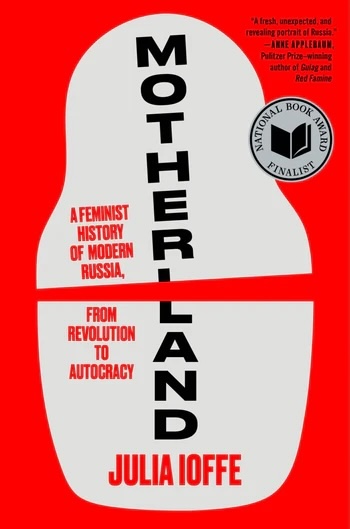 The worst has already happened in Julia Ioffe’s Motherland (Ecco), my top nonfiction book of the year. Documenting modern Russian (and Soviet) history through its women, including the journalist’s own relatives, Motherland is a chronicle of a dream derailed. Beginning with the revolutions that established the Soviet Union, Ioffe chronicles not only the idealism but the accomplishments of the socialist state, from its rocketing literacy rate to the educational freedoms that made it possible for four generations of women in her family to become practicing medical doctors.
Alas, as Ioffe so painstakingly reports, following World War II (in which women combatants, as well as those doctors, played a crucial role) those possibilities for women were undercut, both in terms of policy (curtailing the uncontested divorce and abortion laws that had allowed for gender equality) and responsibility for personal behavior (the many women raped by Lavrentiy Beria – Stalin’s head of secret police – are far from the only victimized women here). By 2009, when Ioffe returned to the country her family left when she was seven, Russia had become a different place – a country where women aspired to marry for wealth and Nazi concepts promoting large families had become public policy.
Ioffe, one of the founders of the news platform Puck, tells this history through the lives of Russia’s women, such as Alexandra Kollontai, who was named in 1917 the first Soviet commissar for social welfare, and her own mother, grandmothers, and great grandmothers. The result is a revelatory and incredibly compelling history, one that illuminates not only the forgotten (or, at least, little known) roles of early heroines, but also details the day-to-day experience of more than half the population. It is a tragic narrative. By the time Ioffe ties up her story — with the death of her beloved grandmother — it is clear why she cannot safely return to her motherland. As her Puck newsletter column always ends, “Tomorrow will be worse.”
Bill Marx
Editing the magazine cuts into my reading time, which can be frustrating. I must second Roberta Silman’s praise of journalist and novelist Omar El Akkad’s One Day Everyone Will Have Always Been Against This, which I reviewed as a Short Fuse in June. I wrote that it “succeeds as an eloquent polemic aimed at our growing collective callousness, a voice declaiming what poet Joseph Brodsky called ‘the unacceptability of the world.’”
 Another Short Fuse notice I would like to give a shout out to – Korean-born philosopher Byung-Chul Han’s The Spirit of Hope, who lives and teaches in Berlin, at the University of the Arts. He has became a popular writer in Europe through a series of short, dense, astringent quasi-manifestos (written in German) that dissect the twenty-first century’s accelerating crisis of community. His 2010 bestseller, The Burnout Society, and others analyze a number of pathologies, from the world’s dependence on technology to its embrace of narcissism. In The Spirit of Hope, the usually dour Han proselytizes for a concept of hope that transcends the satisfactions of facile optimism. There can be no engaged sense of future possibility, writes Han, that does not face the fears generated by doomsday scenarios. This is a necessary step for arriving at a vision of hope for change — slim as it may be — that obliterates modernism’s worship of instrumentalism, consumerism, and alienation. Underneath his gloom at how deeply inhuman life has become, Han remains a romantic: “As long as poets speak, there remains hope in the world.”
 The late Helen Vendler’s Inhabit The Poem–Last Essays was intended to be her final book, a collection of pieces on the work of poets — American, English, and Irish — that were originally written for the publication Liberties. The volume boasts the impressive strengths and limitations of this powerful literary critic, with the added value that she was writing for a non-academic readership. On the one hand, Vendler insists that in her explications of the poems she is making discoveries others have missed. That is the competitive, another notch-in-her-gun aspect of the literary critic. But who, outside of the seminar room, cares whether Vendler is an ace newshound? What matters is whether her exegesis adds to our pleasure when reading the poetry under her spotlight.
Thankfully, a number of entries here increase enjoyment, pay fresh homage to the verse’s “linguistic play,” while also having the merit of opening up a consideration of broader cultural issues. My favorites include Vendler’s meditation on why there have been so few poems about childbirth as she looks discerningly at Sylvia Plath’s “The New Statue,” and her savvy appreciation of Vietnamese American poet Ocean Vuong. Unfortunately, Vuong is the only living poet she considers — one wishes she had evaluated more contemporary writers during this gig. I am grateful for Vendler’s fruitful probing of “The Lamb,” a lyric by one of my favorite poets, William Blake.
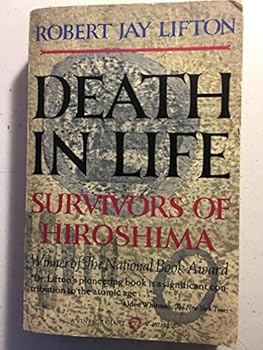
I must pay homage to the writings of an American master, Robert Jay Lifton who died earlier this year, at the age of 99. I wish the NYTimes article I linked to was more complete — it could at least have mentioned some of Lifton’s pricklier writings, such as his book Hiroshima in America (written with Greg Mitchell), which details, with considerable evidence, how reporting on the atomic bomb drops in Japan (particularly their aftermath) was censored — by the government and the media — to maximize political advantage and discourage public questioning.
In 1968, my view of the world and myself changed radically after I read Lifton’s masterpiece, Death in Life, his psychohistory of Hiroshima, which was awarded the National Book Award in 1969. The volume painstakingly recorded — from a humane analytical distance — the traumatized voices of the Japanese survivors of the atomic bomb, offering an iconoclastic, non-xenophobic look at the psychological (and by extension ideological) ramifications of the disaster. Among its other virtues, Death in Life explores the redemptive value of witnessing and remembrance as well as the damage inflicted by repressive forces that insisted on selling the false salvation of amnesia. Hiroshima was symptomatic of what Lifton termed a “genocidal mentality,” a cluster of beliefs, psychic adaptations, and institutional habits that make mass extermination of a targeted group thinkable, justifiable, and administratively doable, a mindset that spawned the Holocaust, Vietnam, the Climate Crisis, and our problematic response to the Covid-19 pandemic.
Before we can collectively heal, before we can take the steps necessary to ameliorate the global damage, we must consider turning away from what Lifton saw as the “malignant normality” of escape and listen to voices that express a harsh reality: “civilization — life itself — is threatened, dying or dead: that we must recognize this death or near death, pursue it, record it, enter into it, if we are to learn the truth about ourselves, if we are to go on living as a species.” Looking squarely at the condition we are in — through the testimony of witnesses, the vision of engaged artists, the research of professional organizations, and the emotional power of memorials and rituals of remembrance — is essential in cultivating the imaginative effort needed to encompass that darkness and move beyond it to activism.
As we look over the 20th and 21st centuries, Lifton’s characterization of our plight in Surviving Our Catastrophes is inescapable “…we live in a landscape of holocaust …On that basis (and without in any way equating ordinary life to the experience of holocaust), we all have in us something of the witness of the survivor.” His books, Death in Life, The Nazi Doctors, and The Climate Swerve among them, explore the ramifications of our “malignant normality,” and posit what it takes to be a morally responsible witness.
Lifton was a giant — one of America’s most important postwar writers. His compelling amalgamation of clinical psychiatry, history, reportage, philosophy, and politics will continue to shape our understanding of ongoing ideologies of ethnic annihilation.
Bill Littlefield
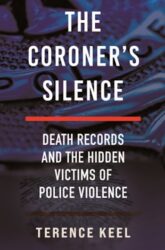 The title of Profesor Terence Keel’s revelatory book might suggest that it’s limited to uncovering the deficiencies and biases of a particular profession. But The Coroner’s Silence is far more than that. In his final chapter, “The Bodies That We Don’t See,” the author delivers a well-earned generalization: “Our politics reflect the belief that people on the wrong side of the law are not like us.” He goes on to insist that “not enough of us believe that criminals can be helped with institutions that offer care, shelter, and dignity,” and that “justice is more than a bureaucratic process.” True justice “requires us to return to our humanity.” It’s hard to imagine a more necessary or timely message given an administration that’s so thoroughly dedicated to preaching hatred and revenge. Genuine justice hardly seems to stand a chance.
Tagged: Bill-Marx, Clea Simon, David Mehegan, Kai Maristed, Preston Gralla