
Cultural Commentary: Cryptocurrency and Artists, A Match Made in Heaven? Or Hell?
By Steve Provizer
Our financial establishment is being hijacked in a car driven by a greedy, vengeful man, his industry cronies, and a doormat Congress cowering meekly in the back seat.
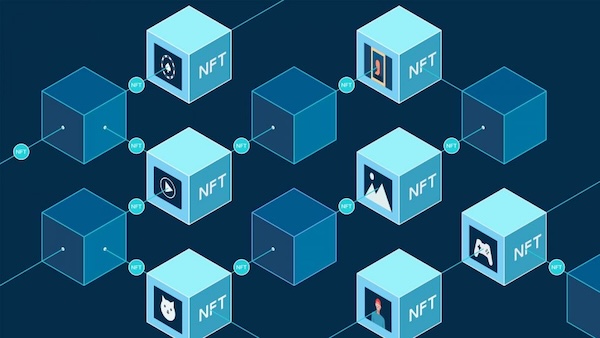
Prepare for the dominance of the blockchain.
This is a rough time for an artist to make a buck. First, AI comes thundering along, sucking up art, music, and writing without recompense while it threatens to replace artists in every medium. This recent headline says it all: “Xania Monet is the first AI-powered artist to debut on a Billboard airplay chart, but she likely won’t be the last.”
Another cultural time bomb is about to explode: the move to make blockchain technology the foundation of our banking/ financial system. America’s financial and political elite are jockeying for position to take maximum advantage of this technology. JP Morgan Chase, Bank of America, Citi, and Goldman Sachs, not to mention BlackRock (manages $13.5 trillion in assets) have already joined the stampede to blockchain. Astonishingly, there has been little comment from our creative economy about what it means for the future. Assuming that more MFA’s than MBA’s read The Arts Fuse, I’ll try to give you an understanding of what this technology is, and what it might portend for artists.
Blockchain was an idea initially proposed by a person or group using the name Satoshi Nakamoto in a 2008 paper called: “Bitcoin: A Peer-to-Peer Electronic Cash System.” It’s a network of computers that may be centralized or decentralized. Transactions are recorded and stored on a distributed ledger and encrypted. The safety, integrity, and balance of ledgers are maintained by a community called miners.
Transactions are grouped together to form a block that is added to the chain. Hence, blockchain. Theoretically, once data is recorded on the blockchain, it can’t be altered. That eliminates the need for third party intermediaries. The purported multiple upsides: increased security, transparency, immutability, scalability, efficiency, and adaptability. These virtues are described in detail here.
The medium of exchange in a blockchain is called cryptocurrency. The first cryptocurrency was Bitcoin, which was released as open-source software in 2009. As of June 2023, there were more than 25,000 other cryptocurrencies. There are several types of coins: Altcoins (initially, these were anything but a Bitcoin), Stablecoins (tied to currency or a commodity), Memecoins (the most volatile; price is derived from social media momentum and celebrity association). Important stand-alone cryptos: Tether, XRP (Ripple) and Ethereum. The latter has emerged as a key player because it introduced “Smart Contracts,” a vital element in scaling blockchain technology.
Here are the negatives: huge energy consumption, the anonymity of the process makes it ideal for criminal uses, such as money laundering, and there is considerable vulnerability to cyber attacks. The setup is technically complex, awash in a sea of acronyms and jargon that takes a substantial learning curve to master (believe me). The world of cryptocurrency is highly volatile, with prices fluctuating dramatically in short periods.
So, how did this technology — once the brunt of jokes and spurned by the financial and political world — become our new economic savior? Donald Trump has had a lot to do with it, and his enthusiasm is not out of a concern to make the world a better place for artists or others.
A few years ago, Trump was opposed to the idea of bitcoin. In 2019, he said it was “not money” and “based on thin air.” In 2021 he called Bitcoin “a scam,” as well as a threat to the supremacy of the U.S. dollar.
During his 2024 campaign, Trump began accepting cryptocurrency donations for his campaign and hosted high-profile fundraisers with crypto industry leaders. As soon as he took office, Trump signed executive orders whose goal was to make the U.S. the “crypto capital of the planet.” This campaign included a March, 2025 order to establish a U.S. Strategic Bitcoin Reserve, using forfeited assets to build a government stockpile of Bitcoin, which would be held as a reserve asset and not sold.
Trump’s administration loosened regulations on Bitcoin that had been previously pursued by the Biden administration’s SEC. Trump pardoned several convicted figures who operated in the crypto space, including Binance founder Changpeng Zhao. Juston Sun, the Chinese crypto entrepreneur and founder of the blockchain platform TRON, invested $75 million in the Trump family’s World Liberty Financial. Venture capitalist — and blockchain advocate — David Sacks was appointed the White House’s crypto czar.
The Trump family launched a series of cryptocurrency projects, including a meme coin and a stablecoin (USD1) through their company World Liberty Financial. Trump has also disclosed personal holdings in Ethereum and other digital assets. They’ve made over $1 billion so far. And this is just a drop in the crypto bucket. This article won’t go into detail about how this astounding scam is being pulled off. I have done that in my blog here.

What ramifications does all this chicanery have for artists? Could there be an upside?
Possibly.
In theory, blockchains could allow artists to directly address their fan base and then sell their work, which has the upside of cutting out the middle men — galleries, record labels and agents. Creatives could sell shares in the profits from their work, offer exclusive content as well as access to events or a say in their creative decisions. Cryptocurrency might provide new ways to crowdfund projects, thus bypassing traditional funding sources.
NFTs are non-fungible tokens (“crypto assets”) which exist on top of blockchains; they’re essentially unique, collectible digital representations of either digital “objects,” such as music, or physical objects, including paintings and sculptures. Artists can sell NFTs, which protects art from being copied or duplicated. When NFTs are sold, “smart contracts” can automatically pay artists a predetermined royalty percentage every time that work is resold on the secondary market, income that had previously been nearly impossible to track or enforce.
On paper, blockchains provide a clear, complete, and unchangeable public ledger that details transactions and ownership history. This arrangement could help verify authenticity and reduce the risk of fraud or forgery. Also on the positive side: cryptocurrency transactions will enable artists in places with no banking infrastructure to access a global market and receive payments instantly.
That all sounds pretty good; there is no prima facie evidence (that I can see) that blockchain technology would not benefit artists in the ways described. However, anyone who remembers the optimistic conversations sparked by the early days of the internet will hear its utopian echoes now — and will be skeptical.
Note the similar language. Artists will be able to take control of their careers. They will be able to reach out to their fan base directly, deepen their relationship, excise the middlemen. To some degree, that has happened on the internet, but not nearly on the scale that was predicated. Why not?
The assumption is that artists were going to become entrepreneurs. Yes, there were technological barriers artists were supposed to deal with, but those who were puzzled would be able to hire people who would handle it for them — get domains, build websites, learn SEO, arrange with third parties to handle merch, keep financials, post on social media, etc. There was a cost to all this.
Then illegal downloading and streaming services that pay almost nothing for what they sell arrived. Lastly, a small group of gatekeepers learned how to dominate cyberspace, creating and manipulating algorithms that reward previous success, to the detriment of new talent.
There is no doubt that thriving in the new blockchain world will involve dealing with many of the same issues. In fact, navigating the technical demands of the blockchain world for artists will be even more challenging — and dangerous. One problematic opening of a digital wallet and an artist might well be wiped out with the push of a key.
Here are a couple more concerns:
Cryptocurrency is nothing if not volatile. This creates a financial risk for artists who may rely on crypto as a stable income source or who price their work via the fluctuations of an ever-changing currency.
The legal and regulatory landscape for cryptocurrencies and NFTs continues to evolve. Trump’s GENIUS Act seems to provide a framework for stockpiling digital assets, but there are, predictably, weak protections against illicit finance deals and no strong consumer safeguards. The bill favors traditional banks while it also allows big tech companies to engage in bank-like activities — without being subject to the stricter regulations that are required of banks. Few artists can afford the legal and financial support that protect them from running afoul of what is sure to be shifting tax and legal consequences.
Watch any of the financial TV channels and the upshot of cryptocurrency is hard to miss: the already enormous wealth divide will grow even larger. Once the blockchain sales job hits the mainstream media, those with resources will reap the benefits, while those without will be forced to scrounge for “trickle down” bonanzas. Note: amidst this fool’s gold rush, nary a word is being spoken about the enormous environmental damage that will inevitably follow increased power consumption (via tidal wave demands for electricity).
In the old days, you might have been able to fix a radio, TV or car. At this point, even the creators of AI aren’t sure of how the systems-within-systems work together: the blockchain “environment” is byzantine and almost impenetrable for non-MBAs. Our financial establishment is being hijacked in a car driven by a greedy, vengeful man, his industry cronies and a doormat Congress cowering meekly in the back seat.
Steve Provizer writes on a range of subjects, most often the arts. He is a musician and blogs about jazz here.