
Musician Interview: Black Rebel Motorcycle Club Honors the Anniversary of “Howl” at House of Blues
By Rob Duguay
“Howl” was one of the hardest things Black Rebel Motorcycle Club has ever made. We knew weren’t going to make another album like it unless the spirit really demanded the songs — it raised the bar rather high.
 Any significant musician’s or band’s discography inevitably boasts one stand-out album. There can be a variety of reasons: its level of popular success, artistic achievement, or social impact. For the San Francisco garage rock act Black Rebel Motorcycle Club, their third album, 2005’s Howl, fits the bill. It was a major departure from BRMC’s previous style, which leaned heavily on fuzz-laden rock and post-punk influences. This album embraced acoustic instruments and explored Americana, country-blues, and gospel, drawing on ’60s psychedelia and outlaw themes.
This year marks the record’s 20th anniversary and the trio’s co-vocalist, co-guitarist, co-bassist, and pianist Robert Levon Been, co-vocalist, co-guitarist, co-bassist, harmonica, and synth player Peter Hayes, and drummer, percussionist, and backing vocalist Leah Shapiro are on tour to mark the occasion. On October 8, the celebratory expedition is making a stop at the House of Blues in Boston. The show starts a little after 7 p.m., with British alt-rock collective Humanist kicking things off.
Been and I chatted ahead of the performance about why Howl was somewhat of an outlier when it was made, his thoughts on coming back to Boston, and what the future holds.
The Arts Fuse: When Howl was released, it marked a sonic departure for the band. Most of the songs were given an acoustic foundation. What inspired the different musical direction?
Robert Levon Been: We didn’t really know what we were doing when we started. We had a lot of the songs already written probably even before our first album ever came out. We had a lot of these rootsy songs that we would just have fun playing backstage or on tour buses with acoustic instruments. They didn’t really fit with the sound of the band that the public had become familiar with, so we first started recording the songs separately rather than trying to blend them in or put them through distortion pedals to make them into rock songs. We didn’t want them to be something they weren’t. We started recording one after another, and what started as a throwaway acoustic album kept growing. It became something that was exciting and unexpected for us — just as much as it was for the fans. We kept pushing the envelope into the unknown while learning how to play some of the instruments.
I didn’t know how to play the piano until the song “Promise” called for it, so I learned piano just to play that song. A lot of things like that grew out of necessity in the making of Howl.
AF: Allen Ginsberg’s influential poem “Howl” inspired the album’s title. Was that simply a nod to his work as a poet and a writer or are there thematic similarities?
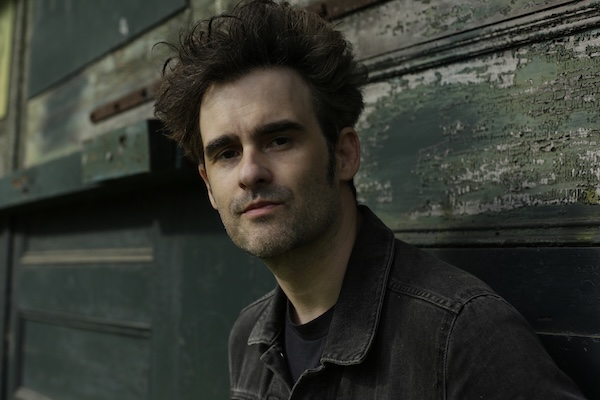
Robert Levon Been in 2021. Photo: courtesy of the artist
RLB: It was sort of us diving into the beatnik poetry and the [Bob] Dylan/Ginsberg world. As we were writing these songs, it demanded that we do our homework a little more and study up on their writing, which got us into writing more poetry as well. The spirit of that time and the spirit of community or calling on ghosts and calling on different spirits of the past — we were trying to do something like that, to make a connection with history. In a lot of ways, this album felt like a love letter to a lot of our heroes on the other side of the coin like Neil Young, Dylan, [Bruce] Springsteen, The Beatles, and Johnny Cash. It was kind of all over the map — Americana mixed in with the literary. That’s why it felt like it was a good name to steal (laughs).
AF: Do you feel that the acoustic nature of Howl had a major effect on the albums that came after it, such as Baby 81 and Beat the Devil’s Tattoo? Where do you think the album stands in the evolution of the Black Rebel Motorcycle Club?
RLB: It made us embrace our first love again, falling back in love with rock & roll, and that is reflected in the albums that came after it. I feel like it made us appreciate what we had more. Once you get that freedom to do anything you want, make an album like Howl, and throw everything in the kitchen sink at it, it scratches the creative itch in a big way. It made the records that followed not sound as if they came from a band that didn’t know what it wanted. That thought, maybe we should be doing this other thing or what if we did something else? It allowed us to form into one unified tight fist punch. If we hadn’t made Howl, we probably would have been more fractured, so it helped in a lot of ways. The album was one of the hardest things we have ever made. We knew weren’t going to make another album like it unless the spirit really demanded the songs — it raised the bar rather high.
AF: Black Rebel Motorcycle Club has performed in Boston a lot of times over the course of its existence. What has it been like?
RLB: We’ve got a lot of friends out there, and some of Howl was actually recorded on the East Coast, or at least demoed when the material was in an experimental phase. Ironically, we ended up finishing it when we recorded polished versions of the tracks on the West Coast. So you could say the album was conceived on the East Coast and delivered on the West Coast (laughs). It’s got a little bit of everything from across the country, I guess. New York can apply a lot of unnecessary pressure — everyone gets on pins and needles — so you can end up having some really bad experiences. Boston always gets the best show because we’re more dialed in. The city feels kind of homey for us and we’ve been embraced there really well over the years.
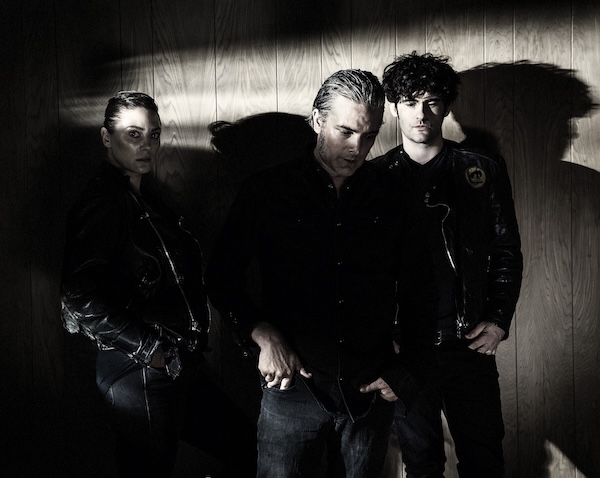
Black Rebel Motorcycle Club. Photo: Tessa Angus
AF: After this tour, what are you and the band’s plans going forward? Are there any plans for a new full-length album to follow up The Black Tape EP that came out last year?
RLB: We’re going to see how this tour goes first. We’ve started working on separate projects, each of us working with other bands. I did a film score and I’ve been helping out some other people, so we’re all sort of feeling things out. Depending on how the feeling and the spirit are when we’re out together, we’ll probably make a decision after that. Right now, we’re going backwards in time, which is a really abnormal feeling.
We’ve never gone back to a record before, but it feels like time to pay some respects to what came before. From there, we’ll be able to know where and how we want to move forward. That’s the idea.
Rob Duguay is an arts & entertainment journalist based in Providence who is originally from Shelton, CT. Outside of The Arts Fuse, he has also written for DigBoston, Aquarian Weekly, Providence Journal, Newport Daily News, Worcester Magazine, New Noise Magazine, Manchester Ink Link, and numerous other publications. While covering mostly music, he has also written about film, TV, comedy, theater, visual art, food, drink, sports, and cannabis.