
Jazz Artist Appreciation: Sheila Jordan (1928-2025)
By Steve Elman
Each time I heard Sheila Jordan sing live, I remember being spellbound, embraced, dazzled, awestruck, and I know I’m not alone.
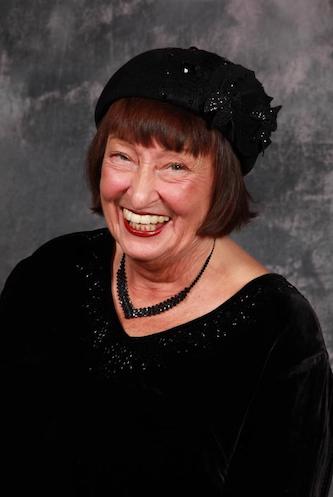
Sheila Jordan, in her official portrait as a National Endowment for the Arts Jazz Master; she was inducted in 2012. Photo: Michael G. Stewart
I was one of Sheila Jordan’s friends, but I’m not special. She had thousands, maybe millions of friends, because she embraced her audiences intimately in her performances, shared her life with her listeners without pretense, and made each one of the people in the club or concert hall feel like he or she mattered in her life.
Two preeminent things: First, she was the last performing survivor of the original bebop generation; with her passing, an era of giants has come to an end. Second, she perfectly married the two classic approaches to jazz song — she was simultaneously a profound song interpreter and a fearless creator of spontaneous melody; no one else has done this as well, except for Billie Holiday.
My words here will never be adequate to the experience of hearing her. I have created an annotated Spotify playlist to introduce new listeners to her and remind those who loved her of her greatness. See “More” below.
Barry Singer’s beautiful obituary in The New York Times will tell you the story of her life. He has to chronicle her abuses and disappointments, and he does so well, but her story is not one of the countless jazz tragedies. Ultimately, her story is one of triumph. She lived long enough and had enough luck and strength to overcome poverty and substance abuse, to keep building her art when it seemed like very few cared, to become the master jazz singer she always aspired to be, to receive the encomia she richly deserved, and finally — most importantly — to make her living as a performing musician.
I first saw her live when Mark Harvey, then a practicing minister who often gave the facilities of Emmanuel Church or the Church of the Covenant to jazz musicians, brought her to Boston for a recital. I have since seen her with a pickup quartet in London as part of the London Jazz Festival, with Steve Kuhn at the Regattabar, twice with her preferred local rhythm section, Yoko Miwa’s trio, at the Mad Monkfish in Central Square, and other times I can’t quite place in space or time. Each time I remember being spellbound, embraced, dazzled, awestruck, and I know I’m not alone. As I indicated above, the intimacy with which she imbued her performances simply erased the distance between the stage and the seats. When I looked around, I saw the same rapt expression on faces all around me; inwardly, they each seemed to be saying, “This is a special time, and I’m glad Sheila is sharing it with me.”
Another example of her lack of artifice: She never chose a song for her repertoire that did not resonate with her personally. I once asked her why she didn’t sing “Laura,” remembering the magical duet on that song by Jeanne Lee and Ran Blake. Sheila scoffed. “I’m not a dyke,” she said. “How could I sing a song like that?” She never felt she could adopt a persona for the sake of a lyric; the words of a tune had to be meaningful to her and to be expressive of her life.
In her later years, she began to include “Look for the Silver Lining” in her regular repertoire. This Jerome Kern tune has a rather Polyannish lyric by Buddy DeSylva, and I always thought of it as one-dimensional sentimentality, like “When You’re Smiling,” or “You’ll Never Walk Alone.” But that was before I heard Sheila Jordan sing it. For her, this song represented a philosophy of life and when she sang it, you felt it was the Voice of Experience. It made me cry when I heard it live for the last time in 2023.
Many years ago, after I had interviewed her on my radio show, I asked her to sign one of the LPs she made with Steve Kuhn, and when she handed it back to me, she had written, ”To Steve, who’s always been there for me.” I treasured it then. I treasure it now. I will treasure it until the day I, too, will have to say goodbye.
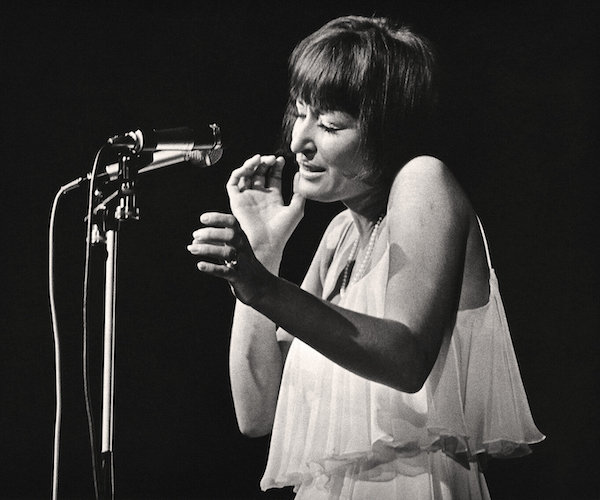
Sheila Jordan performing in the early ’70s. Photo: Wikimedia
More:
This is a link to my Sheila Jordan playlist on Spotify. It will serve as something of a preview to Jazz Ave, a podcast I am developing with old friend John Redman. We expect the first episodes to debut later this year, and I will revise my Arts Fuse bio with a link when the podcast goes live.
These are the tunes in playlist order.
- Look for the Silver Lining (Jerome Kern/Buddy DeSylva) – Jordan, vo; Stephan Kramer, 7-string g (from Kramer’s Thank You Sheila!, House Master [Germany], released 2018) Rec. Munich, Germany, c. 1977 [date provided by Apple Music].
This duo comes from a group date led by Stephan Kramer, a German guitarist who had many experiences learning from and working with Sheila. He is a very sensitive accompanist and sets up this tune for a great reading.
- Baltimore Oriole (Hoagy Carmichael/Paul Francis Webster) – Jordan, vo; Steve Swallow, b; Denzil Best, dm (from Portrait of Sheila, Blue Note, 1963) Rec. Englewood Cliffs, NJ, 1962
Swallow is playing acoustic bass here, showing great sensitivity to the accompaniment as well as to the beat. Later in his career he gave up the acoustic instrument to concentrate exclusively on electric bass, where he is considered one of the world’s great stylists. The tune became a signature for Jordan, who performed it regularly throughout her life.
- You Are My Sunshine (Jimmie Davis) – Jordan, vo; George Russell, p, arr; Don Ellis, tp; Garnett Brown, tb; Paul Plummer, ts; Steve Swallow, b; Pete LaRoca, dm (from Russell’s The Outer View, Riverside, 1962) Rec. New York City, 1962
Composer George Russell radically rearranges Jimmie Davis’s southern classic here, bringing out its darkness in a way never before imagined. He begins with six statements of the theme by the instrumental group in various tempos and with different instrumental voices coming briefly to the front. All of these choruses show off Russell’s unique ideas of harmony, where (especially in the bass and piano parts) he provides a foundation that opens up the simple emotions of Davis’s tune and permits a far wider range of expression by the trumpet, trombone, and tenor sax. Then, with a piano flourish, he leads into Jordan’s vocal. He calls for her to sing the first eight lines with no accompaniment — a stunning passage that shows off the amazing beauty and maturity of her voice — and then the ensemble sneaks back in to accompany her, and finally it takes over for a brief boozy conclusion. This track remains a milestone in the discographies of both of these two geniuses.
- Confirmation (Charlie Parker/Skeeter Speight) – Jordan, vo, Harvie S, b; Alan Broadbent, p (from Better Than Anything – Live, 2016; also available on bandcamp.com) Rec. Kimball’s East, Oakland, CA, 1991
Thanks to Raul da Gama for the recording data. See his review/appreciation of the full recording here.
Jordan first recorded this tune, with lyrics by her old Detroit singing partner Skeeter Speight, on her 1975 Japanese LP Confirmation, made for East Wind and released the same year it was recorded. Regrettably, Spotify does not have access to it.
This version is slightly faster than the 1975 recording, and that makes it harder for Jordan to sing all of Speight’s words with perfect clarity, but she sparkles in her scat choruses, so it’s great nonetheless.
- Tomorrow’s Son (Steve Kuhn) – Jordan, vo; Steve Kuhn, p; Harvie S [as Harvie Swartz], b; Rakalam Bob Moses [as Bob Moses], dm (from Playground, ECM, 1979, reissued in Life’s Backward Glances, ECM, 2006) Rec. New York City, 1979
For the recordings of the Kuhn-Jordan quartet, ECM producer and major domo Manfred Eicher made the controversial decision to mix Jordan as an equal partner with Kuhn, rather than to give her the traditional up-front mix that is given to most singers. As a result, you may have to boost the volume in your playback to hear all the words here, but it’s worth it for her spellbinding performance. Kuhn builds beautiful intensity in his accompaniment, making this much more than just a “tune.” It is a real composition, and Jordan brings heartfelt meaning to Kuhn’s enigmatic lyric.
- Art Deco aka Art of Don (Don Cherry/Sheila Jordan) – Jordan, vo; Steve Kuhn, p; David Finck, b; Billy Drummond, dm (from Jazz Child, HighNote, 1999) Rec. New York City, 1998
This example of Sheila’s lyric writing is simultaneously a tribute to trumpeter Don Cherry, who wrote the original tune, and an expression of her own optimistic love of the musical experience.
- Relaxin’ at Camarillo [erroneously shown as “Relaxing at the Camarillo” by the label and by Spotify] (Charlie Parker/Sheila Jordan) – Jordan, vo; Harvie S, b; Roni Ben-Hur, g (from Portrait Now, Dot Time, 2025) Rec. c. 2022, Bronx, NY
In this one, Sheila presents lyrics she wrote on a Charlie Parker line. Unlike so many others (but absolutely consistent with herself), Jordan uses the lyric to tell of her admiration for Parker and how she reacted when she first heard him play. Israeli-American guitarist Ben-Hur has a nice spot, too.
- The Zoo (Steve Kuhn) – Jordan, vo; Steve Kuhn, p; David Finck, b; Billy Drummond, dm (from Jazz Child, HighNote, 1999) Rec. New York City, 1998
Here’s another Kuhn song with a lyric that slides between the definite and the enigmatic. Is it about zoo animals, or the singer’s loneliness? Jordan finds the path within it to make it meaningful. It seems to be just a nonsense ditty, but she brings sadness to the final lines.
- The Crossing (Jordan) – Jordan, vo; Steve Amirault, p; Kieran Overs, b; Andre White, dm (from Winter Sunshine, Justin Time, 2008) Rec. Upstairs Jazz Bar & Grillades, Montreal, 2008
- Sheila’s Blues (Jordan) – Jordan, vo; Steve Amirault, p; Kieran Overs, b; Andre White, dm (from Winter Sunshine, Justin Time, 2008) Rec. Upstairs Jazz Bar & Grillades, Montreal, 2008
Jordan often works her biography into her songs, and “Relaxin’ at Camarillo” is an example of a written lyric telling of her first hearings of Charlie Parker. Here are two more examples showing off her ability to improvise her life into a performance, the conclusion of a live set she did in Montreal. The first is a sensitive lyric full of advice on the trials of life, informed by her long experience. The second is a full-blown example of Sheila singing directly to the audience and then improvising her life story, over a standard blues backing. Between the two, she does a typically generous introduction of her all-Canadian jazz trio, probably a pickup group for this performance, who handle all the curves she throws at them with aplomb.
- Please Don’t Talk About Me When I’m Gone (Beatrice Palmer/Sam Stept / Sidney Claire) – Jordan, vo; Arild Andersen, b (from Sheila, SteepleChase, 1977) Rec. Oslo, Norway, 1977
Sheila takes a very free approach to the melody on this old standard and it’s a showcase for her innate and natural inventiveness — nothing about the substituted notes sounds forced or artificial, and there’s even an edge of bitterness that counteracts the speedy tempo. Norwegian bassist Andersen has a solo, a gem, in between the two vocal choruses. The final chorus is just as strong as the first one, and the two players land together, like two dancers, in perfect step.
- Fairweather (Kenny Dorham) – Jordan, vo; Tom Harrell, tp; Steve Kuhn, p; David Finck, b; Billy Drummond, dm (from Little Song, HighNote, 2003) Rec. New York City, 2002
Here’s another of the great collaborations with Steve Kuhn, who limits his role to piano comments on Jordan’s vocal. This is an extraordinarily sensitive ballad performance by Sheila, with Kuhn’s working trio as the backing band. Her vocal is completely imbued with her love for her friend, the late Kenny Dorham, a trumpeter-composer still underappreciated today by the general public but revered by fellow musicians for his depth and intelligence. Dorham also wrote and sang vocal tunes like this one. A special feature here is the solo by Tom Harrell, an introspective trumpeter perfect for interpreting Dorham. There are lovely vocal moments throughout, including a beautiful and daring melisma on the last word, “friend.”
- I Concentrate on You (Cole Porter) – Jordan, vo; Kenny Barron, p; Harvie S [as Harvie Swartz], b; Ben Riley, dm (from Lost and Found, Muse, 1990) Rec. New York City, 1989.
The trio assembled for this date is stellar — pianist Kenny Barron, still with us, is an NEA jazz master; bassist Harvie S collaborated extensively with Sheila and can do anything on his instrument; and drummer Ben Riley is one of the steadiest hands in percussion, known principally for a long run with Thelonious Monk. They give Sheila a bright bossa nova backing on this standard, and she plays with the melody superbly. Barron has a typically superb solo, too.
- What Are You Doing the Rest of Your Life? (Michel Legrand) – Jordan, vo; Roswell Rudd, tb; Hod O’Brien, p; Arild Andersen, b; Barry Altschul, dm (from Flexible Flyer [issued under Rudd’s leadership], Arista / Freedom, 1975) Rec. New York City, 1974
This one is unique in Sheila’s discography, a collaboration with Roswell Rudd, a trombonist often misunderstood as an avant-garder, when he actually was a profound individualist, who went his own way no matter what, and fearlessly challenged himself to do the unexpected. Most of this track is a duet for voice and trombone, with Sheila deep into the heart of the lyric and Rudd providing single notes below her that somehow convey all the harmony that’s needed. The two breaks with the rhythm section show Jordan jumping from extreme intimacy to her most operatically intense. This song, which I have always regarded as rather slight, here becomes an aria with epic impact.
- Hold Out Your Hand (Steve Kuhn) – Jordan, vo; Arild Andersen, b (from Sheila, SteepleChase, 1977) Rec. Oslo, Norway, 1977
Kuhn’s arch lyric is about alcohol abuse, and Jordan invests it with her experience with booze and cocaine. As is typical with Kuhn’s songs, this is not one-dimensional. It may feel like a whimsical ditty — until you hear the words. One way to read it is as a plea for understanding through a drunken haze. After Andersen’s bass intro, Jordan scats her first chorus, sticking close to the melody, and then jumps right into the lyric:
Falling all over the floor
I can’t seem to find my way
Every time I lift my glass
People laugh at me
Won’t you tell me how to behave?
Here’s my hand, look in my eyes
That’s all I ask of you, I really want of you.
I’m alive
Everyone seems so lost
In the past
It’s you I love
As my head is clear most of the time
All I ask of you, I really want of you.
Jordan colors “Here’s my hand, look in my eyes” with a hint of pathos — this is the voice of someone who knows what it’s like to be pitiably drunk, trying to hold on to a shred of dignity. Kuhn concludes the line with a wordless seven-note figure, repeated four times. Jordan and Andersen use that as an outro.
- Two Bass Hit (Dizzy Gillespie/John Lewis) – The Echo Park Project [Carlo Lopez, bgo, leader; Steve Giraldo, Ron Blake, tp; Humberto Ruiz Jr., tb; Anthony Gill, Frank Fontaine, saxes; Matt Amper, p; John Belzaguy, b; Jimmy Branly, dm; Giancarlo Anderson, tim, cga] (Big Band Tribute Dizzy Gillespie, Echo Park Project, 2017) Rec. Los Angeles, c. 2017
This infectious Latin version of one of Dizzy’s classics came to our attention on a Spotify search and the fanfares from it make perfect attention-getters for our podcast. So we include the full version of the track in each one of our Spotify Jazz Ave playlists. We hope these plays give them wider attention. Solos here are by tenor saxophonist Frank Fontaine (no, not the Crazy Guggenheim Frank Fontaine) and trumpeter Ron Blake.
You can purchase the track directly from the band via this link.
Steve Elman’s more than four decades in New England public radio have included 10 years as a jazz host in the 1970s, five years as a classical host on WBUR in the 1980s, a short stint as senior producer of an arts magazine, 13 years as assistant general manager of WBUR, and fill-in classical host on 99.5 WCRB.
4 Comments
Leave a Comment

Dear Steve; Such a great tribute to Sheila Jordan, whom I’d never heard before her great performance at the Jazz All Night, Church of the Covenant, was that in 1976(?). Big fan ever since, including a chilly night at Faneuil Hall with Harvey Schwartz, when she joked about the old portraits high on the walls, and a New England Conservatory artist in residence talk where she described serenading cows in upstate NY with the blues. I’m guessing you introduced her to the audience at Jazz All Night. I remember first picking up your WBUR evening broadcasts, holding forth on the excellence of Miles Davis’ /Gil Evans’ Shetches of Spain, while a student in Portsmouth NH, in 1974. Remind me please, what was your introductory theme song, I remember John McLaughlin/Joe Farrell’s Follow Your Heart; and wasn’t there another with a very buoyant, harmonized horn lead in.
Peter, how kind of you to remember my work after all these years. You’re right, the tune I used as an intro to “Spaces” from 1972 to 1982 was “Follow Your Heart,” from a CTI LP called Joe Farrell Quartet, this despite the fact that there were four notable sidepeople supporting Farrell playing saxes and flute – John McLaughlin on guitar, Chick Corea on keyboards (not heard on “Follow Your Heart”), Dave Holland on bass and Jack DeJohnette on drums.
As for the other tune, I’m not sure, but you might be thinking of the tune Jose Masso used as the intro tune to his show “Con Salsa,” which followed mine on Sunday nights. That one did have a buoyant, hamonized horn lead-in, and it was “Puerto Rico,” one of the many masterpieces by the late Eddie Palmieri.
Finally, I don’t think I was the person who introduced Sheila Jordan at Jazz All Night. I remember being glad to hear her, but there were oithers more prominent on the air doing jazz at the time. I wouldn’t be surprised if it was Eric Jackson, Charlie Perkins, Wylie Rollins, or the late Tony Cennamo.
Wonderful! Glad to have been a small part of Sheila’s amazing life. Steve Amirault (pno) Montreal
I was so glad to read this right after Sheila’s passing, Steve. So personally thoughtful and thorough, down to the playlist of recordings no less. Sheila was quite the strong-willed spirit!