
Musician Interview: Talking to Folk-Rock Troubadour Steve Forbert
By Blake Maddux
It’s difficult to say if Steve Forbert sounds youthful now or if he has long since fully grown into his always expressive and distinctive voice. Or both.
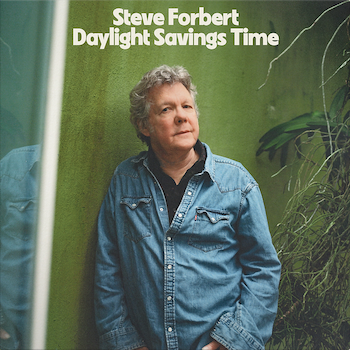 Singer-songwriter Steve Forbert’s voice sounded mature and lived-in beyond his 24 years at the time of his 1978 debut, the appropriately titled Alive on Arrival.
Given that it sounds more or less completely non-wizened on last year’s Daylight Savings Time, it’s difficult to say if he sounds youthful now or if he has long since fully grown into his always expressive and distinctive voice. Or both.
Whatever the case, the 10-track collection exhibits all that has made the now 70-year-old a favorite of fans, peers, and critics.
Daylight Savings Time is a modest but potent recording. Forbert’s lyrics and his delivery thereof are by turns earnest and humorous, making his observations on aging, change (whether over the course of a single year or decades), and mental health particularly effective. Sometimes something seemingly inconsequential stands in for something larger (“Purple Toyota”) and other times that larger thing is front and center (“The Blues”).
Forbert spoke to me by phone from an undisclosed spot along the Jersey Shore, which he has called home since 2017. Among the many highlights of his six-decade-spanning career that we touched upon were the timeless “Romeo’s Tune” (which reached #11 in 1979), his enshrinement in the Mississippi Musicians Hall of Fame, his appearance in one of the most memorable videos of the early ’80s, and the apparent inclusion of one of his songs in a list of the greatest ever written about New York City.
Note: Steve Forbert will perform at the Narrows Center for the Arts in Fall River on July 25, at the Burren in Somerville on July 26, and at the Farmstand in Tamworth, NH, on July 27.
The Arts Fuse: Which songs are about actual experiences and which are — as James McMurtry described it to me — “playing with words”?
Steve Forbert: I know what James means exactly. To start off with, there’s one called “One Lone Leaf,” which is a real-life experience. It’s a literal account. It’s just a nice little song about walking out of the woods in, say, August and seeing that leaf come drifting down. “Simon Says” is an example of playing with words. You start out the music in those cases, and James would probably agree. Then you want words that you like and are good but also sing well. But you’re not just going to throw something down. It still has to be a quality song, even if you’re not relating an actual experience.
AF: “The Blues” — which mentions Janis Joplin and Amy Winehouse — is a touching song about an important topic. What inspired it?
SF: It’s more of a country song than a blues song. I was writing about that weird thing that a lot of people know when you get the blues for a while. “The blues ain’t just a good man feeling bad/Or just a stretch of feeling somewhat sad.” Honestly, we’d be talking about what we call depression. That is another song that is about something in particular.
AF: “Sound Existence” and the bluesy “Simon Says” cleverly quote lyrics from the Grateful Dead and Free, respectively. How did they work their way into those songs?
SF: Well, I’ve got quite a record collection. That’s the simple answer. “Simon Says” is about a party and maybe Simon is the designated driver. He’s saying, “hey let’s get out of here. We’ve got things to do tomorrow.” That just gets onto the paper from my record collection. Same thing with the Grateful Dead.
“Sound Existence” is about an older person who is comfortable in a retirement community. It’s not a bad way to live your golden years. It’s not about me, I must stress that, but I’ve seen people like that who have chilled out and just gotten into their comfortable routine. “You’ve got a place to stay and a place to park” is how it starts. “It’s been a long strange trip but it’s worn well upon your face/You’re in your golden years and you are in your proper place.” That’s the essence of the song. And that’s not too bad, really. A lot of people have it a lot worse as they get older.
In 2020, I did a covers record where, after 40 years, I decided to cover some of my favorite songs, including [Grateful Dead’s] “Box of Rain.”
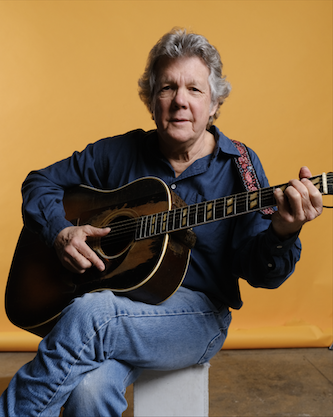
Steve Forbert. Photo: George McMorrow
AF: You are a 2006 inductee into the Mississippi Musicians Hall of Fame. Who are some of your fellow members?
SF: Well you know, Mississippi is a pretty badass musical state. So we will be starting with the likes of Elvis Presley. And bluesmen like Howlin’ Wolf and B.B. King and Albert King. The ever-awe-inspiring Robert Johnson. Tammy Wynette is from Mississippi, and Jimmie Rodgers is from my hometown. Wait, let me be clear: I’m from his hometown. I did a tribute record to him.
AF: And you received a Best Traditional Folk Album Grammy nomination in 2003 for that one.
SF: Yeah. I knew that June Carter would win that year. She had just passed away and released a very good record that year. So it wasn’t a shock to me that she won. But sure, it was nominated and it was great.
AF: I meant to mention Mississippi John Hurt before as you were answering the Hall of Fame question.
SF: That’s right, and there are many others. Son House, the list goes on and on. We’d be talking about Charlie Patton, Muddy Waters, Mose Allison, and if I thought about it for a minute I could come up with 10 more who you would know.
AF: I watched a lot of MTV in the early ’80s and saw the video for Cyndi Lauper’s “Girls Just Wanna Have Fun” several times a day. What led to your appearance (3:44, in tuxedo) in that?
SF: As I said, I’ve got quite a record collection. I had bought the record Blue Angel, and Cyndi was in that group. They were kind of a retro thing, and she had kind of a ’50s throwback and there were ’50s tones to what Blue Angel was doing. So I went to a few shows and met them and, to make a long story short, she knew I was a fan. When she put out a solo record and they were ready to make a video, she asked me if I would be in it, and I of course said yes.
AF: How grateful are you for “Romeo’s Tune”?
SF: Very. That established enough for me to be talking to you right now. Just to have enough of a recognition factor to make more records and to keep at it all this time. You’ve got to have something that you are known for, and that’s worked out good. A calling card that the general public would know.
AF: Finally, can you confirm that your song “Grand Central Station, March 18, 1977” appeared in the Village Voice’s 2014 selections for “The 60 Best Songs Ever Written About New York City?”
SF: That’s what I understand.
AF: It’s mentioned on Wikipedia, but I cannot locate a link to the original list.
SF: I’ve never seen the list either, actually, so if you find it let me know!
Blake Maddux is a freelance journalist who regularly contributes to The Arts Fuse, Somerville Times, and Beverly Citizen. He has also written for DigBoston, the ARTery, Lynn Happens, the Providence Journal, The Onion’s A.V. Club, and the Columbus Dispatch. A native Ohioan, he moved to Boston in 2002 and currently lives with his wife and eight-year-old twins — Elliot Samuel and Xander Jackson — in Salem, MA.