
Arts Appreciation: Ozzy Osbourne — He Was One of Us
By Scott McLennan
Ozzy also gave us all the inspiration to overcome whatever dipshit, fucked up, and idiotic things we did, because he did just that, and generated plenty of good in the process.
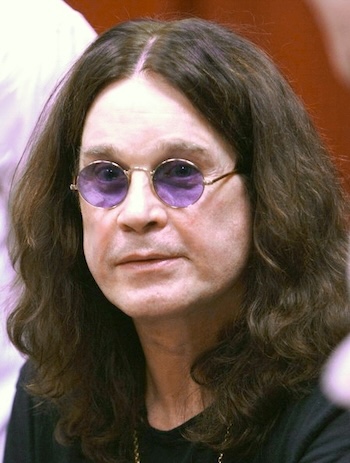
Ozzy Osbourne in 2010. Wikimedia
Ozzy Osbourne gave us license to be complete dipshits, fuck ups, and idiots. Nobody was a bigger dipshit, fuckup, or idiot than Ozzy ever was, and yet news of Ozzy’s death on Tuesday triggered an avalanche of grief, memorials, and fond remembrances from the ordinary to the famous.
That’s because Ozzy also gave us all the inspiration to overcome whatever dipshit, fucked up, and idiotic things we did, because he did just that, and generated plenty of good in the process.
Ozzy’s story could have easily ended in 1979 when the band Black Sabbath booted him as its lead singer, claiming that his drug and alcohol abuse made him unreliable. Yet just two weeks before his death, Ozzy was at the center of the music universe, performing at a farewell concert in a massive stadium that included a festival-style lineup of bands he inspired and that raised $190 million for charitable causes.
In between those two events, Ozzy soared and crashed throughout the ’80s and ’90s before emerging oddly as an “anti-celebrity” celebrity, a guy who still inspired rebellion in teenagers yet could comfortably duet with Elton John as a pair of aging British rock stars.
Ozzy had a knack of walking that line between celebrity and authenticity, insider and hooligan, menace and savior.
Pop-culture Ozzy sometimes made us cringe. (Motörhead’s Lemmy Kilmister once lamented during an interview with me that he felt people were laughing at Ozzy — and not with him — when they watched The Osbournes TV show). Still, these buffoonish turns helped keep the music alive in a way few could have predicted. Black Sabbath is easily as popular now as it ever was, and Ozzy’s solo hits are likewise inescapable.
With Black Sabbath, Ozzy was an architect of the heavy metal sound. As a solo artist, he continued to be a dominant figure in metal’s second wave of popularity. And as a global celebrity — known as the Prince of Darkness and scourge of religious groups and concerned parents — Ozzy provided a platform for rising talent, especially when he launched the Ozzfest tours in the mid-’90s.
Black Sabbath unleashed an updated form of working-class blues for a new generation. The music was dark, it was sincere, and it was defiant. Ozzy infused the same ingredients into his solo career, just through different packages. The music became more sonically dynamic, driven by guitarists who deployed as much flash as they did doom. He was a major influence on a rejuvenated metal scene. And he complicated his celebrity image with songs about madness and spiritual rot. And, before poor health took him off the road in 2019, Ozzy could be counted on to be a maniacal cheerleader in performance, dousing himself and audience members with buckets of water and howling through songs that played on classic rock stations all afternoon when the news broke of his death.
He was one of us.
Scott McLennan covered music for the Worcester Telegram & Gazette from 1993 to 2008. He then contributed music reviews and features to The Boston Globe, Providence Journal, Portland Press Herald, and WGBH, as well as to The Arts Fuse. He also operated the NE Metal blog to provide in-depth coverage of the region’s heavy metal scene.