
Music Documentary Reviews: “Goddess of Slide” and “Sound of the Surf”
By Noah Schaffer
For fans of guitar music, two excellent new documentaries offer plenty of insight into impressive musical accomplishments as well as some memorable playing.
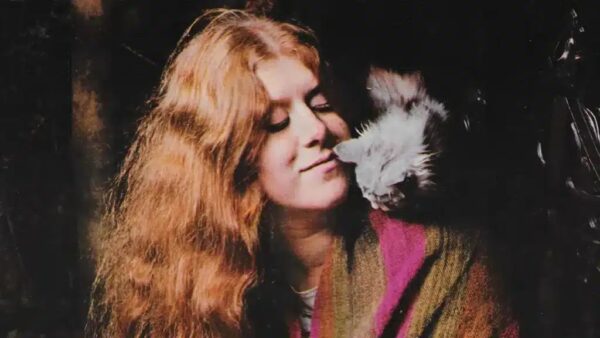
Guitarist/singer/songwriter Ellen McIlwaine in a scene from Goddess of Slide.
Goddess of Slide: The Forgotten Story of Ellen McIlwaine, which makes its Boston premiere at the Regent in Arlington on July 13, looks at a criminally undersung guitarist, singer, and songwriter. Sound of the Surf, which is now available via Apple TV and Fandango at Home, offers a concise look at the rise, fall, and ongoing revival of instrumental surf rock.
The opening minutes of Goddess of Slide contain two remarkable scenes. The first is footage of McIlwaine performing on Canadian television in the mid-’70s, her head-spinning playing drawing on both deep Delta blues and Indian ragas. While the music plays, a series of talking heads describe the power of her playing in a past-tense manner that suggests that this will be (yet) another music documentary detailing the tragic story of a promising musician who died before they reached 30. Which is why, when we see McIlwaine herself being interviewed for the film, it is such a surprise. Guitar heroes are usually a dependable draw, but McIlwaine was absent from the US touring circuit and hadn’t released a new recording for 15 years when she died in 2021.
At one point, McIlwaine, who also had strong vocal and songwriting chops, didn’t seem to be destined for obscurity. She was at the right place at the seemingly right time when she first started turning heads in the ’60s Greenwich Village scene, playing with Jimi Hendrix and Taj Mahal (one of the many McIlwaine fans interviewed for the film). On top of that, she led a band that was part of the fertile Woodstock scene in the early ’70s. One of Tom Waits’s first appearances in Boston was as the opening act for McIlwaine at Passim.
McIlwaine ended up moving to Canada, a country which offers the kind of arts funding that makes a film like Goddess of Slide possible. (Filmmaker Alfonso Maiorana co-directed the fine 2017 documentary Rumble: The Indians Who Rocked the World.) But she found herself grappling with bad luck with labels and management. The performer recounts how the producer of her 1978 LP wouldn’t even let her play guitar on the record; it is a reflection of how widely female instrumentalists were discounted at the time. (Among her fans: Boston’s Patty Larkin, who included her on a 2006 compilation of female musicians called La Guitara.)
That McIlwaine never lived to see this potentially career-reviving documentary released is a sad reality. The film’s only misstep is its especially mawkish conclusion. That should not detract from the fact that the film splendidly serves its dual purposes: to introduce McIlwaine’s formidable talents to new fans while also letting her old ones learn why such a talent ended up fading away.
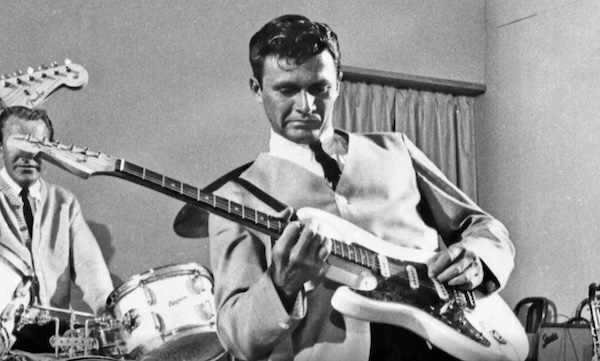
Guitarist Dick Dale in a scene from Sound of the Surf.
That Sound of the Surf ever reached streaming platforms is a bit of a miracle. Filmmaker Tom Duncan started the film 18 years ago. He was still working on it when he passed away in 2021. Guitarist and author John Blair picked up the pieces, and the result is a seamless and extremely informative documentary.
One of the film’s considerable strengths is the way it contextualizes the rise of a Southern California youth culture that transformed surfing from a niche sport into a popular — and heavily commoditized — culture. The West Coast jazz scene was surfing’s original soundtrack. That meant that the region hosted large ballrooms, like the Rendezvous Ballroom in Balboa. Stan Kenton’s big band recorded a pair of live albums at the venue in the ’50s, but by 1960 the house attraction was the act who would define surf music, Massachusetts native Dick Dale and his Del-Tones.
Dale was interviewed for the film before his 2019 passing. As anyone who saw him live knows, the guitarist could never be accused of being modest. But the interviews from the other Del-Tones along with the teens who flocked to the Rendezvous back up Dale’s claim that the scene was the big bang of surf rock.
Equally fascinating are the stories of the pioneering teen surf bands who never achieved Dale’s fame, like the Challengers, the Belairs, and Eddie and the Showmen. And, if a ’60s surf band conjures up an image of four white blonde males, Sound of the Surf also includes Black guitarist Will Glover of the Pyramids and tells the story of Kathy Marshall, who was the unrecorded Queen of the Surf Guitar decades before Canada’s Surfrajettes became a popular touring act.
History is presented without bitterness: the British invasion killed off the genre’s commercial potential while the nonsurfing Beach Boys became the most popular surf-adjacent act. Despite that, the reverb-drenched guitars and thundering drums of surf can still be heard on a regular basis. Blair’s Jon and the Nightriders formed in 1979, just as the punk scene was embracing such rootsy styles as rockabilly. Surf received a turbocharge via the soundtrack to Pulp Fiction that has yet to let up, thanks to local instrumental rock bands that can be found playing bars and beaches all around the world.
As with earlier chronicles of surf rock’s past, Sound of the Surf lets the actual surf revival musicians tell their story. A conventional music documentary would have rounded up a cadre of classic rock guitar gods who were inspired by surf. This film’s focus on those who were there, including those who are carrying on the tradition, is refreshing.
Sound of the Surf doesn’t have an official soundtrack album, but a perfect audio companion was released over the July 4 weekend. The Legends of Surf Guitar captures one of several reunion concerts that were held in the ’90s, a time when Pulp Fiction was still in theaters and many original surf artists were still alive and more than ready to get their axe out if asked.
The live audience provided these surf veterans with some extra adrenaline. One time Belairs guitarist Paul Johnson kicks off the set with his own band, the Packards, and his 10 tracks show that he is also a master of blues and country playing. A fast-paced surf revue follows, which includes Blair (who co-produced the LP), madman Davie Allan, and the Chantays of “Pipeline” fame.
As with any revival show, there is a tension between listeners, who want to hear the songs played with the same gear and tone that made them magical in the ’60s, and the artists, who’ve moved on over the intervening 30 years and want to stretch out beyond the limits of a two-minute, 45-second performance. One of the most satisfyingly authentic sets comes from Bob Demmon of Colorado’s The Astronauts, creators of the surf classic “Baja.”
Like many of their surf peers, there’s little live footage of the original Astronauts beyond a handful of mimed TV appearances, making The Legends of Surf Guitar an especially valuable document of a time when the surf giants still roamed the beach.
Noah Schaffer is a Boston-based journalist and the co-author of gospel singer Spencer Taylor Jr.’s autobiography A General Becomes a Legend. He also is a correspondent for the Boston Globe, and spent two decades as a reporter and editor at Massachusetts Lawyers Weekly and Worcester Magazine. He has produced a trio of documentaries for public radio’s Afropop Worldwide, and was the researcher and liner notes writer for Take Us Home – Boston Roots Reggae from 1979 to 1988. He is a two-time Boston Music Award nominee in the music journalism category. In 2022 he co-produced and wrote the liner notes for The Skippy White Story: Boston Soul 1961-1967, which was named one of the top boxed sets of the year by The New York Times.
Tagged: "Goddess of Slide", Alfonso Maiorana, Ellen McIlwaine, John Blair, Music documentaries, instrumental surf rock
Ellen was top notch. Dale who’s name was Rachid Mansour claimed he developed his guitar style by aping the sound of Mideastern drums. The Dumbek. I can’t eait to see this documentary. Thanx for your article and all of your articles.
David Nader