
Classical Album Reviews: Järvi Conducts Furtwängler & Collon Conducts Sibelius
By Jonathan Blumhofer
Neeme Järvi, true to his usual form, favors brisk tempos, which tend to keep things from getting bogged down in Wilhelm Furtwängler’s bog of a Symphony No.2; Nicholas Collon leads a stupendous recording of Sibelius’s Symphony No. 5.
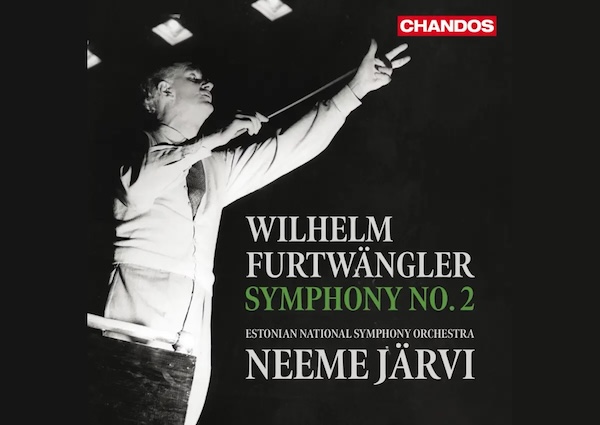
Sometimes it’s fascinating to see how skills don’t transfer. Take Wilhelm Furtwängler. One of the 20th-century’s greatest conductors, he long harbored aspirations as a composer. In that department, he didn’t exactly lack a point of view — his style was steeped in the modes of Bruckner, late Brahms, Wagner, and tonal Schoenberg — but neither did he have anything particularly compelling to say.
Even so, a handful of conductors have seen fit to revisit Furtwängler’s output now and again. Count Neeme Järvi, that great champion of underserved music, among them: he and the Estonian Festival Orchestra have lately turned their attention to the Symphony No. 2.
Completed after Furtwängler fled Nazi Germany for Switzerland in February 1945, the Second is a strangely shapeless, bloviating creature that suggests little, if anything, of the context of its gestation. On the plus side, the writing is skillful and idiomatic, and the orchestration — though never approaching the inventiveness of Mahler or Strauss — is creative. A few Easter eggs for the symphonically alert also dot the score, like a nod to Tchaikovsky near the end of the first movement and a lovely Brahmsian tone across the Andante.
Most of the time, though, the music sounds like secondhand Korngold or Franz Schmidt having an off week. Textures tend toward unrelenting thickness. Furtwängler’s management of his motivic ideas is often banal. Likewise, his counterpoint is competent but dull. Phrases, especially in the last two movements, have a frustrating, start-stop quality.
Every now and then, a bright spot emerges. There’s a charmingly quiet, recurring woodwind lick in the first movement that’s a picture of innocence. Also, the second’s opening theme is quite lovely.
But then the storm clouds gather, and those rays of sunshine are overwhelmed by so much bluster and turgidity. Maybe because it comes near the end, one of the Second’s most striking features is the comically miscalculated, out-of-nowhere cymbal crash just before the finale’s last cadence.
Järvi, true to his usual form, favors brisk tempos, which tend to keep things from getting bogged down. That fact alone might make this recording preferable to the composer’s own from Berlin and Daniel Barenboim’s traversal with the Chicago Symphony. That said, things sometimes feel rushed: at times, the Andante pants, and parts of the finale sound frantic.
What’s more, the EFO’s unfamiliarity with the music shows in some raw transitions and touchy string ensemble, particularly over the outer movements. Brasses flag in the finale, though, in their defense, they’re worked to within about an inch of their lives over nearly an hour and a quarter. Either way, the end result is done in by the music itself, which, after 80 years, remains so much sound and fury signifying not so much.
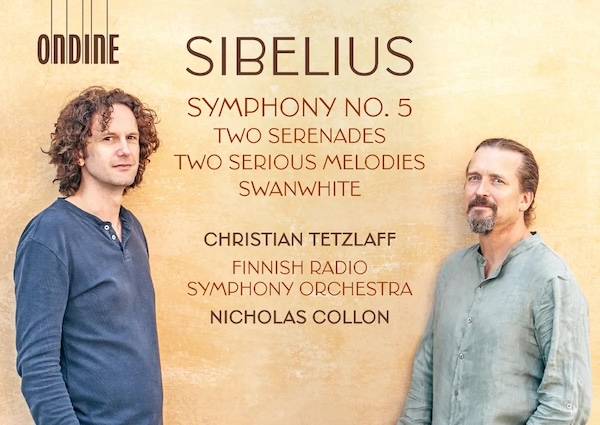
Jean Sibelius, on the other hand, usually had a very strong sense of what he was after, even if — as in the case of his Symphony No. 5 — it sometimes took him a little while to figure out just how to say it. That masterpiece was completed in 1915 but heavily revised over the next four years; a four-movement effort became a three-part essay, and some of the last century’s most thrilling music emerges across its 30 minutes.
At least, that’s how it should sound.
And it does in a stupendous new recording of the score from the Finnish Radio Symphony Orchestra and conductor Nicholas Collon. Their take on the Fifth is magisterial: rhythmically tight, smartly balanced, sweepingly directed. It’s also exhilaratingly clear, not just harmonically (the biting dissonances in the first two movements speak with icy clarity) but texturally — you might just be able to hear sinews snapping and feathers rustling in the breeze on the first iteration of the finale’s great “swan hymn,” so flawlessly voiced is the collective’s reading.
The sheer weirdness of the Fifth is subtly emphasized by the album’s filler, which includes violinist Christian Tetzlaff’s perfectly unsentimental accounts of Sibelius’s two Serenades and the Two Pieces (op. 77). Also on tap is the suite from the composer’s incidental music to Strindberg’s play, Swanwhite.
There’s no question why the latter is a Sibelius connoisseur’s piece: only the freshly lilting “Swanwhite and the Prince” is a true, standalone number. Even so, Collon and his forces navigate the music’s quirky episodes — from the feather-light, harmonically static “The Peacock” to the brooding “The Prince Alone” and hymnlike “Song of Praise” — with purpose, color, and energy.
Taken together, these are fresh, beautiful performances and glorious reminders of how, as Morton Feldman once memorably put it of this composer, “the people who you think are radicals might really be conservatives. And the people you think are conservative might really be radical.”
Jonathan Blumhofer is a composer and violist who has been active in the greater Boston area since 2004. His music has received numerous awards and been performed by various ensembles, including the American Composers Orchestra, Kiev Philharmonic, Camerata Chicago, Xanthos Ensemble, and Juventas New Music Group. Since receiving his doctorate from Boston University in 2010, Jon has taught at Clark University, Worcester Polytechnic Institute, and online for the University of Phoenix, in addition to writing music criticism for the Worcester Telegram & Gazette.