
Poetry Reviews: A Roundup of New Volumes from New Orleans Poets
By Matt Hanson
Let’s look at a fresh crop of collections by poets who are either born and raised or have made their homes in NOLA, stopping to admire the architecture and the scope, the heft and the breadth of their lines.
New Orleans is famous (or maybe infamous) for its literary legacy. So it’s only natural that it should produce superb poets. Lee Meitzen Grue and Everette Maddox both made their mark in their day, though they didn’t get the attention from the outside world that they deserved. Now there’s a fresh crop of collections by poets who are either born and raised or have made homes in NOLA. Let’s take a tour through some of their works, stopping to admire the architecture and the scope, the heft and the breadth, and the verve of their lines in gleaming ink. Themes, concerns, and landscapes often mesh, though they each have their own distinct stylistic thumbprints.
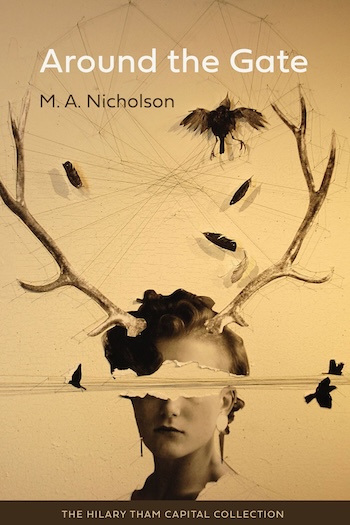
M.A. Nicholson’s debut Around the Gate is dedicated to “my city, my people, my family.” This heartfelt investment in the psychic terrain of childhood and adulthood — probing the obscure distance between the two — animates every line. Most of the poems are dedicated or addressed to a specific person or place, which enhances the lived-in poetics. These are places the poet knows, from the lovely sculpture garden outside the museum in City Park to where “women’s heads stooped together/ in a dim lit corner store.”
Appropriately for NOLA, food imagery abounds. A witty comparison is between the creative process and the way a crawfish — about as essential NOLA food item as you could ask for — “splits its shell” and “hides its new body behind” the exoskeleton it sheds. In the ekphrastic “A Gift of Onions” the location is in Germany: a Turkish migrant offers gifts of the tearing, bitter vegetables to people on both sides of the Berlin Wall. The poem is a timely meditation on what slightly acidic presents from the Other can bring.
Not all food is healthy, of course: “Candy Girl” recounts the harrowing experience of a teenage raver who is trying to have fun while evading the predatory stalking of men — she “was suddenly surrounded./ Six men shining, slick beautiful.” She escapes in time, but this situation rears its ugly head again and again, each time with increasing danger. It tells you something about how smart but vulnerable young women might feel when they try to relax in the midst of a party.
Nicholson visits family in St. Roch Cemetery and ruminates on her “uncle’s crushing death” and how her “Maw’s kitchen towels grip her at the sink./ she dreams she could have stopped what was foreseen.” All the while, surrounded by “etched marble hands” in one of NOLA’s many cities of the dead, the speaker shouts words that can’t necessarily be heard and yet must be uttered: “remind me of the stories I must keep.” Stories abound: of family in and out of jail or good graces (“He toiled./ He teetered for a decade” says so much in two lines), of parades, of floods and twisters, of walking down Chartres with John the Baptist, converting it all into “an instrument// delivering sustenance:/ delivering song.”
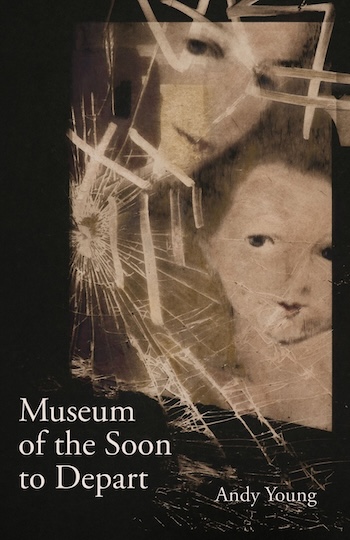
Andy Young’s Museum of the Soon to Depart, her third collection, opens with a series of poems responding to the death of her mother. Poetry is a common response to loss, though these works supply a bracingly nonresponsive response to trauma: “Because I’m a poet I try to make/ music of her diagnosis: scan the adonic of glioblastoma,/ terminal cancer, clinical trials.// No music in this diagnosis.… There’s no meter in this music,/ in the adonic of glioblastoma,/ no comfort in this cureless verse/ that as a poet I can’t help but make.”
It’s not that the pain is meaningless or untranslatable. Not at all. It’s that the experience of it is not commensurate with the understanding of it. “Strange spectacle” is a funeral conducted online: “my family inside a screen/ for her Facebook funeral.” While the poet does a “grief walk” by City Park as the pandemic looms she longs for “the night heron to mean something” because it stares with “jeweled eye as if it knew.” It’s reminiscent of Randall Jarrell’s haunting lines: “Pain comes from the darkness/ And we call it wisdom. It is pain.”
New Orleans has its share of painful and unsavory history, as does any city. But the way it likes to turn its murkier aspects into museum artifacts is distinctive. I don’t know if, say, Chicago or Orlando hosts a Museum of Death. In “Pharmacy Museum Tour Guide, New Orleans” (where the book’s debut reading took place), the poet wryly explores some of the 18th century’s weirder tastes — as found in America’s first licensed pharmacy. “Ladies came for potions, too!/ Love Potion Number 9/Draw Him to Me/ The Essence of Bend Over// and the wealthy had special ways./ They liked their pills coated/ in chocolate or precious metals,/ so they took their strychnine and liver pills/ again and again, the gold ball tracing/ each intestinal canyon…” There’s something very NOLA about fetishizing the practice of powdering skin “with the dust of the Morpho butterfly,/ painted veins on their face/ for that paler, consumptive look.” That sexy morbidity must have been très chic to the respectable ladies of the garden district.
But wait, what’s that dark staircase leading to over there, where experiments of a gruesome nature might well have taken place? “Sit down if you feel faint—some say they hear/ muffled screams through the thick wood…/Oh but that’s not the tour you signed up for” — which says quite a bit about the way people (usually, though not exclusively, tourists) like to forget the kind of history that tends to slip between the cracks. Or be shoved there.
Speaking of bloody histories, Young and family spent time in Egypt during the Arab Spring, while the country was convulsing with dissident protests against oppression. One poem is set in Cairo in December 2012, “as the counterrevolution begins.” They “smelled the burning cars yards away.” I can’t imagine what it must have been like to try and explain what was happening to children, who had to deal with media images of “tanks amassing near the poll stations” or cutting “lemons in case of gas/ before we went to the Square.” Neither can I imagine the horror of Syrian political cartoonist Ali Farzat, whose hands were broken, among the various harassments and punishments visited by a hostile government. Still, I feel like standing up and saluting when Young writes that despite “knowing/ nothing will change anytime/ soon” we must “praise the cartoons/ of Ali Farzat/ praise Ali Farzat’s/ middle finger.”
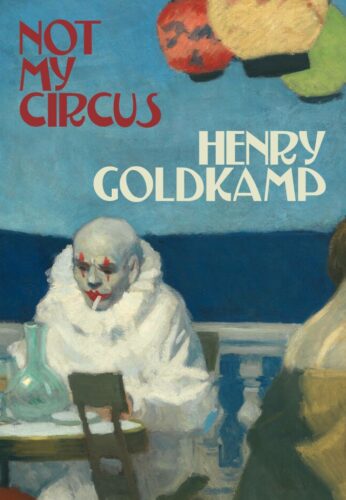 Humor, or at least playfulness, is something a lot of people don’t necessarily associate with poetry. In the popular imagination at least, poetry is scribbled mash notes to your crush or soggy notebook pages after a breakup. This may be true in many ways (was Yeats, for one, immune from such things?), and yet the idea of playing with words, with sounds, with meanings, and with contexts can be an amusing way to alter your approach to language. Henry Goldkamp, who co-hosts Splice, the beloved monthly poetry reading series at the venerable Saturn Bar on bustling St Claude, has a new chapbook out whimsically entitled Not My Circus.
Goldkamp has studied the art of clowning, of performance mixed with poetics, and there’s a palpable interplay of sound and sense in his poems from the start. “Right exactly hello clown nope not a rancid zit/ that’s just your big red nose attached to yr face” starts the procession off and why not, since being a jejune jester is a poetic trope that hearkens back centuries. “A little CharlieChaplin man” is what Ferlinghetti called poets, and come to think of it, wasn’t the frisky little tramp fond of circuses himself?
You just gotta raise a glass, or your preferred intoxicant of choice, to any poem that boasts “I’d Fail A Piss Test/ With Flying Colors” and proceeds to rev itself up: “sorry/ this is already annoying/ most so into poetry rn/ all in on this one all in on one I’m on one/ on one…ONE! Let’s fucking go.” Where? Why, to a performance of Cirque du Soleil, that’s where! Join a multipart exploration of the spangled ring, where distinctly fraught and fragile leaps are made: “the clown’s ascent his hobble/ bobbing and desperate/ lithe attached to nothing/ no prop beyond the rungs/ freestanding near collapsing/ like this poem.”
And away we’re off, jazzing up the inert and inept and inane, the corporatized bureaucratized language we’re all subject(ed) to. “Hop in the whip in the whip hop in the WIP/ my insurance is so progressive/ keys stroked this lil qwerty pie…this is a laundry detergent commercial/ this is a lifestyle/ shred on me/ I’m skimping on reality lately.”
So are we all, aren’t we, especially in these mad days of malfeasance high and low. (That is, of course, only if we have eyes to see and ears to hear, or even notice.) Reason enough to revel in Goldkamp’s piquant sensibility, like “a field of plastic squirting daisies,” from an acutely absurd(ist) clown poet who gleefully “stole all these words out the dictionary/ thrown together with my own personal brand of doofus glue.”
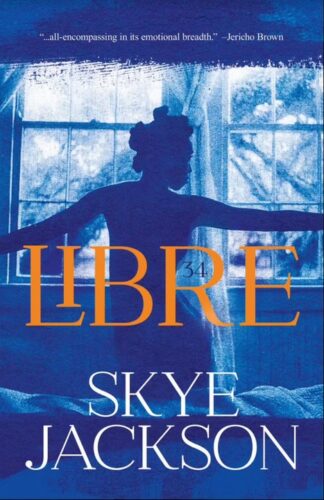 Black writers from W.E.B, DuBois and James Baldwin to Toni Morrison to Claudia Rankine have discussed how the white gaze is a painfully inextricable part of being Black in America. Whether you like it or not, assumptions and prejudices cling to you and linger, even if you refuse to let these projections have the final say. Skye Jackson’s Libre wittily and definitively turns the gaze of others back onto them in several incisive and creative ways.
While strolling through the Musée D’Orsay she subversively sizes up Cellini’s sculpture of Medusa in a poem entitled “#medusawasblackyall,” which becomes a rumination on sex and power and selfhood. In another poem, she notices something about a classic painting many would probably miss: “I stand hidden in a crowd of people/ rushing past me to see Olympia, / the painting in which manet/ captured what appears to be/ the first ever recorded side-eye/ cast towards a white woman.” I think I might have seen the same recording of Josephine Baker and I love how Jackson responds to it: “lips slicked dark breasts bared/ knees shimmying/ with so much laughter in her eyes// I look up at her and whisper, sister/ I look up at her and whisper, friend.”
A resonant sensuality infuses these poems. In one moment, Jackson can’t decide which might be more compellingly romantic. The first time her lips touched her boyfriend’s in a five-star hotel in Paris, after each of them left cities to be there. Or “the slip of your hand/ down into my pocket/to find/ the room key.” As a New Orleans girl (albeit an ambivalent one), Jackson recognizes the symbolic power of cooking. NOLA doesn’t mess around about food. Grocery lists and descriptions of meals and recipes appear and reappear in Libre, including a meditation on how differing over sugar consumption explicates the humdrum compromises of marriage.
Jackson’s body is poked and prodded throughout the collection, such as in the opening poem “can we touch your hair?,” which was chosen by Billy Collins to include in a significant anthology. Irritatingly naïve white women remark about her hair and how much they just love it, “then suddenly/ just like my ancestors long ago,/ I am pulled apart…by pale hands/ in all directions.”
Ditto the woman who grabs her shoulder in an ostensibly friendly way in a public place, or the Vermont Uber driver who says to her face in the rearview mirror that her boyfriend must be white because there aren’t any Black people around here, or the ill-fated time she met the fabulous but ferocious Faye Dunaway while working in a clothing store in Hollywood, who blithely treated her like hired help.
The collection ends with the vivid narrative “sugar daddy sonnet tiara,” which is about an affluently affable fellow in Key West who took it upon himself to spontaneously treat her to all kinds of indulgences in a way that seems fairly creepy. His is the usual brand in that former haven of bohemia. Or consider the other old white Key West denizen who gives her a ride on her scooter, while fatuously referring to a Black magazine editor as “not black black” and inquiring about what her perfume is called, because it smells “so good,” leading her to murmur to herself what will become the title of her debut, which is about stating the things she would have liked to say at various moments and did — or could — not.
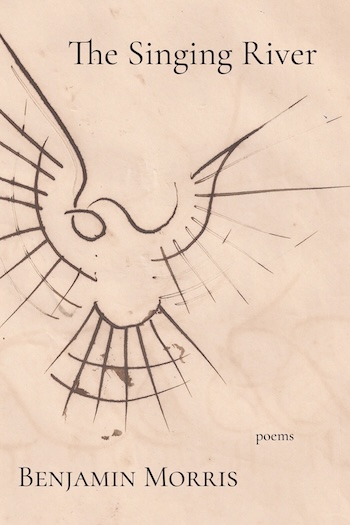 The poems in Benjamin Morris’s The Singing River weave in and out of a psychic terrain filled with rivers and roads made up of memories and their implications. NOLA poets often speak of floods and the fallout afterwards — how could you not? — and scrutinize the different ways the storms leave their mark. “Some we speak of as old friends/ reminding us how to prepare/ for their arrival.” The wizened wit culled from those disasters is a very New Orleans trait. A lamp can be a faithful friend indeed, when the power’s out for days. After you’ve lived in an atmospheric bowling alley for natural disasters long enough you get used to “knowing that in years to come/ we will be ravished again/ each time we murmur their name.”
Flooded highways are everywhere down here, and Morris, who originally hails from Biloxi, knows them all well. In “Highway 90” “all I ever see is water anymore/ water foaming in/ forty feet tall.” “Highway 57 (to Vancleave)” immediately reflects on disaster –“don’t ask what stories I can tell” — which casts a pall over what the road has gone through. A road can also be a place that takes you from where you were supposed to be. “Old Highway 80 East (to Meridian)” opines that “with luck, you’ll never see me again” which sounds like something Jimmie Rodgers, who was born there, might have sung. The poem gestures toward a place where the “last town is named/ Lost Gap.”
I’ve never been parasailing, but Morris’s beautifully crafted account of doing it on the Pensacola Bay masterfully uses the tightness of the sonnet form to make the experience luminous and vivid. “Strapped in under the chute, inch by inch/ we’re lifted into the sky, the winch/ unspooling us as from a coil of thread.” After we soar for hours, slip sliding in the wind, we land on solid earth in solidly placed couplets. “To the west the storm has swallowed the day,/ as we alight, we stand upon the bay.”
The collection finishes with the frank, moving, cinematic, and morally anxious titular poem about how young men make choices, suffer tragedy, and survive to pick up the pieces. There’s a profoundly chilling and coldly profound line in Blood Meridian where the diabolical Judge Holden states that war “endures because young men love it and old men love it in them.” As Morris puts it: “These are the things/ I know to be true:/ when boys go off to war/ they come back two feet taller/ or in a box.”
The lust for various forms of glory echoes through these lines. Childhood friends, with raunchy nicknames for each other, were “born sons of the river” or went to the desert “where the wind strips the sense/ from your body like sweat.” The latter are driven by the need to test their manhood. Raunchy terms for sex and the coveted bodies of women are kid’s stuff (hopefully you grow out of it), yet Morris powerfully connects one form of conquest with the other: “now you taste only/ her memory, alone/ in the desert, thumb/ bracing the stock, index locked/ on the trigger/ dreaming/ of the writhing/ she wrought upon it.”
The poet’s litany of friends’ names fades, but one buddy’s name will “never/ be worn as it was/ on the river/ where you left it on the bank/ to dry–/ your name now just Patterson, / stitched on your uniform/ like a cloth prayer/ murmured over and over.” A fitting finale of loss told by someone still alive to sing the sorrowful tale.
Even though these NOLA poets sing in varied voices, and build different structures with their verses, they all inhabit different wings of the same house, a manse filled with its own mélange of memories, dreams, flavors, landscapes, and songs.
Matt Hanson is a contributing editor at The Arts Fuse whose work has also appeared in The American Interest, The Baffler, The Guardian, The Millions, The New Yorker, The Smart Set, and elsewhere. A longtime resident of Boston, he now lives in New Orleans.
Tagged: "Around the Gate", "Libre", "Museum of the Soon to Depart", "Not My Circus", "The Singing River", Andy Young, Benjamin Morris, Henry Goldkamp, M.A. Nicholson