
Classical Music Album Review: Traversing Foreign Landscapes — Lei Liang’s “Dui”
By John Tamilio III
Chinese-American composer Lei Liang’s eclectic collection of ten thematic tracks could pass as a soundtrack to an artistic, surrealist film or an intense, psychological drama.
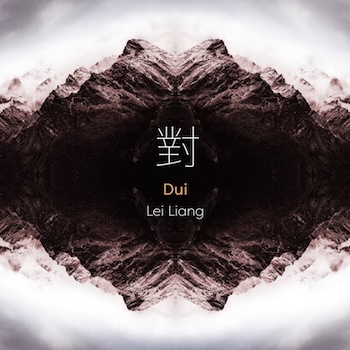
Lei Liang, Dui (Islandia Music)
If you are familiar with the history of classical music, you may know the story of the Paris premiere of Igor Stravinsky’s orchestral ballet The Rite of Spring on May 29, 1913. The audience went into a frenzy as the discordant sounds led to fists being thrown and the police being summoned.
If you are unfamiliar with the diverse instrumental pieces that composers have produced since, then you might have a similar reaction when listening to Lei Liang’s forthcoming release, Dui. If you give this recording more time, and approach it for what it was intended to be, then you will be drawn into sonorous landscapes and hypnagogic dreamscapes.
Liang, a Chinese-born American composer who was a finalist for a Pulitzer Prize in Music and is the Chancellor’s Distinguished Professor of Music at the University of California San Diego, offers an eclectic collection of ten thematic tracks that could pass as a soundtrack to an artistic, surrealist film or an intense, psychological drama.
Dui opens with the atmospheric “vis-à-vis,” the third longest track on the album. A two-minute cacophonous fanfare, featuring Wu Man on the pipa (often called the Chinese lute), makes what is to come clear: this is not the kind of album you play while studying or put on as incidental, background music during a dinner party. However, it is music, much like a film score, that creates mood, atmosphere, and a contemplative aura. At times, the bowed string instruments (cello, violin, and contrabass, another term for the double bass) create squeals and whistles intimating everything from shrill bird calls and ominous foreboding winds to precipitous emotive expressions. An array of percussive styles accompany this distinct instrumentation.
What follows the opening track is a more traditional (but no less unique) mode of musicality. Liang offers his six-part “Mongolian Suite.” Evoking East Asian motifs, as the title suggests, the first movement, “Tongliao Mountain,” commences with cellist Maya Beiser (the founder of the independent Islandia Music Records) lulling the listener into an ultra relaxing vista. There’s so much subtlety and breath here that one can almost smell the rosin dust rising from the slow bowing. It comes to a hypnotic end as the final notes evaporate into the stillness.
Liang states that, “Composing offers me a chance to explore and foster deeply personal relationships, including the relationship with my own cultural and spiritual heritage. It also presents me the opportunity to face seemingly insurmountable challenges.” Some of those challenges are given voice. The second movement of the suite (“Where Is Home?”) bellows the passionate, intense cry of a despondent nomad. There is a somber inquisitiveness in the phrasing which will goad the listener to anticipate what lurks around the corner, as Beiser offers hints and guesses, some more pronounced than others.
The six movements of the “Mongolian Suite” are short, ranging from 1:40 to slightly over four minutes. The other four tracks, between which the “Suite” is sandwiched, are far longer and more discordant. Along with the aforementioned opening cut (“vis-à-vis,”), Dui closes with three equally eccentric and extended pieces. The first, “déjà vu,” is aptly named as it reflects the phantastic opening. It hits the listener like a reverie or the remembrance of a convoluted dream with familiar patterns that quicken the memory momentarily.
Much of the music on Dui is experimental. It sounds improvised, particularly the last track, “Landscape V,” which serves as a fitting ending to this collection seeing as it opened with a comparable, extemporaneous construct. “Landscape V” is the only track that features vocals, though the singer, baritone Jeffrey Gavett, does not articulate any decipherable lyrics. Rather, through obscure articulations that are as influenced by jazz scat-singing as they are by Liang’s cultural heritage, the listener wonders how much of Dui was “composed” or whether Liang provided his musicians with a thematic arch giving them space to explore to create novel textures. It is interesting that the composer, who co-produced the album with Beiser, does not appear on this release.
There are moments on Dui when I am soothed into contemplative reverie. There are other moments when I come to a different realization. I do not consider hunting or car racing to be sports. Why? Because I can take a gun and shoot an animal (although I never would) and I can drive really fast and keep turning left (which I sometimes do in Boston). In other words, if I can do it at the “professional” level, then it isn’t a sport. I could never have written Handel’s Messiah, Bach’s Brandenburg Concertos, or any of Beethoven’s symphonies. But I could have produced some of the nondescript sounds that are conjured on Dui’s longer tracks. I do not watch NASCAR. I probably won’t listen to the tracks that frame this recording again, though I will delve into some of its clearer, eclectic, cultural offerings.
That said, my experience is not Liang’s. Isn’t all art an expression of the one who created it? Isn’t that what makes it art?
The longest and second to last track, “Luminosity,” which features Mark Dresser on the contrabass, is a dark, nightmarish nocturne. Its laggard, low-tone rattle suggests the bellow of a great sea monster growling from the deep, roaring as it surfaces. To borrow the words of novelist Michael Ondaatje, “echo is the soul of the voice exciting itself in hollow places.” Dui resounds with echoes — some from the past, some from every present moment. Offering a suggestion of horns, creaking doors, and sudden pulses, “Luminosity” warns of a close, lurking terror that curls into itself and dissolves before it manifests.
Time will tell. Liang’s work may be to music what Kafka is to the modern novel. Dui may be a work that will be prized over time as musicologists reflect on the nuances of its experimental instrumentation and the range of disparate emotions to which it gives voice — however they may strike the casual listener.
John Tamilio III, Ph.D. is the Pastor of the Congregational Church of Canton, a Professor of Philosophy at Salem State University, and a professional guitarist who plays solo acoustic and for the Boston-based classic rock band, 3D. His playing has been applauded by David Brown (Simon & Garfunkel, Billy Joel), Jack Sonni (Dire Straits), and Carter Allen (WZLX). An aficionado of classical music, particularly the Baroque era, Tamilio’s publications are vast, covering not only music, philosophy, and theology, but the poetry of T.S. Eliot as well. He resides in Beverly with his wife Cynthia.
Tagged: "Dui", Cho-Liang Lin, Islandia Music Records, Lei Liang, Mark Dresser, Steven Schick, Wu Man, loadbang: