
Arts Remembrance: Tom Robbins’s “Joy in Spite of Everything”
By Gary Lippman
In his writing, in his life, and in his fun, generous, and winsomely wise spirit, the late — but never late for a party — Tom Robbins chose to feel “ridiculously fine” and wanted us to feel the same way.
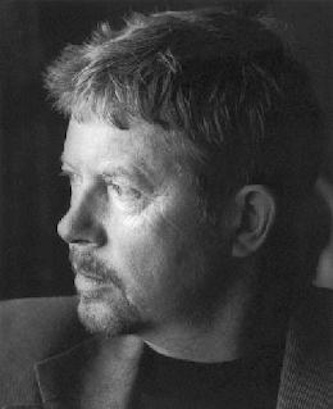
The late novelist Tom Robbins. Photo: Wiki Common
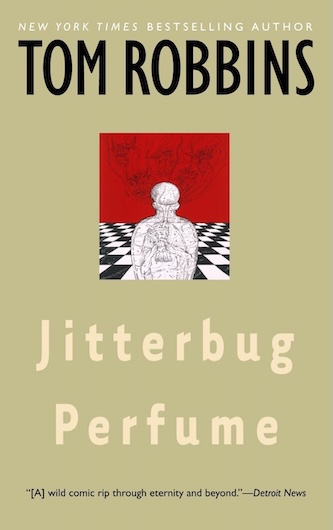
In Jitterbug Perfume, one of Tom Robbins’s whimsical novels, none of the characters can figure out what is meant by a mysterious magic formula, “Erleichda.” The author eventually defines the word as “a transitive verb, an exclamation, a command, of which an exact English translation is impossible. The closest equivalent probably would be the phrase: ‘Lighten up!’”
Robbins once remarked that he asked four things of a novel: that it makes him think, laugh, feel horny, and be filled with wonder. When the author died at age 92 on February 9, he left behind a shelf of novels, a memoir, a collection of short writings, and a children’s book. All of these works lavishly provided the “four things” he requested of fiction. Yet Robbins’s books were seasoned with a notable fifth ingredient: Erleichda.
In our ever-darkening world, this new reality of daily crises, sorrows, outrages, and anger, any “lightening up” might seem irresponsible as well as impractical. Robbins understood these challenges, but he still suggested we prioritize levity — a “divine” form of it. Given his characteristically chipper epigram, “It’s never too late to have a happy childhood,” it is unlikely any type of encroaching darkness would bring him down. Or that he would let it bring down his readers, either.
Robbins identified his main artistic themes as transformation, liberation, and celebration, a vision enlivened by generous doses of puzzles, tenderness, and trickster-grade playfulness. These goodies helped him to, as he put it, “bang the Language Wheel like a gong,” as well as to indulge his power of imagination, which he called his “circus tent-cum laboratory.” As his memoir Tibetan Peach Pie demonstrates, Robbins came by that power early. He came by his sense of Erleichda early, too.
Twenty years after Jitterbug’s 1984 publication, Robbins elaborated on what he meant by the “E” word in an essay entitled “In Defiance of Gravity: Writing, Wisdom, & The Fabulous Club Gemini” in his collection Wild Ducks Fly Backward. He proclaims that Erleichda — or, as he alternatively calls it, “approfondement,” which in French means “playing easy in the deep” — constitutes “our best hope for clearing passageways through our heart-numbing, soul-shrinking, spirit-smothering oceans of frost.”
Right at the top of “Gravity,” Robbins identifies the roadblock to joy: it’s narcissistic “whining, arrogance, avarice, pique, anxiety, severity, defensive cynicism, and aggressive ambition.…Despair is as addictive as heroin and more popular than sex, for the single reason that when one is unhappy one gets to pay a lot of attention to oneself. Misery becomes a kind of emotional masturbation.”
To paraphrase the great Western philosopher Jerry Lee Lewis, that’s a whole lot of suffering going on. But what is the nature of this pain? The answer is implied by a bumper-sticker I once saw pasted on a parked car: “AVOID UNNECESSARY SUFFERING.” Robbins’s argument is that much of our suffering should be filed under that “unnecessary” heading. We can escape it (or at least mitigate it) by “lightening up,” by “playing easy,” by refusing to take anything in life too seriously. Note that crucial word “too.” There are plenty of conditions and experiences in life that are damn-serious, that are heartbreaking, agonizing, and difficult to abide by, and one ought to, one must, take them seriously. Very seriously, indeed. But taking them (or other bummers, major or minor) too seriously will lead to additional heartbreak, agony, and suffering — the type that is not necessary.
Salvation lies in unleashing the “human impulse to be playful.” It is hard for people to feel grim about life when they’re acting carefree, even silly. It’s almost impossible. And so, insists Robbins, while you’re struggling mightily with “necessary” suffering, try playing and laughing and singing and dancing or at least smiling a little, if possible. And whenever struggling is not strictly called for, absolutely cavort your ass off!
 Carnivals, Mardi Gras parades, rock concerts, vaudeville performances, onscreen slapstick and screwball comedies, all-night rent parties, jungle expeditions, psychedelic explorations: Robbins drew on these and other celebratory traditions while crafting his concept of Erleichda. Most importantly, the writer built his Erleichda concept on the Tibetan system of “crazy wisdom.” It is “the opposite of conventional wisdom,” Robbins explains, because it “flouts taboos in order to undermine their power” and “deliberately swims against the current in order to avoid being swept along in the numbing wake of bourgeois compromise.” This unconventional mindset is exercised by people “who neither seek authority nor willingly submit to it.” It encourages us to refuse “to avert one’s gaze from the sorrows and injustices of the world” even as it “embraces risk and eschews security … turns the tables on neurosis by lampooning it …(and) insists on joy in spite of everything.”
Joy in spite of everything? Shoot that stuff into my veins, please! But how exactly can we obtain such joy? How do we Erleichda-ize ourselves? Robbins’s explanation of crazy wisdom suggests that there are three intertwined ways to go about it.
First comes that aforementioned playfulness, which permits us to loosen up our psychological repressions and “promote what Joseph Campbell called ‘the rapture of being alive.’” In an interview, Robbins argued that “To say that life shouldn’t be taken seriously is not to say that life is trivial or frivolous. Quite the contrary. There’s nothing the least bit frivolous about the playful nature of the universe. Playfulness at a fully conscious level is extremely profound.”
Playfulness profound? Isn’t this notion paradoxical? True enough, yet Robbins reckoned that “Paradox is the engine that runs the universe.” And he wouldn’t have it otherwise: “One reviewer said I need to make up my mind if I want to be funny or serious. My response is that I will make up my mind when God does, because life is a commingling of the sacred and the profane, good and evil. To try and separate them is fallacy.”
The second hallmark of Erleichda is humor. For Robbins, “I laugh, therefore I am.” Our most meaningful guffaws should be slung in the direction of this world’s bottomless, ever-creeping-closer darkness. Citing Freud, who called wit “the denial of suffering,” Robbins says that the creator of psychoanalysis “wasn’t whistling ‘Edelweiss’ when he wrote that gallows humor is indicative of ‘a greatness of soul.’ The man who jokes in the executioner’s face can be destroyed but never be defeated.”
And that zings us to Erleichda’s third aspect: courageous defiance. In his “Gravity” essay, Robbins mentions a rookie policeman character in a Joseph Wambaugh novel who is so afraid of being assigned to a dangerous beat that he ultimately volunteers for it. By doing so, this character changes his attitude toward what had been a frightening job “by regarding it less as a tribulation than as some special opportunity to escape routine and regularity, by appreciating it as an unusual experience.” Despite the danger, “his anxiety begins to evaporate … and, for better or worse, he controls his destiny.”
Speaking of controlling one’s destiny, Robbins believes that “There are only two mantras, yum and yuck. Mine is yum.” Which of these mantras suits you at any given juncture is entirely your choice, entirely within your power. “We are our own dragons as well as our own heroes,” is how Robbins views it, “and we have to rescue ourselves from ourselves.” Viktor Frankl, the Auschwitz survivor and psychoanalyst, would have agreed. He wrote in Man’s Search for Meaning that “everything can be taken from a man but one thing: the last of the human freedoms — to choose one’s attitude in any given set of circumstances, to choose one’s own way.”
So Frankl would have probably agreed with Robbins. Saying “yum” — saying “yes” to life instead of surrendering to the loud external and internal “no”s — is the wiser choice. Here, as always, perspective is key. As my friend Bob Neuwirth would say, “We don’t have to deal with problems, we get to deal with them.” A growth opportunity, no matter how painful, can be greeted as a privilege, as a gift.
 One helpful tip for practicing Erleichda is to remember how frustratingly difficult it might be. Habits die hard, and even a slight self-caused bout of unnecessary suffering may prove to be daunting to shake off. Still, this is no reason to give up. Erleichda is not an ironclad demand; it’s a goal, one that we will most likely fall short of reaching again and again. Robbins hardly expects us to brim over, daily, with that “joy in spite of everything.” All he hopes is that we will try as best we can to be Erleichda-ites. And to forgive ourselves for falling short. Practice might not “make perfect,” but practice has its own rewards regardless of outcomes.
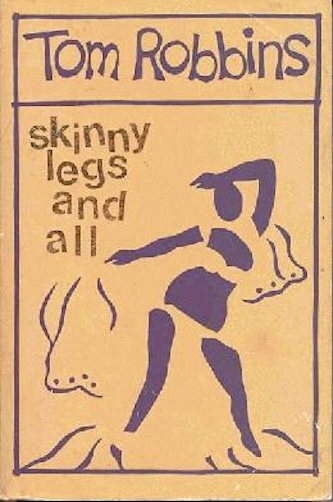
In 2005, I attended a lecture about Robbins’s redemptive concept that he delivered at a conference in New York City. By then I’d been enjoying his books for two decades, but listening in person to the soft-spoken, sweet-natured, surprisingly diffident author made an especially invigorating impression. Fifteen years later, I had an assignment from a magazine to interview Robbins, and we became friendly.
During the past four years, I visited Tom once at his home and emailed and spoke with him on the telephone fairly often. His typical sign-off in our correspondence was the request to “please remember to feel ridiculously fine,” while our phone calls usually ended with Tom comically exclaiming, “Don’t try to stop us!” We were not nearly close enough for me to say that I “knew” him, but as a pal Tom appeared to genuinely embody the qualities of Erleichda. He was always very much the person who wrote:
Our lives are not as limited as we think they are; the world is a wonderfully weird place; consensual reality is significantly flawed; no institution can be trusted, but love does work; all things are possible; and we could all be happy and fulfilled if we only had the guts to be truly free and the wisdom to shrink our egos and quit taking ourselves so damn seriously.
In one of our phone conversations, I told Tom about another bumper-sticker I’d glimpsed on a parked car. This second bumper-sticker read, “THE PESSIMIST MAY BE RIGHT IN THE END, BUT THE OPTIMIST HAS MORE FUN GETTING THERE.” He appreciated the message. I’m not surprised he did — the adage is, after all, pure Erleichda. As was one of Erleichda’s most successful proselytizers. In his writing, in his life, and through his amusing, generous, and winsomely wise spirit, the late — but never late for a party — Tom Robbins chose to feel “ridiculously fine” and wanted us to feel the same way.
Gary Lippman, a recovering attorney, has published a novel, Set the Controls for the Heart of Sharon Tate; a story collection, We Loved the World but Could Not Stay; the introduction to The Many Worlds of David Amram; various Fodors travel guides; and essays that have appeared in The New York Times, Paris Review, VICE, and Literary Hub. His play Paradox Lust was produced off-Broadway in 2001.
I had to read this several times just to feel connected to Tom Robbins one more time. I have not read his final novel because I always needed there to be one more. I may never read it so there will always be one more.
Read it! It is his best. His life story is even more full of joy and wonder than his books
We are all better for Tom’s circus tent-cum laboratory (thank God for punctuation), and I very much appreciate this reminder to find joy in life. These days, we need many reminders (a plethora of pings perhaps).
This piece rich in allusions (Freud, Frankl) couldn’t have come at a better time, nationally speaking. Robbins was sometimes a bit too sweet-n-light for me, but better “yum” than addicted to depression. Good warning!
Gary & Tom would be blood brothers.