
Musician Interview: The Jesus Lizard’s Duane Denison Talks About Assembling the “Rack”
By Robert Duguay
“For me, having new material to play — that’s the best. If you’re on tour, you are presenting a new album and people are psyched because you are playing some of that stuff live.”
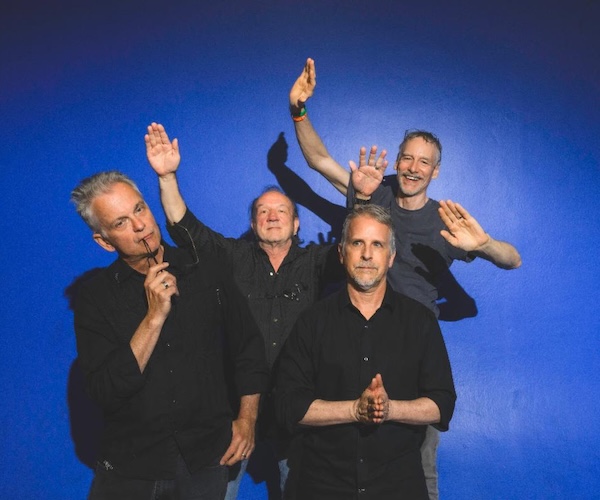
The Jesus Lizard. Photo: Doug Coombe
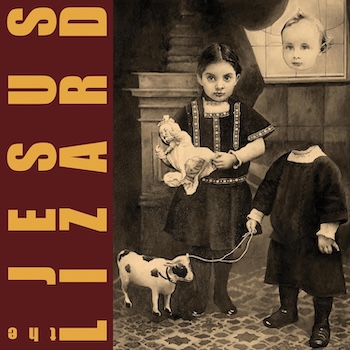
When they formed in Austin, Texas during the late ‘80s, on the heels of the demise of the noise rock pioneers Scratch Acid, The Jesus Lizard quickly became one of the top bands in the American independent underground music scene. At first, the initial trio — vocalist David Yow, guitarist Duane Denison, and bassist David William Sims — played their shows backed by a drum machine; then Mac McNeilly jumped behind the kit to complete what was a fully loaded arsenal of distortion and amplification. Over the ensuing decades the quartet has maintained its influence and status among numerous noise, hardcore, punk, and art rock bands. There have been a few breakups and reunions along the way, but The Jesus Lizard has been rock solid as a group since 2017. On September 13, via Ipecac Recordings, the band released a new album, Rack. The Jesus Lizard is touring in support of the disc, and they’re going to be at Roadrunner in Boston’s Allston-Brighton neighborhood on December 12. Local rockers Pile will kick things off at 8 p.m..
Denison and I had a talk ahead of the show. We chatted about how Rack was recorded, his background in classical guitar, and the band’s affection for “The Hub”.
The Arts Fuse: Rack is The Jesus Lizard’s first full-length release in over 25 years along with being the band’s first album since reuniting in 2017. What was the experience like of going into the studio with everyone after such a long time away? And working with producer Paul Allen at the Audio Eagle in Nashville?
Duane Denison: We kind of worked our way up to it. We had been playing shows intermittently since 2009, but we hadn’t performed any new material. After touring around the world, we played a few shows in 2017 and 2018, so getting back together with the guys was no stretch. We started working on new material gradually. Then we started doing demos in a practice space; Paul would bring a mobile recording unit, and we would work on batches of songs at a time. By the time we went into the studio the process was not unusual in any way — it was pretty much how we always did it. We played live in the studio, just like we always did, and knocked out the whole thing in about two weeks. It was kind of like the good ol’ days.
AF: Did you use recording equipment that was familiar to you from the ‘80s and ‘90s? Or latch onto newer equipment to make everything sound a little more polished and new?
 Denison: There’s obviously been a lot of changes since our early days, mostly the rise of digital over analog tape. None of us are married to the old school analog gear; the studio rig had really nice microphones, really good sized rooms, and a really nice board, so moving to digital wasn’t a problem. If anything, it gave us greater control in terms of editing. To me, as long as the microphones and the equipment, the drums, the amplifiers, etc., are of good quality, it doesn’t matter if it’s going to tape or digital. You can always approximate some of the same sounds you would get on tape. Obviously it’s not going to be exactly the same, but it doesn’t have to be. We didn’t have any qualms with doing things in a modern way.
We don’t sound more polished than we were; it’s still the same guys playing the same way. But it was easier to edit; if we wanted to fix a note here and there, we could do it more efficiently with digital.
AF: You started out as a classical guitarist while studying at Eastern Michigan University. What inspired you to embrace the noise rock sounds of The Jesus Lizard during the late ’80s?
Denison: Regarding the classical music stuff, I wasn’t that into it. I liked modern composers, those who worked with dissonant and original sounds. When I was a kid and started playing the guitar in the ’70s, classical guitar was really popular. Prog rock bands like Yes, Genesis, Emerson, Lake & Palmer were admired. I was an impressionable teenager and those guys were the shredders of our day. Then punk rock came along and it was more exciting to play just straight-forward, stripped down, powerful rock guitar.
I had already been in bands before I started fooling around with the classical stuff. I was figuring songs out by ear off of records and playing in front of people with loud amplifiers, it wasn’t that big of a jump. I stopped doing classical and let rock take over. But there were similarities. Some of the things I learned — chord voicings, orchestrating guitar parts, pacing and timing — a lot of that carried over, so it wasn’t that big of a stretch.
AF: Do you feel that your education in classical guitar made you a more malleable guitarist when it came to collaborating with the likes of Hank Williams III, The Legendary Shack Shakers and Mike Patton, John Stanier and Trevor Dunn in Tomahawk among others?
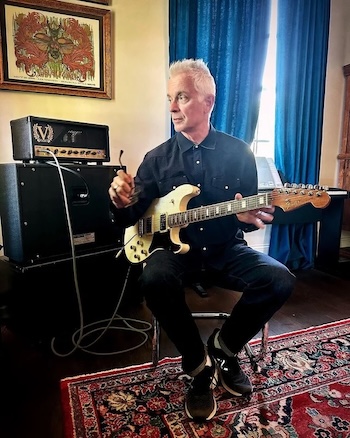
Jesus Lizard guitarist Duane Denison. Photo: Wiki
Denison: I don’t think it hurt; it certainly didn’t get in the way. Still, it’s a whole other thing. When you’re playing with different people a lot of the arrangements are often done by ear — things are done on the fly. You’re not necessarily writing things out, at least not with Hank III, Jesus Lizard, or the Shack Shakers. With music that’s a little more advanced, say with Patton, John Stanier and Trevor Dunn, things are written out more extensively. Getting music education gave me good ears; for example, I can quickly figure out and recognize intervals and chord sounds.
The most valuable thing I learned was a sense of composition — the value of form, balance, and symmetry. Other than that, I’m not so sure a lot of my classical background really helped that much. It’s just so different.
AF: What are your thoughts on coming back to Boston with The Jesus Lizard to perform this new material at Roadrunner?
Denison: It’s just exciting to me anytime you’re back playing somewhere that you haven’t been in a while. It brings a certain energy and excitement. You want to make a good impression, to give people something to think about. For me, having new material to play — that’s the best. If you’re on tour, you are presenting a new album and people are psyched because you are playing some of that stuff live. That’s the fun and challenging part, you are eager to win people over to the new songs. That said, there’s always going to be a certain percentage of people who expect to hear a certain amount of the old material, and that’s fine.
When I go to hear people, I want to hear some of my old faves, but I also want to hear new things and I want to hear where the musicians are coming from now. I hope that some attendees will be in that frame of mind. Boston has always been a great music town, obviously a lot of great bands are from there and it has a certain legacy to it. It’s one of the first cities on the East Coast, along with New York City, Washington, [D.C.] and Philadelphia. George Washington went to a concert in Boston, so I’m looking forward to it. [Editor’s Note: George Washington attended a concert in Boston on October 27, 1789, at King’s Chapel. He sat in the Governor’s Pew.]
Rob Duguay is an arts & entertainment journalist based in Providence, who is originally from Shelton, CT. Outside of the Arts Fuse, he has also written for DigBoston, Aquarian Weekly, Providence Journal, Newport Daily News, Worcester Magazine, New Noise Magazine, Manchester Ink Link, and numerous other publications. While covering mostly music, he has also written about film, TV, comedy, theater, visual art, food, drink, sports, and cannabis.