
Visual Art Commentary: Silence Is Complicity — Why Museums Must Use Their Voice to Defend Democracy
At a moment when arts and culture, public education, historical memory, and American democracy itself are under coordinated attack, silence is not a neutral posture. It is a decision with consequences.
Julie Trébault, the Executive Director of Artists at Risk Connection (ARC) — an independent organization that defends and advances the right to artistic freedom, providing practical resources and support to ensure that artists and cultural professionals can live and work safely without fear. Photo: PEN America
Across the United States, and with particular visibility in cultural hubs such as Boston, a troubling pattern has emerged. Censorship campaigns, the erosion of democratic norms, and political pressure on artistic expression and educational freedom are expanding. In turn, many major museums and cultural institutions respond with silence. This restraint is often justified as neutrality, professionalism, or institutional caution. But at a moment when arts and culture, public education, historical memory, and American democracy itself are under coordinated attack, silence is not a neutral posture. It is a decision with consequences.
This is not a call for museums to become partisan actors or advocacy organizations. Rather, it is a call for them to uphold their civic responsibility. Museums are among the few remaining public spaces where we can confront difficult histories, encounter difference, wrestle with challenging questions, and both reaffirm and reassess our shared values. When the very conditions that make those functions possible are constrained by those in power, institutional silence will not save anyone.
Audre Lorde’s warning, often cited but rarely internalized, is instructive here: “Your silence will not protect you.” For institutions, silence will not safeguard autonomy or instill public confidence, and it risks accelerating the breakdown of the foundations on which public cultural life depends. This outcome, however, is not inevitable. Around the world, cultural institutions operating under restrictive political conditions have found subtle yet meaningful ways to affirm commitments to human dignity and historical truth. By contrast, US museums, which still — for now — retain comparatively broad freedoms, have been reluctant to exercise them.
The current political context compounds the danger of this silence. In recent years, efforts to control what can be openly taught, represented, and remembered have expanded rapidly. Book bans have spread across school systems. University curricula and research agendas are increasingly subject to political scrutiny and demands for compliance. Funding for federally supported cultural and media institutions is now more frequently tied to ideological conditions. And beyond institutions, individual artists, educators, librarians, and journalists face heightened harassment and intimidation from a range of different actors. These pressures are visible in state legislatures, school boards, funding agencies, and governing bodies that increasingly seek to police cultural content. These developments have clear global precedents. In periods of democratic backsliding, culture and education are often the first arenas constrained, often in the service of disseminating propaganda. The goal is to narrow our capacity for critical thought and to weaken our ability to recognize abuses of power.
In this environment, the cautious response of many US museums is understandable — the threat of retaliation, particularly for cultural institutions that receive federal funding, is real. But it is no longer sufficient. Institutional statements continue to emphasize inclusion and access, but rarely address censorship, historical erasure, or the politicization of education directly. Public programming likewise seldom engages sustained questions of democratic fragility, disinformation, or public memory. The issue is not whether museums should “take sides”; their duty has long been to foster honest cultural discussions that include multiple perspectives. The problem is that many museum directors, boards, and senior leadership are not calling this moment what it is, and are not rising to meet its urgency.
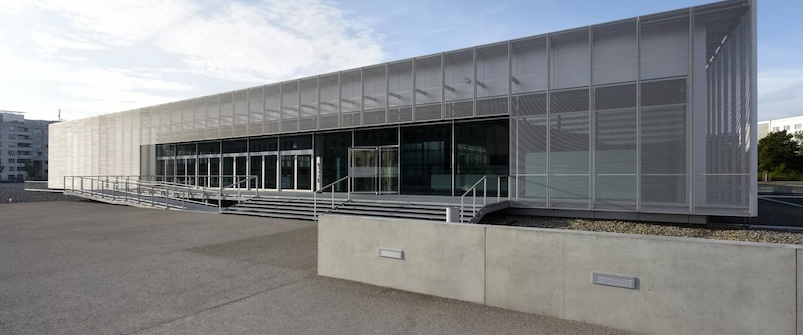
The Topography of Terror Documentation Center in Berlin uses rigorous public history to examine the mechanisms of authoritarianism and strengthen democratic literacy in the present. Photo: Visit Berlin
Let us turn to the pragmatic reasonings museum directors and trustees often use of explain this restraint: They have long sought to avoid accusations of partisanship. Likewise, they are concerned about alienating donors, public officials, or segments of their audience. Funding structures are increasingly fragile, and controversy can carry real institutional costs. And in a polarized media environment, even carefully framed statements risk being distorted or weaponized. Neutrality is treated not only as a professional virtue, but as a strategy for survival. This raises an unavoidable question: survival at what cost?
Neutrality becomes untenable when those in power wish to sanitize history and exclude any voice that does not sing their praises. There is no compromise between historical truth and historical erasure, or between free inquiry and censorship. Silence does not suspend politics; it tacitly accepts the status quo. Cultural institutions must choose to stand up for political freedom, because in the words of Karl Popper, “We do not choose political freedom because it promises us this or that. We choose it because it makes possible the only dignified form of human coexistence, the only form in which we can be fully responsible for ourselves.” Institutions that are meant to foster diverse viewpoints and honest conversation may weather this moment by complying. But they will emerge at the other end having lost something irreplaceable.
Some may insist that democracy and civic responsibility are distractions, viewing museums’ primary roles as curation and object preservation. But this would disregard the historical context and the narratives that surround collections, a reality that positions institutions as public educators and stewards of culture and memory. Aspiring to “neutrality” should also be scrutinized; museums already make decisions about which histories to foreground, which artists to exhibit, and which communities to engage. Just because these decisions are value-based does not mean that they are ideological. Affirming democratic principles, truth, freedom of expression, artistic freedom, and historical accountability is value-driven as well. But it is not an endorsement of a specific ideology or political platform. At this moment of heightened polarization and political pressure, we have a civic responsibility to help communities understand what is happening around them and how it connects to broader historical patterns, and to push back against those who try to suppress this understanding. We can do this, but it requires clarity of purpose, and a measure of bravery.
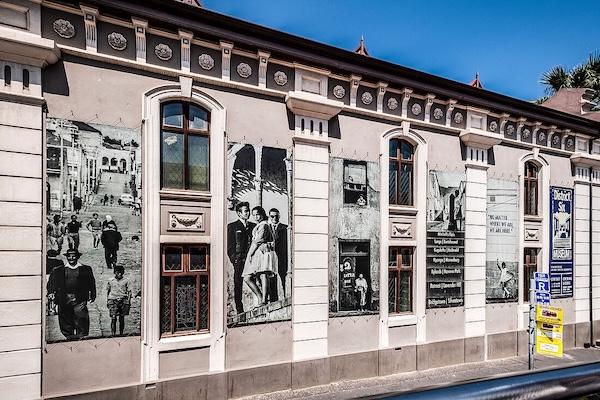
District Six Foundation was founded in 1989 and the museum in 1994, as a memorial to the forced movement of 60,000 inhabitants of various races in District Six during Apartheid in South Africa in the 1970s.
Examples from around the world come to mind. In Latin America, museums operating during periods of democratic backsliding, particularly in Brazil under the Bolsonaro administration, faced defunding, public vilification, and political interference for addressing slavery, Indigenous dispossession, and military dictatorship. Rather than retreat, many reaffirmed exhibitions and programs centered on historical memory and pluralism, asserting a role as civic anchors. In Germany, the Topography of Terror Documentation Center uses rigorous public history to examine the mechanisms of authoritarianism and strengthen democratic literacy in the present. In South Africa, the District Six Museum demonstrates how community-driven institutions can preserve the voices of those displaced under apartheid, fostering civic belonging through an unflinching look at a painful history. These cases differ in context, but they converge on a single lesson: authoritarian movements begin by narrowing spaces for culture and memory, and institutions that resist that narrowing help preserve democracy.
The question, then, is not whether US-based museum directors, boards, and senior leadership should act, but what this action could look like. The museums they represent could host public programs on censorship, access to information, and artistic freedom, grounded in historical and global context. They could commission artists to explore themes of public memory, democratic fragility, and truth. They could curate exhibitions that connect past struggles over expression with contemporary challenges. Partnerships with libraries, universities, and community organizations could anchor these efforts locally. Museums could also offer their spaces as trusted convening grounds for difficult conversations, facilitated with care and evidence. These programming choices reflect museums’ duty of care and ethical responsibilities, while also protecting credibility, public trust, and long-term relevance.
As a place of great significance in American civic life, Boston’s museums and cultural institutions are well-positioned to model how engagement with democratic values can be bold yet thoughtful, historically grounded, and credible. Decisive leadership there will offer a template for institutions nationwide.
Museums are an integral part of our democracy’s public infrastructure, and they must remain so. They are entrusted not only with objects, but with the myriad of meanings through which we understand ourselves. They take an active role in shaping what and how communities can know, remember, and imagine together.
The space for action still exists, but it is narrowing. Whether museum leadership chooses to use that space now will determine not only relevance, but whether these institutions remain credible civic actors in the years ahead.
Julie Trébault is the Executive Director of ARC – Artists at Risk Connection
Tagged: "Artists at Risk Connection", Censorship campaigns, Julie Trébault, and political pressure on artistic expression, educational freedom
Julie, bravo. Thank you for such an important article at such a crucial time. For readers interested in these topics, I’m happy to share that the Boston Public Library currently has on view Revolution! 250 Years of Art & Activism in Boston—a timely reminder of the important role art and activism have to play in civic life. Let’s hope for more.